

Hypertrophic osteodystrophy (HOD) and panosteitis (pano) are classic developmental lamenesses of young dogs and puppies. Both problems tend to occur in large- to giant-breed puppies.
German Shepherd Dogs have a high risk for pano. Often, the biggest pup in a litter will be affected, especially if a male. Strangely, there is a higher incidence in the fall and in the northeastern United States.
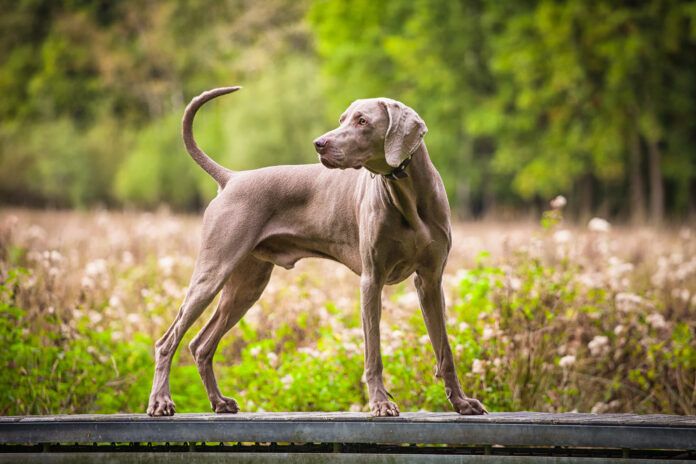
Weimaraners are the poster breed for HOD, with puppies of this breed often more severely affected than the average case. Great Danes are also at high risk.
While these developmental bone diseases are both very painful, most puppies can outgrow them, with appropriate care and support. These conditions usually resolve when the growth plates close, generally between 14 and 16 months of age for large-breed dogs. Giant-breed dogs may continue to grow up to 24 months of age. The only way to know for certain that the growth plates have closed is through an X-ray.
What Do HOD and Pano Look Like?
In both HOD and pano, puppies tend to be quite painful. Dogs with panosteitis often drive owners slightly crazy as the lameness tends to shift from leg to leg. For example, on Monday, your pup hurts his right front leg. On Wednesday, his left front leg is clearly sore while the right front is better. Most dogs with panosteitis recover and grow to be normal. A few will suffer recurrences but eventually clear the problem.
Dogs with hypertrophic osteodystrophy are often even more painful and may be ill as well. Affected dogs often lose their appetite, have a fever, and are lethargic, basically not bright-eyed on top of hurting and not wanting to move. This condition is generally bilateral. While most dogs with HOD recover and lead normal lives, some end up with growth deformities. Very severe cases can be fatal due to the associated illness.
Diagnosing HOD and Pano
With pano, palpation of the long bones is usually painful. Front legs are affected more often than rear. Treatment generally consists of pain medications such as non-steroidal anti-inflammatory drugs (NSAIDs) and exercise restriction.
Dogs with HOD have intense pain and often swelling around the metaphysis of their long bones (near the joints). The front legs are affected more commonly than the rear ones.
A definitive diagnosis of both conditions requires X-rays. It is important to recognize the radiologic signs take a while to show up. If you just notice lameness on Monday and take your dog in for X-rays and an exam on Tuesday, the X-rays may be normal. Your veterinarian will generally be able to make a suggestive diagnosis based on physical exam and history if you bring your pup in early on.
X-rays can be important to rule out two much less common, but extremely serious, young dog orthopedic problems: osteosarcoma and osteomyelitis. The prognosis for those conditions is much worse than for pano or HOD.
Can You Prevent Pano or HOD?
Since both pano and HOD are likely due to genetic factors, prevention is unlikely. However, you can lower your individual dog’s risk. Feed a puppy food designed for large- to giant-breed dogs if your puppy fits those categories (look for the American Association of Feed Control Officials, or AAFCO, label stating that the food meets the requirements for the growth of large-breed dogs). Overfeeding, particularly of protein, has been associated with pano, but it is not clearly causative. There are undoubtedly genetic factors involved as well.
When choosing a large-breed puppy, considering passing by the biggest boy. Ask about any history of pano or HOD in parents and other relatives. A responsible breeder will know the answer. By 12 to 18 months of age, the dog should be past the risk of these two conditions.
