







When you purchase through links on our site, we may earn a commission at no extra cost to you. Learn more.
We’ve all had one of those days. Maybe work was exhausting, you came down with a nasty cold, or something happened that left you staring into space on the couch.
Before anyone else noticed, your dog was already there. They rested their head on your leg, quietly followed you from room to room, or curled up beside you without asking for a walk, a treat, or a game of fetch.
It can feel almost uncanny. How did they know something was wrong?
Dogs may not understand why you’re upset, but they’re remarkably good at noticing when something about you has changed. They often respond in subtle, heartwarming ways that can feel intentional.
Here are some of the most common things dogs do when they’re trying to comfort the people they love.
Can Dogs Really Tell When You’re Upset?
Dogs can’t read your mind, but they are remarkably good at noticing when you’re not acting like yourself.
They spend every day watching your habits, expressions, voice, and routines. So when several of those things change at once, your dog may recognize that something is different, even if they don’t understand why.
Researchers have found that dogs pick up on a surprising number of emotional cues, including:
- Facial expressions
- The tone of your voice
- Body posture and movement
- Changes in your scent caused by stress
- Disruptions to your normal daily routine
Your face is one clue. A study published in Biology Letters found that dogs can match happy and angry human faces with voices carrying the same emotion, even when the person is a stranger.
Dogs also pay close attention to how you move. Eye-tracking research suggests they gather emotional information from your entire body, not just your face.
That may explain why slumped shoulders, slower movements, or spending an afternoon curled up on the couch can catch your dog’s attention before you’ve said a single word.
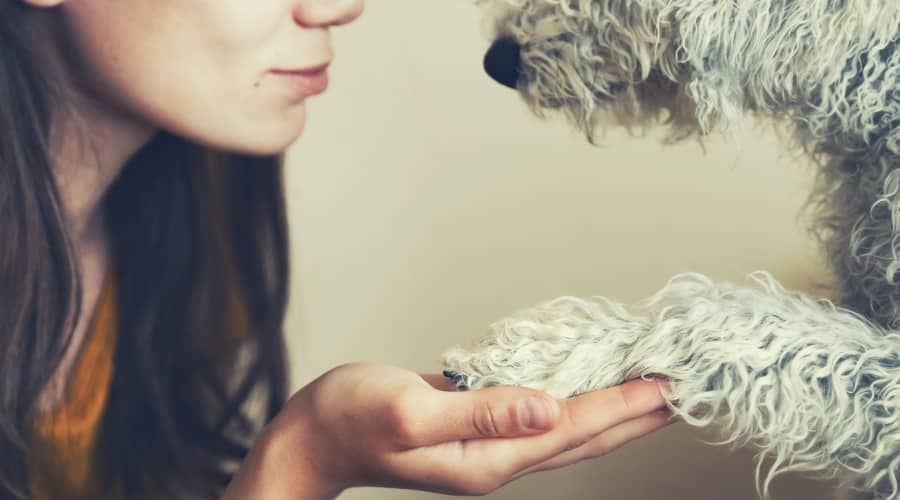
Then there’s something we can’t see ourselves: our scent.
When we’re stressed, the chemical makeup of our breath and sweat changes slightly. In a 2022 study, researchers found that dogs could reliably distinguish samples collected before and after people experienced stress. Another study found that simply smelling human stress could even make dogs behave more cautiously during a problem-solving task.
Finally, your dog knows what’s normal for you.
Maybe you’re usually the first one out of bed, but today you haven’t moved. Maybe you normally greet them enthusiastically, but tonight you barely look up. Your dog has spent thousands of hours learning your routines, so even small changes can stand out.
They’re not reading your thoughts. They’re noticing patterns, and few animals spend more time studying the people they love than dogs do.
How Dogs Notice Something’s Different
Your dog may pick up on changes in:
- Body language: Slower movement, tense muscles, slumped posture, or unusual stillness
- Voice: A quieter tone, faster speech, crying, or less conversation than usual
- Routine: Staying in bed, skipping a walk, coming home late, or sitting somewhere unusual
- Scent: Subtle chemical changes in breath and sweat during stress
- Facial expressions: Changes around your eyes, mouth, gaze, and overall expression
The clue that gets your dog’s attention may be tiny: a slower walk, an unfamiliar tone, or the deeply suspicious fact that you are still in bed at noon.
Signs Your Dog May Be Trying To Comfort You
Your dog probably won’t hand you a box of tissues or tell you everything will be okay. Instead, comfort usually shows up in small, everyday behaviors that are easy to overlook because they feel so ordinary.
None of these behaviors proves that your dog is deliberately trying to cheer you up. The better clue is whether an ordinary habit changes in timing, intensity, or tone when you are having a difficult day.
1. They Quietly Become Your Shadow
One of the first things many owners notice is that their dog simply refuses to be far away.
Instead of napping in another room or doing their usual rounds of the house, they start following you almost everywhere. Not in an excited, “Let’s play!” kind of way, but quietly, almost like they’re checking in.
You might notice your dog:
- Following you from room to room
- Lying outside the bathroom door
- Waiting outside the bedroom instead of wandering off
- Choosing to nap wherever you are
- Staying close without asking for attention
This behavior isn’t necessarily a sign of separation anxiety. The difference is what happens once they’ve found you.
A dog that’s trying to comfort you is often perfectly content just being nearby. They’re not whining, pacing, or demanding interaction. They’ve simply decided that, for whatever reason, today you’re the place they want to be.
Behaviorists sometimes call this social monitoring — the simple act of keeping a closer eye on someone who seems off.
🐾 What Owners Notice
- “He followed me everywhere after I got home from the hospital.”
- “She stayed outside the bathroom every time I went in after I’d been crying.”
- “Normally he sleeps downstairs, but when I was sick he spent the whole day beside my bed.”
2. They Rest Their Head On You
Sometimes the smallest gesture says the most.
If you’ve ever been upset and your dog quietly rested their head on your knee, lap, arm, or even your foot, you’ve experienced one of the gentlest ways dogs seek connection. It’s calm and quiet, asking almost nothing in return.
Unlike pawing at you, barking, or dropping a toy in your lap, this behavior isn’t demanding your attention. It’s simply physical contact.
Researchers have found that gentle touch plays an important role in strengthening the bond between dogs and their owners.
Physical contact can help both species feel more relaxed, and positive interactions between people and their dogs have even been shown to increase levels of oxytocin, the hormone often associated with social bonding.
When your dog rests their head on you during a difficult moment, they may be doing something similar to what close companions often do with each other: offering quiet presence instead of trying to solve the problem.
You might notice this behavior when you’re:
- Crying or visibly upset
- Feeling sick on the couch or in bed
- Recovering after surgery or an illness
- Sitting quietly after a stressful day
- Feeling anxious or overwhelmed
Dogs also rest their heads on people because they are tired, affectionate, or very aware that this position often unlocks ear scratches.
What makes the gesture stand out during a difficult moment is its restraint: your dog makes contact, settles their weight, and waits for you to decide what happens next.
3. They Lean Against You
Some dogs don’t just sit beside you—they become your personal weighted blanket.
Maybe they press against your leg while you’re standing in the kitchen. Maybe they squeeze in against your hip on the couch. Or perhaps they perform the classic full-body flop, somehow managing to make 70 pounds feel like 700.
Leaning is a common social behavior in many dogs. By putting part of their body against yours, they’re maintaining close physical contact while staying relaxed. It’s another way they can stay connected without asking anything of you.
When owners describe a comforting dog, they often say things like:
- “He leaned against me the entire time.”
- “She wouldn’t stop pressing into my leg.”
- “He curled up so close we were practically sharing the same seat.”
That extra contact may feel comforting for you, too. Research suggests that positive physical interaction between dogs and their owners can strengthen the human-animal bond and promote feelings of relaxation, making these quiet moments meaningful for both ends of the leash.
Some dogs lean because they enjoy affection. Others appear to have signed a lifelong objection to personal space. During an emotional moment, however, leaning offers something head-resting does not: steady body pressure.
That pressure can make the interaction feel grounding for both of you, even when your dog has also claimed most of the couch and temporarily disabled one of your legs.
4. They Keep Checking On You
Not every comforting dog stays glued to your side.
Some become quiet little wellness inspectors, checking in throughout the day before wandering off again.
You might notice your dog:
- Poking their head into the room every so often
- Watching you from across the room
- Making more eye contact than usual
- Walking over for a quick sniff or gentle nudge
- Returning every few minutes to see what you’re doing
The difference between a shadow and a check-in is that this dog leaves. They wander back to the window, investigate the kitchen, or resume whatever highly classified activity was happening in the hallway, then return to reassess you.
Those repeated visits suggest that your dog has not merely chosen a comfortable sleeping spot. You have remained on their mental checklist.
It’s a bit like living with a furry roommate who keeps peeking in just to make sure their favorite person is still okay.
5. They Bring You Their Favorite Toy (Or Something Even Stranger)
Sometimes your dog decides the best way to help is by presenting you with their greatest treasure.
To you, it’s a slobbery tennis ball, a ragged stuffed squirrel, or the sock that disappeared three days ago. Your first thought is probably, “Thanks, but what am I supposed to do with this?”
To your dog, it may be much more meaningful.
Many dogs naturally share valuable objects with people they trust. Bringing an object is often an invitation to interact. But dogs do not distribute all possessions equally.
The battered toy they sleep with, guard from the vacuum, and rescue from the laundry basket carries more social weight than the squeaky avocado they met six minutes ago.
A dog who drops a tennis ball at your feet every evening at 6:00 p.m. probably just wants to play fetch. But if they gently bring you their favorite toy while you’re crying on the couch or recovering from the flu, the behavior can take on a different meaning.
It’s as if they’re saying, “This always makes me feel better. Maybe it will help you, too.”
Of course, we can’t know for sure whether your dog intends the toy as comfort, distraction, or an emergency prescription for fetch. What matters here is that they chose to bring something from their world into yours.
Do You Recognize One?
Has your dog ever tried to comfort you by:
- Following you from room to room
- Resting their head or body against you
- Checking on you throughout the day
- Bringing you a favorite toy
- Sitting nearby without asking for anything
Or does your dog have a completely different emotional-support strategy—possibly involving a sock, a tennis ball, or all 75 pounds of their body? Tell us what they do in the comments.
6. They Lick You More Than Usual
A dog who greets you with a full facial car wash is sending a very different message from one who gives your hand two slow licks and settles beside you.
Licking may serve several social purposes, but the pace and intensity often offer the better clue:
- A few slow, gentle licks can appear during quieter moments of affection or tension.
- Fast, enthusiastic licking often occurs during greetings or when excited.
- Persistent nudging and licking may be a request for food, attention, or interaction.
During emotional moments, licking often becomes remarkably gentle and unhurried. Instead of showering you with kisses, your dog may give your hand a few soft licks before settling beside you.
Many behaviorists believe licking can function as an appeasement behavior — a way of easing social tension rather than creating excitement.
Puppies begin using licking as part of their earliest social interactions with their mothers and littermates, so it’s a behavior that’s deeply woven into canine communication.
7. They Match Your Mood Instead Of Their Own
Some dogs seem to have an uncanny ability to read the room.
Normally, they might be:
- Zooming through the house
- Dropping toys at your feet
- Bouncing around at full speed
But on the days you’re feeling down, that same dog may become:
- Quieter
- Slower
- Content to simply lie beside you
It’s almost as if they’ve decided today isn’t a zoomies kind of day.
Animal behaviorists sometimes refer to this as behavioral synchronization. Social animals often adjust their behavior to fit the emotional “temperature” of the group, and dogs are especially good at syncing their routines with the people they live with.
That doesn’t mean every energetic dog suddenly turns into a meditation instructor. Some dogs will still wag their tails, ask to go outside, or bring you a toy. But many seem to dial their own energy up or down depending on what’s happening around them.
If you’ve ever looked at your normally goofy dog and thought, “You’re being unusually gentle today,” you may have been seeing this subtle adjustment in action.
8. They Sit Beside You Without Asking For Anything
Sometimes the most meaningful thing your dog does is almost nothing at all.
Instead of pawing at you, barking, or dropping a toy in your lap, they simply choose the spot next to you and stay there.
You might notice them:
- Curling up beside you on the couch
- Lying at your feet while you work
- Sleeping next to your bed instead of their usual spot
- Resting quietly nearby without expecting attention
Humans often feel compelled to fill silence. Dogs are far less bothered by it.
They don’t need an explanation for why you’re lying under a blanket at 2:00 p.m., and they don’t ask whether you want to talk about it. They may not even require petting.
A dog who normally spends the afternoon conducting neighborhood surveillance may quietly abandon the squirrel beat and settle at your feet instead.
9. They Become More Watchful Or Protective
Some dogs respond to a difficult day by becoming a little more alert than usual.
Instead of sleeping through every sound, they may lift their head when someone walks past the house, position themselves between you and the front door, or keep a closer eye on unfamiliar visitors.
You might notice your dog:
- Lying where they can watch both you and the room
- Following you to the door when someone knocks
- Barking at unusual noises they normally ignore
- Staying nearby when strangers are around
This doesn’t necessarily mean your dog thinks you’re in danger. Often, the shift is more subtle: they choose a position that lets them monitor both you and the environment.
A dog who normally sleeps belly-up in the middle of the floor may suddenly face the doorway, react faster to footsteps, or place themselves between you and a visitor. That is increased vigilance, not automatically aggression, fear, or guarding.
If the watchfulness escalates into stiff posture, growling, blocking access, or distress around other people, it has moved beyond the gentle “security detail” described here.
10. They Seem To Know When You’re Sick
Many owners have a story like this.
Before they even took a COVID test, their dog wouldn’t leave their side. During a bad migraine, their usually playful companion spent the entire afternoon in bed with them. After surgery, their dog became unusually gentle for days.
While it can feel almost supernatural, dogs have access to clues we don’t.
Illness can alter how a person smells, moves, breathes, sleeps, and interacts. A household dog does not need to identify the disease to recognize that its familiar person is behaving differently.
Specially trained medical-alert dogs take this ability much further. Depending on their training, they may learn to respond to specific changes associated with conditions such as low blood sugar or impending seizures.
That trained detection should not be confused with a pet dog becoming unusually attentive while you have the flu.
Your dog may not know what a migraine is or why you came home from surgery moving like every joint has filed a formal complaint. They only know that today’s version of you does not match yesterday’s.
Why Some Dogs Seem More Emotionally Tuned In Than Others
If you’ve read this list and thought, “My dog does every single one of these,” while someone else is thinking, “Mine just stole my sandwich while I was crying,” you’re not alone.
Not every dog responds to human emotions in the same way. Several factors influence how expressive a dog may be, including:
- Breed tendencies. Some breeds were developed to work closely alongside people, while others were bred to be more independent.
- Individual personality. Just like people, some dogs are naturally more observant, affectionate, or sensitive than others.
- Upbringing and socialization. Dogs raised with plenty of positive human interaction often become especially skilled at reading the people around them.
- The strength of your bond. A dog that has shared years of daily routines with you has had plenty of time to learn your habits and recognize when something feels different.
- Simple observation. Some dogs seem to notice everything, from the sound of your car turning onto the street to the suitcase you quietly pulled out of the closet.
These influences overlap in unpredictable ways. A people-focused working breed may be highly observant but not especially cuddly. A supposedly independent dog may become the household’s most reliable emotional barometer.
Two dogs raised by the same family can react to tears as differently as two relatives at an awkward wedding.
Responsiveness is not a love ranking. It’s a mix of temperament, experience, confidence, and the particular habits a dog has developed with one person.
That doesn’t mean one dog loves their owner more than another.
Every dog expresses attachment differently. One may lean against your leg. Another may quietly lie at your feet. A third may decide the appropriate response is to bring you their oldest, slobberiest tennis ball.
The behavior may look different, but the bond behind it can be just as strong.
When Comforting Behavior Might Signal Something Else
Most of the behaviors in this article are completely normal.
A dog that stays close while you’re sick, curls up beside you after a stressful day, or seems a little gentler when you’re upset is usually just showing the bond you’ve built together.
What’s more concerning is a sudden, lasting change in your dog’s behavior, especially if it isn’t tied to anything happening in your life.
It’s worth talking to your veterinarian if your dog suddenly becomes:
- Extremely clingy for days or weeks
- Unusually anxious or restless
- Confused or disoriented
- Noticeably different in personality
- More vocal than usual
- Less interested in eating, playing, or interacting
These changes don’t necessarily mean something is wrong, but they can sometimes accompany pain, cognitive changes, illness, or other medical conditions that deserve a closer look.
The sooner you identify an underlying problem, the more treatment options may be available.
Pet Insurance Can Help With The Unexpected
Every dog owner hopes a behavior change turns out to be nothing serious. But if it isn’t, getting answers shouldn’t have to wait on your finances. A veterinary exam, blood work, imaging, and follow-up testing can add up quickly.
However, pet insurance can help cover eligible costs when an unexpected illness or injury requires diagnosis and treatment. Explore our guide to the best pet insurance providers to learn more.

Frequently Asked Questions
Every dog has their own way of showing affection, so it’s natural to wonder what certain behaviors really mean. Here are answers to a few common questions that didn’t fit elsewhere in the article. If you don’t see yours here, let us know in the comments.
Can Dogs Sense Panic Attacks Or Anxiety?
Some can. Research suggests that dogs can detect changes in human behavior, body language, and even scent during periods of stress.
That’s one reason psychiatric service dogs can be trained to recognize the early signs of panic attacks and interrupt them with specific tasks.
Most family dogs don’t have that level of training, but many owners notice their dogs becoming unusually attentive during anxious moments.
Do Dogs Comfort Other Dogs The Same Way They Comfort People?
Sometimes, but not always. Dogs often stay close to sick or injured canine companions, engage in gentle social behaviors, or avoid bothering a dog that isn’t feeling well.
However, canine relationships differ from human-dog relationships, so a dog may respond very differently to another dog than to their favorite person.
Why Does My Dog Ignore Me When I’m Upset?
It doesn’t necessarily mean they don’t care. Some dogs respond to emotional situations by giving people space instead of moving closer.
Others may feel unsure because crying, raised voices, or unusual behavior doesn’t fit their normal routine. Personality, past experiences, and confidence all influence how an individual dog reacts.
Can You Encourage A Dog To Be More Affectionate?
You can encourage trust, but you can’t force a particular style of affection.
Dogs are individuals. Some naturally lean against you or curl up on the couch, while others prefer to stay nearby without much physical contact.
Building a strong bond through positive training, play, predictable routines, and quality time is far more effective than trying to teach a dog to cuddle.
Do Older Dogs Become More Emotionally Attuned?
Many owners think so, and there’s a good reason for it.
An older dog has often spent thousands of hours watching the same person. Over the years, they’ve learned your routines, habits, and daily patterns exceptionally well.
While age doesn’t automatically make dogs more empathetic, that long history together can make subtle changes easier for them to notice.
Is It Possible To Misread My Dog’s Behavior?
Absolutely.
One behavior can have several different meanings depending on the situation. A dog may lean against you because they’re comforting you, because they enjoy being close, or because they’re hoping you’ll scratch behind their ears.
Rather than focusing on one isolated behavior, look for patterns. When several comforting behaviors appear together during times you’re sick, stressed, or upset, they paint a much clearer picture than any single action alone.
Your Dog Has Been Talking This Whole Time
Once you start noticing how your dog uses proximity, touch, eye contact, and even suspiciously damp tennis balls to connect with you, many of their other habits begin to look less random.
Keep decoding those quiet little messages:
What does your dog do when you’re having a rough day? Do they quietly stay close, bring you their favorite toy, or attempt emergency emotional support by sitting directly on top of you? Tell us in the comments.