





Pugs are described as a lot of dog in a small package, and nowhere is that truer than at mealtimes. They eat with a commitment that would be impressive in a dog three times their size. The problem is they’re not three times their size — they’re a compact 6–9kg dog with a flat face, compressed airways, and a skeletal structure that handles extra weight very badly.
Obesity in Pugs isn’t just a cosmetic issue. The breed already deals with brachycephalic airway syndrome, meaning their breathing is structurally compromised. Extra fat around the chest and neck makes that significantly worse. Add the pressure excess weight puts on their already short legs and curved spine, and you have a dog heading toward breathing problems, joint pain, and spinal issues years ahead of schedule.
This Pug feeding chart is written with that biology in mind. The right portions at every age, the foods that work for the breed in India, and the habits that actually keep a Pug lean long-term.
The Pug Weight Problem Is Bigger Than Most Owners Realise
According to the Association for Pet Obesity Prevention (https://petobesityprevention.org/), over 50% of dogs in developed countries are overweight or obese, with brachycephalic breeds like Pugs disproportionately represented. Indian data is limited, but veterinary clinics in major Indian cities report Pugs as one of the breeds most frequently presenting with obesity-related conditions.
The breed’s flat face and large, expressive eyes make portion-control guilt very real. A Pug asking for more food looks genuinely pitiful in a way most breeds can’t manage. That’s the trap. A well-fed Pug acts hungry because the breed is food-motivated, not because the portions are inadequate.
Fixed portions, fixed times, and zero table scraps are the three rules that keep most Indian Pugs at a healthy weight. Everything else is detail.
Pug Feeding Chart by Age
Quantities below are for dry commercial kibble. Home-cooked portions are covered separately.
Puppy Stage: 2 Months to 12 Months
| Age | Daily Meals | Approx. Daily Quantity (Dry Food) |
| 2–3 months | 4 meals | 60–90g |
| 3–6 months | 3 meals | 90–120g |
| 6–9 months | 3 meals | 110–140g |
| 9–12 months | 2–3 meals | 130–160g |
Pug puppies are small even by toy breed standards. The 4-meal schedule at 2–3 months is important — their stomachs can’t handle larger portions without bloating or diarrhoea, and spreading the daily quantity across four meals prevents both. Weigh the food rather than estimating visually. At these quantities, a 10-gram error per meal adds up.
Adult Stage: 1 Year to 7 Years
| Weight of Dog | Daily Dry Food (Low Activity) | Daily Dry Food (Moderate Activity) |
| 6–7 kg | 120–145g | 155–175g |
| 7–8 kg | 140–165g | 170–195g |
| 8–9 kg | 155–180g | 185–210g |
There is no high-activity column here deliberately. Most Pugs are low-to-moderate activity dogs, and treating them as high-activity dogs with larger portions is one of the most common feeding mistakes the breed’s owners make. A Pug that goes on two 15-minute walks a day is a moderate activity dog. Adjust only if the dog is genuinely active for extended periods, which is uncommon due to the breed’s breathing limitations.
Neutered and spayed Pugs should be at the lower end of whichever range applies, and monitored closely. The breed is already metabolically efficient; desexing compounds that.
Senior Stage: 7 Years and Above
| Age | Daily Dry Food | Notes |
| 7–9 years | 120–150g | Reduce if mobility has declined |
| 9+ years | 100–135g | Senior formula recommended; split into 2–3 meals |
Senior Pugs slow down considerably, and their breathing often becomes more laboured with age. Extra weight on a 9-year-old Pug is genuinely dangerous — it restricts already-compromised airways and strains the heart. This is the life stage where portion discipline matters the most, even when the dog seems fine.
What to Feed a Pug in India
Kibble
A good commercial small-breed kibble is the most practical choice for most Indian Pug owners. Small-breed formulas are calorie-dense per gram compared to large-breed food, so double-check that you’re using the portion guidelines for your dog’s actual weight rather than defaults.
Because Pugs eat fast and tend to inhale air while eating — which worsens bloating and gas, a significant issue for flat-faced breeds:
Recommended: Himalayan Yak Cheese Stick Chews (6-Hour Long-Lasting)
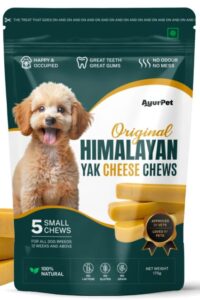
These long-lasting chews slow the eating impulse down, provide dental benefits, and are far lower in calories than standard commercial treats. For a breed that needs constant feeding stimulation managed, they’re genuinely useful.
Home-Cooked Meals
Pugs do well on home-cooked food with careful portion control. The key difference from larger breeds: Pug portions are small enough that the composition of each meal matters more. Getting the protein-to-carb ratio wrong on a 150g daily meal has more impact than it would on a 400g meal.
A working structure for an adult Pug’s daily home-cooked meal:
- Protein (40–45%): Boiled chicken, scrambled or boiled eggs (1 egg per day maximum), small amounts of fish like rohu
- Carbohydrates (35–40%): Plain rice is the easiest and most digestible; small amounts of sweet potato work well
- Vegetables (15–20%): Pumpkin, carrots, spinach, beetroot; absolutely no onion, garlic, or grapes
- Fat: A small drizzle of coconut oil or a fish oil capsule 2–3 times per week
Pugs are more prone to food allergies than many breeds. If your dog develops recurring ear infections, paw licking, or skin redness, a protein source change — switching from chicken to fish, for example — is worth trying before assuming a medical cause.
Flat Face and Fast Eating: A Real Problem
Brachycephalic dogs eat differently from normal-faced breeds. They can’t pick up food cleanly, swallow more air per mouthful, and are at higher risk for bloating and gas. This isn’t a discipline problem — it’s anatomy.
A slow feeder bowl or a lick mat makes a significant difference for Pug mealtimes. It extends the eating time, reduces air ingestion, and decreases post-meal bloating.
Recommended: Joansan Dog Puzzle Toys
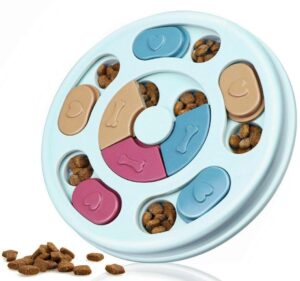
Using a treat puzzle for part of the daily food allowance slows consumption significantly and adds mental stimulation that Pugs genuinely need. Mentally occupied Pugs beg less and sleep better.
Keeping a Pug Lean: The Practical Habits
No table scraps, ever. Indian households are often generous with food, and a Pug is skilled at working a room. The tadka-heavy cooking most Indian households produce is also genuinely harmful. Onion and garlic, even cooked, damage red blood cells in dogs.
Treat budget. Training treats count toward the daily caloric intake, not alongside it. A Pug doing daily training sessions can easily double their calorie intake through treats if that isn’t managed. Use tiny pieces — a pea-sized portion is genuinely sufficient for reward-based training with this breed.
Exercise within limits. Pugs need daily movement, but they overheat quickly and shouldn’t be exercised hard in India’s summer heat. Two short walks a day — 15 minutes each — in the early morning and evening is more appropriate than a single long walk in variable weather. Watch for labored breathing or open-mouth panting as signs to stop immediately.
How to Read Your Pug’s Weight
The rib test: Place both hands on the dog’s ribcage and press gently. You should feel each rib with light pressure and minimal fat covering. If the ribs are easy to see, the dog is underweight. If you can’t feel them without pressing through a layer of softness, the dog is overweight.
Looking from above: A healthy Pug at the right weight should have a slight hourglass shape — a visible narrowing behind the ribcage. If the view from above is a uniform oval or rectangle, that’s excess weight.
Pugs can look healthy to untrained eyes even when significantly overweight because the breed’s body shape normalizes roundness. The rib test is the only reliable tool.
Conclusion
Managing a Pug feeding chart is really about managing one of the breed’s most challenging traits: an appetite that never turns off. The portions here are starting points — run the rib test monthly, adjust if the condition is drifting, and treat the daily food budget as non-negotiable rather than a rough guideline. A lean Pug breathes better, moves better, and lives longer. The investment in discipline at mealtimes pays off in quality of life in ways that are genuinely visible.
FAQs
My Pug begs constantly even right after meals. Is that normal?
Yes. Pugs are bred to live closely with humans, and food-seeking behavior around people is deeply ingrained. Post-meal begging doesn’t mean the portion was insufficient. Ignore it consistently — giving in even occasionally teaches the dog that begging works, which makes it harder to stop.
Can I feed my Pug curd or paneer?
Plain, unsweetened curd in small amounts (a tablespoon) is fine and many Indian Pugs tolerate it well. Paneer in small quantities is also okay. Neither should be a regular part of the diet since they’re high in fat relative to a Pug’s small daily caloric allowance. Avoid anything with salt or spice added.
How much water should a Pug drink each day?
A rough guideline is 50ml per kilogram of body weight — so around 350–450ml for a 7–9kg Pug. Flat-faced dogs already have higher-effort breathing and can dehydrate faster than owners expect in Indian heat. Fresh water should always be available.
At what age do Pugs typically start gaining weight without obvious cause?
Around 3–4 years, as activity levels start declining and metabolism slows. This is the most common window where owners notice their Pug gradually getting rounder without obvious dietary changes. A small portion reduction — 10–15g per day — at this stage prevents the weight from accumulating.
Should I feed my Pug twice or three times a day?
Twice a day works well for most adult Pugs. Three smaller meals is a better option for Pugs that eat too fast, develop post-meal gas, or have had any history of digestive issues. The total daily quantity stays the same — you’re just dividing it differently.