

As an Amazon Associate I earn from qualifying purchases. Learn More
Updated July 2026
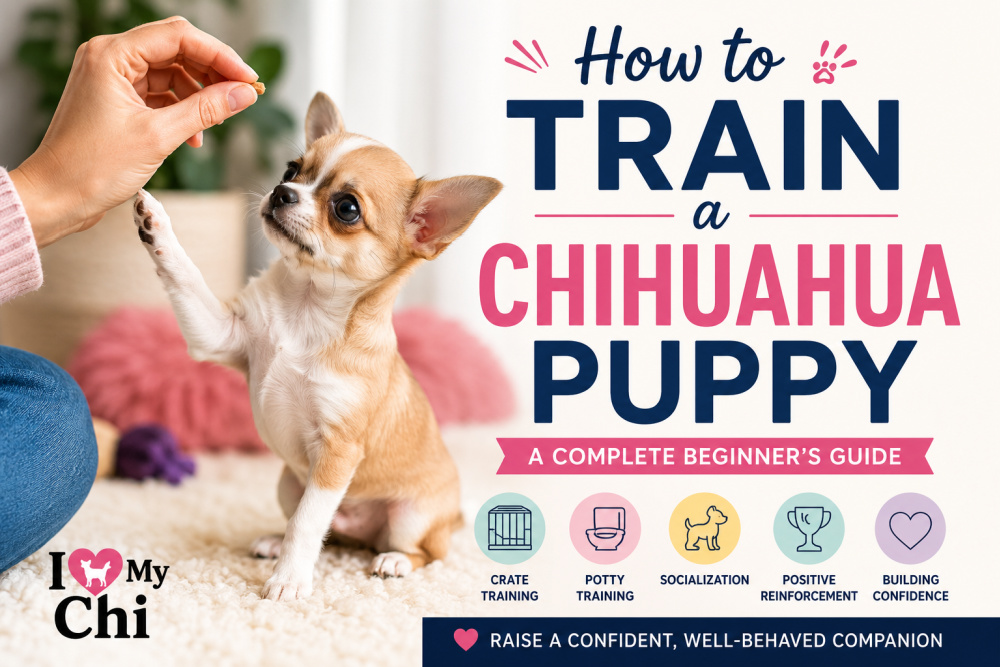
Bringing home a Chihuahua puppy is exciting, heartwarming, and maybe just a little overwhelming. One minute they’re curled up in your lap looking adorable, and the next they’re chewing your shoelaces, having zoomies around the living room, or leaving a surprise on the carpet.
If you’re wondering whether you’re doing everything right, you’re not alone. Every Chihuahua owner has been there.
The good news is that Chihuahuas are intelligent little dogs who are capable of learning far more than many people give them credit for. With patience, consistency, and plenty of positive reinforcement, you can help your puppy grow into a happy, confident, well-behaved companion.
Let’s look at the best ways to get your Chihuahua started on the right paw.
Start Training on Day One
One of the biggest mistakes new puppy owners make is waiting until their puppy is “old enough” to begin training.
Training actually starts the moment your puppy comes home.
That doesn’t mean expecting a tiny eight-week-old puppy to master complicated commands. Instead, begin teaching simple routines and habits right away.
Your puppy can start learning:
- Their name
- Where to sleep
- Where to potty
- Household rules
- Gentle handling
- Basic manners
The earlier you begin, the easier it will be for both of you.
Keep Training Sessions Short
Young puppies have very short attention spans.
Instead of one long training session, aim for several short sessions throughout the day. Five minutes is often plenty for a young Chihuahua puppy.
Always end on a positive note. If your puppy successfully performs a command, praise them, offer a small treat, and finish the session while they’re still having fun.
Leaving them wanting more helps keep training enjoyable.
Use Positive Reinforcement
Modern dog training focuses on rewarding the behaviors you want instead of punishing mistakes.
Every time your puppy does something correctly, immediately reward them with:
- Tiny training treats
- Happy praise
- Petting
- Playtime
- A favorite toy
Your puppy will quickly learn that good choices lead to wonderful things.
Avoid yelling, hitting, or rubbing your puppy’s nose in accidents. Those methods don’t teach the right behavior and can damage your puppy’s trust and confidence.
Be Consistent
Consistency is one of the most important parts of training.
If jumping on the couch is allowed one day but not the next, your puppy will become confused.
Everyone in the household should follow the same rules and use the same commands.
For example:
- Sit means Sit.
- Down means Down.
- Off means get off the furniture.
Using different words for the same command only slows learning.
Teach Basic Commands First
Once your puppy is comfortable in their new home, begin teaching a few simple commands.
Start with:
- Sit
- Come
- Down
- Stay
- Leave It
- Drop It
Keep things fun and reward every success.
Remember that puppies are still babies. They won’t be perfect overnight, and that’s okay.
Teach Your Puppy Their Name
Your Chihuahua’s name should always be associated with positive experiences.
Say their name in a cheerful voice.
When they look at you, reward them immediately.
Repeat this several times each day until your puppy automatically looks toward you whenever they hear their name.
This simple exercise lays the foundation for excellent recall later.
Crate Training Can Make Life Easier
Many people worry that crates are cruel, but when introduced correctly, a crate becomes your puppy’s safe, cozy bedroom.
Choose a crate that’s large enough for your puppy to stand, turn around, and lie down comfortably—but not so large that they can sleep in one corner and use another as a bathroom.
Help your puppy enjoy their crate by:
- Feeding meals inside it
- Hiding treats inside
- Offering safe chew toys
- Leaving the door open during the day
- Never using the crate as punishment
A puppy who loves their crate often adjusts more quickly to house training and learns to relax when left alone.
Focus on House Training
House training deserves plenty of attention, but it’s such an important topic that I’ve written an entire guide devoted to it.
The basics include:
- Take your puppy outside frequently.
- Praise immediately after they potty outside.
- Follow a consistent schedule.
- Supervise closely indoors.
- Expect accidents—they’re part of the learning process.
Remember that very young puppies simply don’t have full bladder control yet. Patience is key.
Puppy Biting Is Normal
Nearly every puppy goes through a biting phase.
They’re exploring the world with their mouths, teething, and learning bite inhibition.
If your puppy starts nipping:
- Offer an appropriate chew toy.
- Redirect them to something they are allowed to chew.
- End rough play if biting continues.
- Reward calm, gentle behavior.
Avoid encouraging wrestling games that teach your puppy it’s okay to bite hands.
Fortunately, most puppy biting improves significantly once teething is complete.
Socialize Your Chihuahua Puppy
One of the greatest gifts you can give your Chihuahua is positive socialization.
Many adult Chihuahuas become fearful simply because they weren’t exposed to enough new experiences during puppyhood.
Introduce your puppy—at a pace they’re comfortable with—to:
- Friendly adults
- Gentle children
- Other vaccinated, friendly dogs
- Car rides
- Veterinary visits
- Grooming appointments
- Different sounds
- Umbrellas
- Bicycles
- Vacuum cleaners
- Different walking surfaces
- People wearing hats or sunglasses
Always make these experiences positive.
If your puppy seems frightened, don’t force the interaction. Give them space and let them build confidence gradually.
Handle Your Puppy Every Day
Get your Chihuahua used to being gently handled while they’re young.
Touch:
- Their paws
- Their ears
- Their tail
- Their mouth
- Their nails
Offer praise and treats while doing so.
This makes future nail trims, grooming appointments, and veterinary exams much less stressful.
Provide Plenty of Mental Stimulation
Training isn’t the only way to tire out an energetic puppy.
Mental exercise is just as important.
Try offering:
- Puzzle toys
- Stuffed Kongs
- Snuffle mats
- Lick mats
- Hide-and-seek games
- Short scent games
A mentally stimulated puppy is often a happier, calmer puppy.
Teach Calmness
Many owners accidentally reward excitement without realizing it.
If you immediately pick up your puppy every time they bark, whine, or jump, they may learn that those behaviors get your attention.
Instead, reward calm behavior.
Praise your puppy when they’re:
- Relaxing quietly
- Sitting politely
- Waiting patiently
- Settling on their bed
Teaching calmness early can help reduce unwanted barking and overexcitement later.
Common Puppy Training Mistakes
Even experienced dog owners make mistakes. Here are a few to avoid.
- Expecting too much too soon
- Being inconsistent with household rules
- Punishing accidents
- Skipping socialization
- Training for too long
- Forgetting to reward good behavior
- Accidentally rewarding barking
- Allowing unsafe jumping from furniture
- Giving up after a few unsuccessful attempts
Remember, progress is rarely a straight line.
Some days your puppy will seem to forget everything they’ve learned. That’s completely normal.
A Simple Training Timeline
8–10 Weeks
- Learn their name
- Begin house training
- Start crate training
- Gentle handling exercises

10–12 Weeks
- Sit
- Come
- Introduce the leash
- Continue socialization
3–4 Months
- Stay
- Leave It
- Drop It
- Build confidence around new experiences
5–6 Months
- Loose leash walking
- Better recall
- Impulse control
- Continue practicing all previous skills
Remember that every puppy develops at their own pace. Use this timeline as a guide, not a strict schedule.
Final Thoughts
Training your Chihuahua puppy isn’t about creating a perfectly obedient dog overnight. It’s about building a relationship based on trust, consistency, and positive experiences.
Celebrate the small victories along the way. Every successful potty trip outside, every “sit,” and every calm greeting is a step toward raising a confident, well-mannered companion.
The time and patience you invest during these first few months will pay off for years to come. Before you know it, that tiny bundle of energy will grow into a loyal best friend who knows exactly what’s expected—and loves learning from you.
Frequently Asked Questions
When should I start training my Chihuahua puppy?
You can begin training as soon as you bring your puppy home. Start with simple routines, their name, house training, and basic manners.
Are Chihuahuas easy to train?
Yes! Chihuahuas are intelligent dogs, but they can also be independent. Positive reinforcement, patience, and consistency go a long way.
How long should puppy training sessions be?
For young puppies, keep sessions to about 3–5 minutes several times a day. Short, fun sessions are much more effective than long ones.
Should I use puppy pads?
Puppy pads can be useful in some situations, but if your long-term goal is for your Chihuahua to potty outside, it’s best to establish that routine as early as possible whenever practical.
Can older Chihuahuas still be trained?
Absolutely. While puppies often learn more quickly, adult Chihuahuas can learn new commands and behaviors with patience and positive reinforcement.
How long does it take to train a Chihuahua puppy?
Every puppy is different. Some behaviors can be learned within a few days, while others take weeks or months of consistent practice. The key is to stay patient and keep training fun.
Getting Your Puppy Settled In


Pet Blogger
I have had dogs all my life. I have been a pet groomer, worked in a pet hotel, and a kennel, and have bred and showed dogs.
Post Views: 6,127