







What finally helped my Cocker Spaniel’s chronic itching wasn’t one miracle product. It was a long-term combination of allergy immunotherapy shots, veterinary dermatology care, therapeutic bathing, skin barrier support, proactive ear management, and reducing environmental allergen exposure.
Before we got there, we had already tried blood allergy testing, food sensitivity testing, allergy drops, supplements, diet changes, itch relief chews, and home management strategies. Here’s what actually helped Alvin, what didn’t, and what I wish I had known sooner about chronic allergies in Cocker Spaniels and dogs in general.
Quick Answer: What Helped My Cocker Spaniel’s Chronic Itching? What helped my Cocker Spaniel’s chronic itching most was a combination of allergy immunotherapy shots, veterinary dermatology care, therapeutic bathing, proactive ear care, environmental allergen management, and long-term skin barrier support. Chronic itching in dogs is often more complex than “just allergies” and may involve secondary yeast infections, inflammation, environmental triggers, and breed-specific factors, all of which require layered management over time.
What Alvin’s Chronic Itching Looked Like
Chronic itching in Cocker Spaniels often involves much more than occasional scratching. In Alvin’s case, his symptoms included paw licking, inflamed skin, some ear irritation, flare-ups after being outdoors, and ongoing inflammation in different spots of his skin that became increasingly difficult to manage with routine care alone.
After seeking professional help with a board-certified veterinary dermatologist, Alvin was eventually diagnosed with:
Here’s what Alvin dealt with on a regular basis: chewing the back section of his outer thigh, chewing under his armpits, and licking the tops of his paws. None of his symptoms were strictly seasonal, but spring and summer consistently made things worse, as did carpeting at hotels during our travels.
One of the biggest things I learned is that chronic itching in dogs is often far more complicated than it first appears. Environmental allergies can trigger inflammation, but secondary yeast and bacterial infections can intensify itching dramatically. And in Cocker Spaniels especially, ears, skin, inflammation, and allergies are often deeply connected.
Some of the links in this article are affiliate links. As an Amazon Associate, I earn from qualifying purchases. I am also an Etsy and Chewy affiliate.
Why Do More Dogs Seem to Have Allergies?
Environmental allergies in dogs appear to be increasing, and more pet parents than ever are searching for answers about chronic itching, inflamed paws, recurrent ear infections, and seasonal flare-ups.
According to AVMA, between 2008 and 2018, there was a 30% increase in cases of dogs with environmental allergies. Vetster also reports that searches for, “What can I give my dog for allergies” generate thousands of searches every month in the United States alone.
Honestly, that doesn’t surprise me.
“Though patterns in allergy cases vary by climate and location, most environmental allergies are seen in the early spring and late fall, with a few that are more prominent in the winter months,” Dr. Jo Myers, a veterinarian with Vetster, told me. “It is also possible for dogs to have multiple seasonal allergies that cause unpleasant symptoms year-round.”
As a dog writer, pet industry pro, and lifelong dog mama, I’ve watched more dog moms and dads struggle with:
- chronic itching
- ear inflammation
- skin irritation
- environmental triggers
- seasonal allergies
- ongoing flare-ups that seem difficult to fully control
I’ve had itchy Cocker Spaniels before Alvin, so when his symptoms first started, I honestly thought, “Okay, we’ll manage this like I always have.”
So Alvin wore lightweight tops or pj’s around the house for comfort, warmth, but also to stop the incessant scratching at certain parts of his body.
But over time, it became obvious this wasn’t just occasional seasonal itching. The paw licking became more constant. The flare-ups became more layered. The ears became part of the cycle too. And it felt like more dog parents around me were saying the exact same thing about their own dogs.
Fun Fact: The skin is the largest organ in the body, which is why it is very important to care for it properly.
What We Tried Before Seeing a Veterinary Dermatologist
Seeing a board-certified veterinary dermatologist was not our first step. Before scheduling with a specialist, we had already tried multiple allergy management approaches through our regular veterinarian and at home.
That included:
- blood allergy testing
- food sensitivity testing
- allergy drops
- bathing routines
- supplements
- diet changes
- environmental management
- flea prevention
- symptom tracking over time
Because Alvin isn’t my first itchy dog, I already understood that allergy management usually requires patience and consistency. But his symptoms were becoming more persistent and layered, and I felt like we needed deeper answers.
Our Experience With Veterinary Blood Allergy Testing for Dogs
Before seeing a board-certified veterinary dermatologist, one of the first things we pursued was veterinary blood allergy testing through our regular veterinarian.
With this type of testing, blood is drawn at the vet’s office, sent to a laboratory, and later returned as a report showing possible environmental allergy reactions or sensitivities. Depending on the test, results may include grasses, pollens, molds, dust mites, trees, weeds, and other environmental triggers.
For us, it was an early step toward trying to better understand what might be contributing to Alvin’s chronic itching and inflammation.
One thing I learned throughout this process is that blood allergy testing in dogs can be somewhat controversial depending on who you ask. Some veterinarians feel it can provide useful information, while many veterinary dermatologists still consider intradermal skin testing the gold standard for identifying environmental allergy triggers.
Pros of Blood Allergy Testing for Dogs
- Less invasive than skin testing
- Blood can usually be drawn during a regular vet visit
- No shaving or sedation required in many cases
- May help identify potential environmental triggers
Cons of Blood Allergy Testing for Dogs
- Results can sometimes be inconsistent
- Positive results don’t always equal true clinical allergies
- Some veterinary dermatologists prefer intradermal testing instead
- It may not fully explain chronic itching on its own
In Alvin’s case, blood allergy testing helped point us toward environmental allergies, but it wasn’t the final piece of the puzzle.
Alvin’s blood testing showed reactions to dust mites, storage mites, cats, and molds. Here are three pages from his extensive blood testing results:



Our veterinarian recommended and ordered oral drops that would go under Alvin’s tongue every day. It isn’t hard, Alvin didn’t mind, but he started to know when it was time for drops…and he’d run away. Sometimes he would vomit afterwards. After a month, his itching became much worse, which can happen in the loading phase, and we decided not to continue this treatment plan.
Our Experience With Dr. Dodds Hemopet Food Sensitivity Testing
Because Alvin’s itching and inflammation were becoming increasingly persistent, I also explored Dr. Jean Dodds’ Hemopet NutriScan food sensitivity testing. I used the same food test with our Dexter, and had great benefit from the results.
Like many dog owners dealing with chronic allergies, I wanted to better understand whether food sensitivities might be contributing to the overall inflammation picture.
Hemopet involves purchasing a test kit, sending a sample of your dog’s saliva back (easy), and a few weeks later, you receive a report showing possible food sensitivities and reactivity levels like this: (your report will be more extensive; this is one of the pages from ours)

Alvin didn’t have any traditional food allergies, and I viewed the results as one more tool to help evaluate Alvin’s long-term allergy management plan rather than a definitive diagnosis on its own.
Pros of Food Sensitivity Testing for Dogs
- Non-invasive
- May help identify possible food patterns or sensitivities
- Gives owners additional information to discuss with their veterinarian
Cons of Food Sensitivity Testing for Dogs
- Some veterinarians question overall reliability
- Results may not reflect true clinical food allergies
- Elimination diet trials are still often considered the gold standard
In Alvin’s case, the testing became one part of a much larger allergy and inflammation conversation and not the entire answer by itself.
Note: I asked the members of Club Cocker, my active Facebook group, if anyone had ever tried the food allergy testing from Nutriscan, and there were several pet parents who expressed mixed results. Some said their veterinarian wasn’t convinced, others said it helped them greatly:
“I have used Nutriscan in the past with good results, but it is pricey.” ~ Melissa Webb
“ We did a NutriScan Food Intolerance test on our guy. We were giving him salmon oil to improve his skin/coat and he came back with ‘off the chart’ intolerant to salmon!” ~ Carol Thorntin Bovi
Why We Finally Saw a Board-Certified Veterinary Dermatologist
A veterinary dermatologist can identify secondary infections, skin barrier dysfunction, and inflammatory patterns that may be contributing to chronic itching in dogs. That deeper level of evaluation completely changed how I understood Alvin’s allergies.
At Alvin’s dermatology appointment, he underwent:
- skin cytology
- ear cytology
- video otoscopy
- environmental allergy testing
- detailed dermatology evaluation
His records also documented:
- chronic inflammation
- secondary bacterial involvement
- yeast overgrowth
- chronic ear irritation
- skin barrier dysfunction
What surprised me most was how much more comprehensive the conversation became. Instead of simply being told, “Your dog has allergies,” we had a long, honest discussion with the the dermatologist regarding:
- skin barrier repair
- inflammatory cycles
- environmental triggers
- secondary infections
- yeast overgrowth
- long-term allergy management
- breed predispositions in Cocker Spaniels
To quote our vet dermatologist, “Atopic dermatitis is a chronic incurable inflammatory disease that most often involves environmental allergies.”
Commonly affected areas include the underside of the body, as well as the ears, paws, and anal sacs, but any part of the body can be affected. Fewer dogs have allergic symptoms affecting the eyes and respiratory tract.
What Does a Veterinary Dermatologist Cost?
Veterinary dermatology is a specialty, and pricing varies by region and practice. At this particular pet allergy and dermatology practice in Pennsylvania, our initial consultation was approximately $[INSERT], which included:
- skin cytology
- ear cytology
- video otoscopy
- environmental allergy testing
- treatment planning
Ongoing management costs have included:
- allergy immunotherapy vials
- medicated shampoos and wipes
- ear medications
- supplements
- recheck visits
Yes, it adds up over time. This is a marathon, not a sprint, especially with an allergy-prone breed like a Cocker Spaniel.
Pet insurance helped us significantly. Depending on your plan, you may get reimbursement for specialty consultations, diagnostics, medications, and ongoing dermatology care. It is worth reviewing your policy carefully before your first appointment. We also have a savings account for Alvin’s emergency needs.
If cost is a concern:
- ask your regular veterinarian about referral options
- contact the dermatology practice about pricing ahead of time
- review your pet insurance policy carefully
- ask whether payment plans are available
Why Chronic Cocker Spaniel Itching Is More Complex Than “Just Allergies”
Chronic itching in Cocker Spaniels often involves multiple overlapping issues including environmental allergies, skin barrier dysfunction, yeast overgrowth, and chronic ear inflammation.
According to Christine McKinney, DVM, DACVD, Merck Animal Health Dermatology Specialist:, “In Cocker Spaniels, chronic itching is usually a combination of underlying allergic disease and secondary infections, abnormal ear and skin anatomy, impaired skin barrier function and sometimes breed-specific inflammatory changes.”
That explanation immediately resonated with me because it described Alvin’s situation almost perfectly.
Dr. McKinney also explained: “If we only call it allergies, we could risk missing the infections and structural factors that actually drive the cycle, resulting in treatment that fails to fully address the root cause and ongoing discomfort for the dog.”
That became one of the biggest mindset shifts for me personally. I stopped viewing Alvin’s itching as one isolated allergy issue and started understanding it as a chronic inflammatory cycle involving the skin, ears, environmental triggers, yeast, and secondary infections.
Dr. McKinney also pointed out that Cocker Spaniels have more wax and oil-producing glands in their ear canals than other breeds, and are prone to a keratinization disorder called primary seborrhea that can mimic infection and complicate the treatment plan; two things I had never heard before and that immediately explained so much about Alvin.
One of the biggest things I learned is that chronic itching in dogs is often not caused by a single issue. In Alvin’s case, environmental allergies, inflammation, yeast overgrowth, ear anatomy, and skin barrier dysfunction were likely contributing to the cycle. Understanding that completely changed how I approached Alvin’s long-term management plan.
What Intradermal Allergy Testing Looked Like
Because Alvin had already undergone blood serum testing with some positive results, the veterinary dermatologist was able to run a smaller intradermal panel, which meant fewer skin pricks and no need for sedation. I appreciated that approach. The dermatologist explained that he would treat for the allergens identified in the blood testing, but use the skin testing to catch anything that may have been missed.
His positive reactions included human dander, Bermuda grass, red cedar, pigweed, and English plantain; some of which surprised me, and one of which lives in my house permanently (me!)
Intradermal testing is considered one of the most reliable methods for identifying environmental allergy triggers in dogs. For Alvin, it became the foundation of his long-term immunotherapy plan.
Intradermal allergy testing in dogs involves shaving a small area of fur, usually on the side of the body, and injecting tiny amounts of common environmental allergens just under the skin. The veterinary dermatologist then monitors the skin for reactions such as redness or raised bumps, which can help identify which environmental triggers may be contributing to a dog’s allergies. Unlike blood testing, intradermal testing evaluates reactions directly in the skin itself.
After all the testing, we discussed these topics with the allergist:
- intradermal allergy testing
- serum allergy testing
- environmental allergens
- allergy immunotherapy
- allergy shots
- allergy drops
- inflammatory triggers
Honestly, the testing process itself was much less stressful than I had built up in my mind beforehand. Before scheduling the appointment, I did a lot of research, talked to other dog owners, including a local friend who had taken her own Cocker Spaniel to the same veterinary dermatologist, so I felt very confident going in. The staff was incredibly kind and experienced, and the actual intradermal testing didn’t take very long at all.
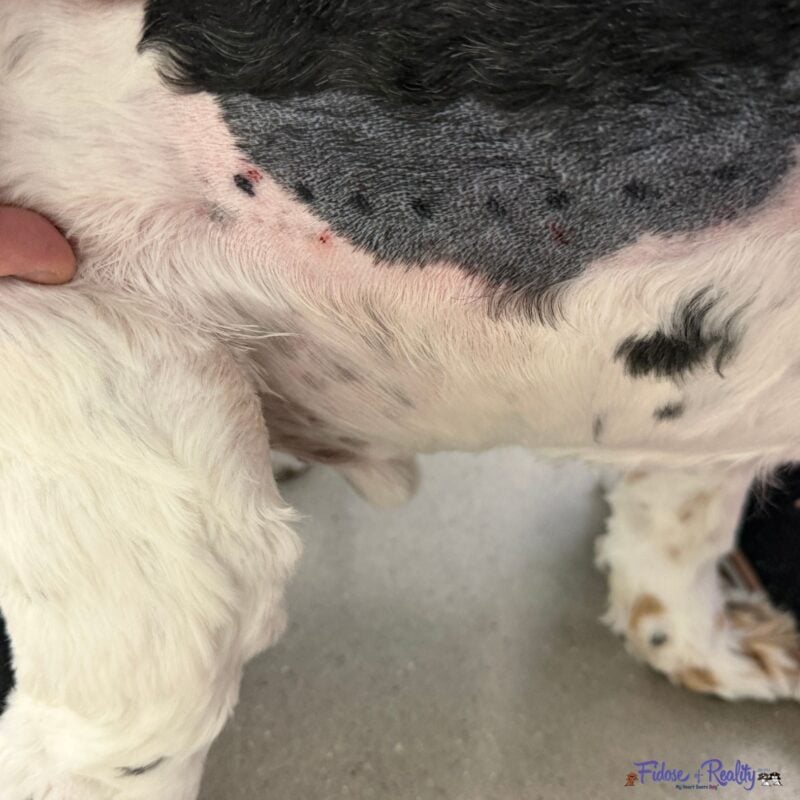
Alvin never squealed or seemed especially bothered during the process, and I learned that most dogs tolerate the testing very well. Because Alvin wasn’t undergoing a massive full-panel test with 60 or more slight pricks, he did not need sedation for his testing experience.
Here’s what Alvin looked like after the skin testing, which uses the same methodology as human allergy testing.
Custom Ear Product Alert: Alvin’s veterinary dermatologist created his own BotaniVet Ear Cleaner with 1% SSD and 12 mg dexamethasone, which is a cleaner and treatment all in one. Always check with your dermatologist in the event they have a custom product for your dog.
Why I Personally Chose Not to Use Apoquel or Cytopoint
Apoquel and Cytopoint can help many dogs with chronic itching, but for Alvin, I personally chose to focus first on long-term allergy management approaches including immunotherapy, skin barrier support, and environmental management.
This was a personal decision based on my own comfort level regarding long-term management and potential side effects. It does not mean those medications are wrong for every dog, and many dogs absolutely benefit from them.
But for Alvin’s situation, I wanted to prioritize:
- allergy immunotherapy
- therapeutic bathing
- environmental management
- skin barrier support
- proactive ear care
- reducing secondary infections
Another point that stood out to me from Dr. McKinney’s interview was, “The innovations that will most benefit dermatology patients are those that balance strong efficacy with a superior safety profile, particularly for dogs managing chronic skin disease long-term.”
That reflected how I personally approached Alvin’s treatment decisions.
For more information, refer to my article on why I don’t use Cytopoint or Apoquel. I consulted with veterinarians and shared factual information from the manufacturers in my piece.
What Actually Helped Alvin’s Chronic Itching
In Alvin’s case, improvement came from combining multiple strategies consistently over time and understanding that inflammation, environmental triggers, yeast, skin barrier dysfunction, and ear issues were all connected.
Another important shift for me was understanding that “better” didn’t necessarily mean “perfect.” One of the things that gave me the most hope going into this process was hearing about my friend Jen’s Cocker Spaniel, Milo.

Milo had been dealing with such severe chronic ear infections that his veterinarian had recommended TECA surgery, a total ear canal ablation, at just a few years old. It’s an intensive, irreversible procedure, and the idea of a young dog needing it was heartbreaking.
After seeing the same veterinary dermatologist we use, the allergist was able to get Milo’s ears and skin under control through allergy management. Milo never needed the surgery.
I think about Milo a lot when the process feels slow or frustrating. It’s a good reminder that getting the right specialist involved can genuinely change outcomes; not just comfort levels, but life-altering decisions.
The biggest improvements for Alvin over the past 9 weeks came from:
- allergy immunotherapy shots
- therapeutic bathing
- environmental allergen reduction
- proactive ear management
- skin barrier support
- reducing yeast and inflammation
- long-term consistency
What We Learned About Allergy Immunotherapy for Dogs
Allergy immunotherapy shots were the single biggest change in Alvin’s management plan and also the one that required the most patience.
The dermatologist explained that allergy immunotherapy shots work by gradually desensitizing the immune system to specific environmental allergens over time. Unlike medications that simply suppress itching symptoms, immunotherapy is designed to help the body become less reactive to the allergens themselves. We were also told early on that allergy shots require patience and long-term consistency, since improvement is usually gradual rather than immediate.
According to Alvin’s dermatology records, some dogs begin improving within about three to six months, while maximal improvement can sometimes take 12 to 18 months. That was important for me to hear because it helped set more realistic expectations going into the process.
As of this writing, we are seeing an 80 percent reduction in his symptoms, at least, and we are on once-weekly shots that I do at home.
We also learned to pay close attention to Alvin’s symptom patterns throughout treatment. That included monitoring for flare-ups before injections, watching for any reactions afterward, and keeping track of overall itching cycles and seasonal changes over time.
I track all of his records, shots, and reactions in the Dogminder Health and Wellness Journal I created for pet parents.
Also learned these facts about immunotherapy shots for dogs in my research, first-hand experience, talking to experts, and our very own board-certified veterinary immunologist, Christopher Lopresto, VMD, Diplomate ACVD:
- Allergy immunotherapy is designed to gradually desensitize a dog’s immune system to environmental allergens over time.
- Allergy shots are customized based on a dog’s allergy testing results and may include allergens such as grasses, pollens, molds, dust mites, weeds, or dander.
- Immunotherapy is often considered the only allergy treatment that attempts to address the underlying allergic response rather than simply suppressing itching symptoms.
- Improvement from allergy immunotherapy is usually gradual rather than immediate. Many dogs require several months before owners notice meaningful changes.
- Studies suggest that roughly 50–80% of dogs with environmental allergies show improvement with allergen-specific immunotherapy.
- Allergy immunotherapy in dogs may help reduce the need for additional itch medications over time.
- Dogs receiving allergy shots usually require long-term consistency and periodic monitoring with their veterinarian or veterinary dermatologist.
- Flare-ups can still happen during immunotherapy, especially early in the process or when doses are adjusted.
- Allergy immunotherapy is commonly administered as injections, though some dogs may also use sublingual allergy drops.
- Many veterinary dermatologists consider immunotherapy one of the most important long-term management tools for dogs with atopic dermatitis and environmental allergies.



How Therapeutic Bathing Helped Alvin’s Skin Barrier
Therapeutic bathing for dog allergies became one of the most important parts of Alvin’s long-term management plan. Bathing with a special shampoo helped remove allergens from the skin, reduce yeast and bacteria, and support the skin barrier.
The dermatologist emphasized weekly bathing and proper shampoo contact time before rinsing.
Dr. McKinney explained, “We now recognize the importance of repairing the skin barrier and controlling bacterial and yeast overgrowth proactively.”
She also noted that newer, more targeted therapies allow for more precise itch control while additional treatments like using a combination of bathing, supplements and diets may help to optimize a dog’s skin and coat health and minimize flare-ups.”
That combination approach became one of the biggest mindset shifts for me personally. Another fun incidental I discovered is that the shampoo does work best when using the frothing method of bathing a dog.
The shampoo the dermatologist recommended that we use on a weekly basis for Alvin’s flare-ups is MiconaHex + Triz Shampoo for Dogs by Dechra.
Why Ear Care Is A Part of Alvin’s Allergy Plan
Chronic ear inflammation is extremely common in Cocker Spaniels with allergies, and managing Alvin’s ears became just as important as managing his skin.
In his four years on earth, I’ve been fortunate that Alvin has had maybe three ear infections. I’ve had success keeping his ears clean with grooming the hair, keeping the canal free of debris, flushing ears twice a week, and keeping a snood on his head during bathing.
You could have knocked me over with a biscuit when the dermatologist examined Alvin’s ears with a video otoscope, took a sample, and under microscopic evaluation, he was diagnosed with inflammation, bacterial overgrowth, persistent irritation, cobblestone erythema, and some debris. I could not see, smell, or notice anything was wrong, which is common in Cocker ears.
It is common for ear flare-ups and skin flare-ups to happen together. That’s one reason Cocker Spaniel ear care deserves much more attention than it often gets in general allergy discussions.
Regular ear maintenance has always been a part of our long-term management routine and includes:
- monitoring for redness or odor
- proactive ear cleaning
- staying ahead of debris buildup
- watching for inflammation during seasonal flare-ups
According to Dr. McKinney, “Cocker Spaniels have more wax and oil producing glands in the ear canals than other breeds.” That breed predisposition alone can make chronic ear management much more challenging.
Here’s what a leading Cornell dermatologist taught me about how to properly clean Cocker Spaniel ears.
Environmental Allergy Management for Dogs
Reducing allergen exposure can help minimize flare-ups in dogs with environmental allergies. For Alvin, environmental management is now an even more regular part of everyday life.
Veterinary experts at Vetster recommend:
- wiping allergens off paws
- washing bedding frequently
- monitoring pollen counts
- maintaining flea prevention
- improving indoor air quality
According to Vetster veterinarian Dr. Jo Myers,“ These contact allergens can be removed from the body with regular grooming and wiping or rinsing your dog’s fur and paws.”
That became part of our routine, especially during higher pollen periods. Dr. Myers also recommends washing bedding, collars, harnesses, and blankets regularly because allergens can linger in fabrics and continue contributing to flare-ups.
Our At-Home Environmental Allergy Routine
Reducing environmental allergens became part of Alvin’s everyday routine, especially during heavier pollen seasons and flare-up periods. While there’s no way to completely eliminate environmental triggers, I do think small consistent habits helped minimize how much irritation he was dealing with overall.
As a bonus, many of these routines helped me and my spouse who have seasonal allergies.
Paw Wiping After Walks
One of the easiest things we started doing was wiping Alvin’s paws and legs after walks or outdoor time. During allergy season especially, pollens, grass particles, and other allergens can cling to fur and paw pads. Sometimes we use dog wipes, and other times I simply rinse his paws off with lukewarm water when he comes inside.
During our first allergy visit with the dermatologist, he used a slide to rub across Alvin’s toes, webbed area between toes, and paw pads. The first time it came by positive for yeast, which is very typical for the breed. He recommended MiconaHex + Triz Wipes and added a bit of steroid to them for good measure. We use them several times a week on Alvin’s pads, and the recent visit showed no paw yeast!
Air Purifiers Throughout the House
I’ve used air purifiers in our home for years because allergies affect both humans and pets in this house. In fact, I previously wrote an entire article on how to reduce pet dander and allergens at home after dealing with allergy issues myself.
I especially notice a difference during high pollen periods and when windows are open more often. Here’s how we get rid of pet dander at home (along with other things in the air.)
Our favorite air purifier is the Rabbit Air Air Purifier, which is admittedly costly but so worth it.
My second favorite air purifier the Shark Air Purifier, which is more affordable and covers up to 1,300 square feet.
Washing Blankets, Bedding, and Soft Surfaces More Often
Once I learned how much allergens can linger in fabrics, I became much more proactive about washing dog blankets, bedding, soft toys, throw covers, and washable furniture covers. Alvin shares life with two moms who value and appreciate a very clean home.
Dr. Myers also recommends washing bedding and soft surfaces regularly because allergens can continue building up inside fabrics over time.
Vacuuming and Keeping Dust Down
Vacuuming became less about “cleaning” and more about trying to stay ahead of allergens, dust, hair, pollen, and dander buildup before things spiraled into a bigger flare-up cycle.
I also started paying closer attention to baseboards, corners, upholstery, rugs, and areas where allergens tend to settle quietly over time.
We also discovered that the bagged vacuums seem to work better for us than bagless. It may be a personal choice, but I’ve noticed far less dust and debris getting released back into the air when changing a sealed vacuum bag compared to emptying a bagless canister.
Many allergy experts and air quality sources recommend bagged vacuums with HEPA filtration for allergy-prone households because the dust, dander, pollen, and debris stay more contained inside the bag rather than creating a cloud of particles when emptied. With some bagless vacuums, I always felt like I was undoing part of the cleaning process the moment I dumped the canister into the trash.
For a dog like Alvin, where environmental allergens and inflammation are already part of the problem, reducing airborne dust and allergens inside the house became another one of those small but meaningful management steps that added up over time.
Learning That Small Things Add Up
None of these environmental allergy management steps magically “cured” Alvin’s allergies on their own. But together, I do think they helped reduce the overall allergen burden on his body and supported everything else we were doing through dermatology care, bathing, immunotherapy, and skin support.
FAQs About Cocker Spaniel Allergies and Chronic Itching
Chronic itching in Cocker Spaniels is often linked to environmental allergies, secondary yeast or bacterial infections, chronic ear inflammation, and skin barrier dysfunction.
Atopic dermatitis is a chronic inflammatory skin condition triggered by environmental allergens such as pollen, grasses, mold, or dust.
Intradermal allergy testing involves injecting small amounts of allergens into the skin to identify environmental allergy triggers in dogs.
For many dogs, allergy immunotherapy can significantly reduce itching and improve comfort over time, though results often take several months.
Environmental allergies in dogs are usually managed rather than cured. Many dogs require lifelong allergy management strategies.
Malassezia dermatitis is a yeast overgrowth condition that can cause itching, inflammation, odor, redness, and skin irritation in dogs.
Many dog owners don’t realize that chronic itching is often connected to secondary yeast infections, bacterial overgrowth, chronic ear inflammation, skin barrier dysfunction, and environmental triggers and not just “allergies” alone.
If your dog has chronic itching, recurrent ear infections, persistent flare-ups, ongoing paw licking, or symptoms that are not improving with routine veterinary care, it may be worth discussing referral to a board-certified veterinary dermatologist.
What I Wish I Knew Earlier About Chronic Dog Itching and Allergies
Looking back, there are things I wish someone had told me earlier in this process — not to scare me, but to help me ask better questions and set more realistic expectations.
I wish I had understood sooner that:
- chronic itching in dogs is rarely caused by one thing alone
- secondary yeast and bacterial infections can drive itching just as much as the allergies themselves
- skin barrier dysfunction is a real and treatable part of the cycle
- environmental management matters more than most people realize
- consistency matters more than perfection
- seeing a specialist sooner can change everything
- improvement is possible even without a perfect cure
If you’re early in this journey with your own dog, I hope this list saves you some time, frustration, and heartache.
Chronic Dog Allergies Changed the Way I Think About Itching
Chronic dog allergies are often lifelong, layered, and connected to secondary infections, inflammation, environmental triggers, and skin barrier dysfunction. That was one of the biggest lessons Alvin taught me.
Before Alvin, I already had experience managing itchy dogs over the years. Most importantly, I learned that improvement doesn’t always happen overnight, and there is generally never one absolutely perfect cure for dogs with itching or allergies to food, environmental, or both.
But there absolutely can be:
- fewer flare-ups
- calmer skin
- less inflammation
- better comfort
- improved quality of life
One of the most reassuring things I heard came from veterinary dermatologist Dr. Christine McKinney when she told me, “You’re not alone. Cocker Spaniels are wonderful dogs, but they can be a challenging breed when it comes to skin and ear disease.”
If you’re currently dealing with a dog who struggles with chronic scratching, nonstop paw licking, recurrent ear infections, inflamed skin, ongoing flare-ups, or itching that never seems fully under control, I understand how emotionally exhausting and frustrating it can feel. One of the hardest parts is realizing that chronic allergies in dogs are often much more layered and complicated than they first appear, especially in breeds like Cocker Spaniels.
And if there’s one thing I’d encourage other dog owners to remember, it’s this: don’t stop advocating for your dog just because someone says it’s “just allergies.”
Have you ever experienced allergies in your dogs? Did anything help? Let me know below.
Here is a list of all the items mentioned in this article, along with some of our other favorites to combat itching in dogs. Always check with your veterinarian before starting anything new or adjusting your dog’s skin care:
- HemoPet Nutriscan Food Allergy Test Kit: Test your dog at home by sending a saliva sample in.
- MiconaHex + Triz Shampoo for Dogs by Dechra: Treats moderate-to-severe fungal and bacterial skin infections by killing pathogens and repairing the skin barrier.
- MiconaHex + Triz Wipes: Our vet adds a light steroid in office, but these pads are ideal for paw licking, yeasty feet, armpit and groin redness, belly rashes, hot spots, and more.
- Shark Air Purifier: An affordable in-home air purifier to help keep the air at home clean.
- Funky Paws Paw, Nose, and Fold Cream by ZYMOX: Using the same enzymatic LP3 system of other ZYMOX products, this cream is a dog-send for us for itching and inflammation flare-ups, including for lip fold dermatitis without antibiotics. Learn more about the product with our in-depth review of Funky Paws.
- ZYMOX Ear Cleanser for Dogs: Ideal for dogs who swim or get their ears wet, this no-sting, unscented formula is veterinarian-recommended.
- ZYMOX Plus OTIC with or without hydrocortisone: At the first sign of ear infection in my dog, I use ZYMOX PLUS Advanced Formula. Designed for both acute and chronic otitis externa, aka an inner ear infection. No pre-cleaning is needed. Always check with your veterinarian first, and never try to self-diagnose.
- TrizULTRA + Keto Flush: One of my all-time favorites that dries quickly and is vet-recommended.
- Douxo S3 Pyo Mousse: Ideal for bacterial or yeast skin infections in dogs, vet-recommended.
- Snout Soother: Treats cracked and chapped noses with organic ingredients.
Expert Contributions for This Article
This article includes insights and commentary from:
- Alvin’s board-certified veterinary dermatologist and dermatology records from pads.vet
- Christine McKinney, DVM, DACVD, Merck Animal Health Dermatology Specialist
- Dr. Jo Myers of Vetster
- Veterinary dermatology testing and allergy immunotherapy records
- Published veterinary dermatology resources related to canine atopic dermatitis and environmental allergies as noted throughout.