

As an Amazon Associate I earn from qualifying purchases. Learn More
(Without Fear or Punishment)
Updated 5/15/26
Dogs bite for many different reasons including fear, pain, overstimulation, anxiety, protectiveness, and lack of proper training.
The best way to stop dog biting is to identify the trigger, avoid punishment-based methods, reward calm behavior, and use consistent positive reinforcement training.
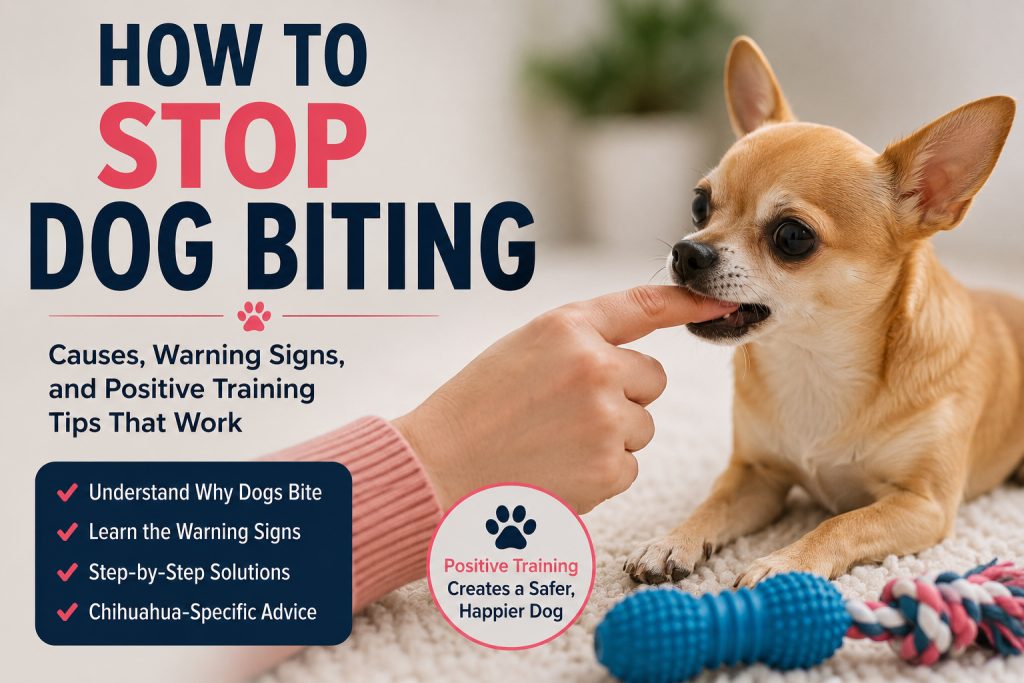
Dog biting can be scary and upsetting, especially when it involves a Chihuahua or other small dog that people expect to be “cute” instead of reactive. But biting is communication.
Dogs usually bite because they are afraid, uncomfortable, overstimulated, in pain, or they simply never learned better ways to respond.
The good news is that many biting problems can improve with patience, training, management, and understanding your dog’s triggers.
Why Dogs Bite
One of the biggest mistakes people make is assuming all biting is the same. The reason behind the behavior matters because the solution depends on the cause.
Common reasons dogs bite include:
- Fear or anxiety
- Protectiveness over people, toys, or food
- Pain or illness
- Lack of socialization
- Rough play
- Overstimulation
- Teasing or rough handling
- Territorial behavior
- Puppy teething
- Redirected frustration
A fearful dog needs a very different approach than a teething puppy.
Why Chihuahuas Bite More Than Some Other Dogs
Chihuahuas often get labeled as “aggressive,” but many are actually fearful or overwhelmed.
Because they are so small, the world can feel scary to them. People often:
- Pick them up constantly
- Ignore warning signs
- Allow behaviors they wouldn’t tolerate in large dogs
- Handle them roughly
- Fail to socialize them properly
Some Chihuahuas also become overly protective of their favorite person.
This does not mean your Chihuahua is “bad.” It simply means they need training, confidence-building, and clear boundaries.
You may also want to read our article on Chihuahua aggression for more help understanding reactive behaviors.
Learn the Warning Signs Before a Bite
Dogs almost always give warnings before biting, but many people miss them.
Watch for:
- Lip licking
- Yawning when not tired
- Whale eye (showing the whites of the eyes)
- Stiff body posture
- Freezing suddenly
- Tail tucked
- Ears pinned back
- Growling
- Snarling
- Backing away
- Hiding
Never punish a growl. A growl is valuable communication. If you punish the warning signs, some dogs learn to bite without warning.
How to Stop Dog Biting: Step-by-Step
Step 1: Figure Out the Trigger
Ask yourself:
- When does the biting happen?
- Who is involved?
- Is food, a toy, or a person nearby?
- Does your dog seem scared or overstimulated?
- Does the dog bite when touched or picked up?
Understanding the trigger is the foundation of solving the problem.
Step 2: Stop Putting Your Dog in Situations That Trigger Biting
Management is important while training is happening.
Examples:
- Give your dog a quiet space during parties
- Don’t allow rough play with children
- Avoid forcing interactions with strangers
- Use baby gates if needed
- Don’t pick your Chihuahua up constantly
Preventing repeated biting rehearsals helps break the cycle.
Step 3: Reward Calm Behavior
Instead of focusing only on stopping bad behavior, reward the behavior you want.
Praise and reward your dog for:
- Staying calm around people
- Relaxing instead of reacting
- Looking at triggers calmly
- Gentle interactions
- Choosing toys instead of biting hands
Tiny treats work great for Chihuahuas because they can eat them quickly during training sessions.
Step 4: Redirect Biting to Appropriate Items
If your dog starts mouthing or nipping:
- Redirect to a chew toy
- Offer a stuffed Kong
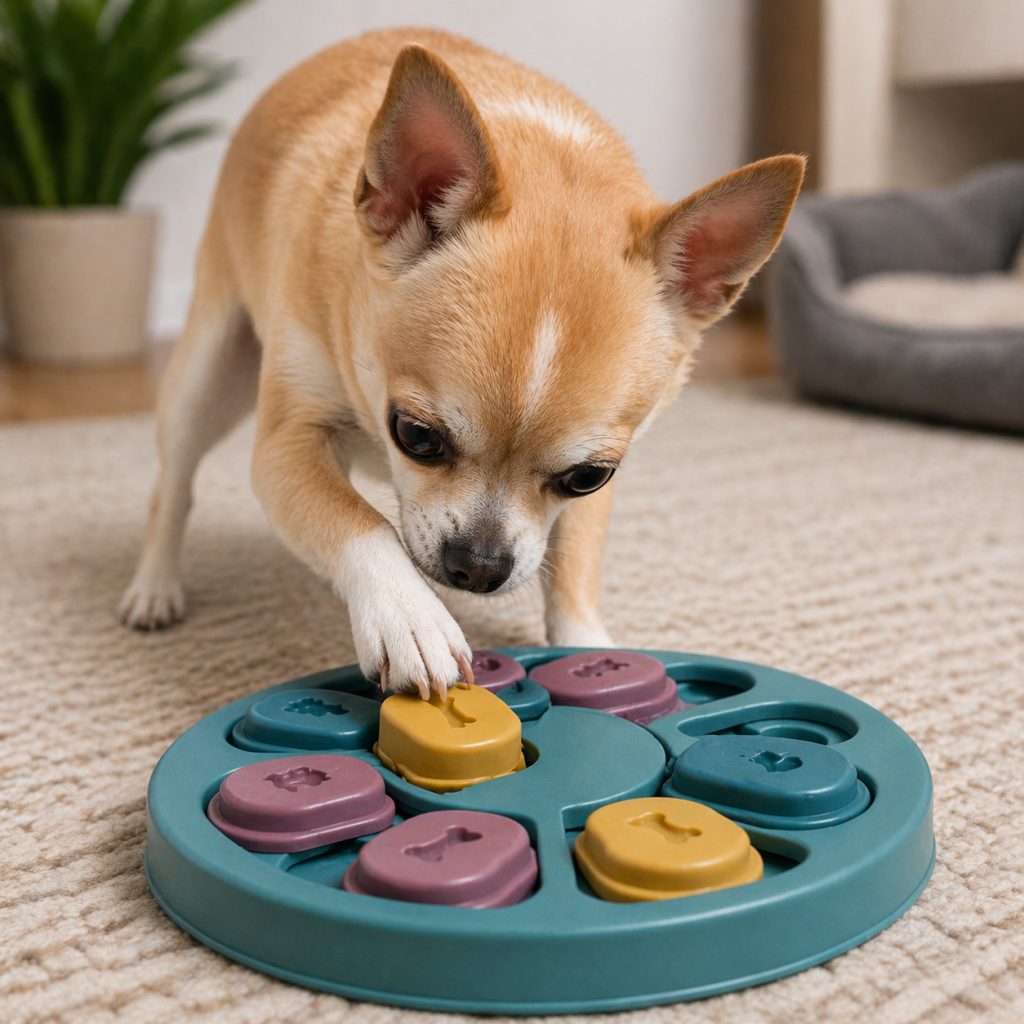
- Use a snuffle mat
- Try a puzzle toy
- Encourage chewing on safe dog chews
This is especially important for puppies and high-energy dogs.
Step 5: Keep Training Sessions Short
Short, positive sessions work best.
Aim for:
- 5–10 minute sessions
- Multiple times per day
- Calm environments
- Consistency
Long sessions can overwhelm small dogs, especially nervous Chihuahuas.
Step 6: Practice Calm Behavior Training
The goal is to teach your dog what TO do instead of biting.
Keep training sessions short, calm, and positive. Practice a few minutes at a time several times a day.
Some helpful exercises include:
Teach “Sit”
Ask your dog to sit before:
- getting attention
- being picked up
- receiving treats
- going outside
- getting meals
This helps teach impulse control.
Teach “Leave It”
“Leave it” teaches your dog to back away from something instead of grabbing or biting it.
Start with treats first, then slowly practice with toys and other distractions.
Reward Calm Behavior
Many people accidentally only pay attention to dogs when they misbehave.
Instead, reward your dog when they are:
- lying calmly
- relaxing near people
- greeting politely
- playing gently
- chewing appropriate toys
Dogs repeat behaviors that get rewarded.
Practice Gentle Handling
For dogs that bite during handling:
- touch briefly
- give a treat
- stop before the dog becomes upset
Slowly build positive associations with:
- touching paws
- being picked up
- brushing
- nail trims
- collar handling
Teach an Alternate Behavior
If your dog usually bites during excitement, teach them another behavior instead.
For example:
- grab a toy
- go to a mat
- sit for attention
- make eye contact
This gives your dog a safer way to respond.
End Before Your Dog Gets Overstimulated
Short successful sessions work better than long frustrating ones.
Always try to end on a positive note.
Step 7: Teach Bite Inhibition
Puppies need to learn how hard is “too hard.”
If your puppy bites too hard:
- Say “ouch” calmly
- Stop play immediately
- Withdraw attention briefly
- Resume play once calm
This teaches puppies that biting makes fun stop.
Step 8: Avoid Punishment-Based Training
Punishment often makes biting worse because it increases fear and anxiety.
Avoid:
- Hitting
- Alpha rolls
- Yelling
- Smacking the nose
- Holding the mouth shut
- Shock collars
These methods can damage trust and increase aggression.
Positive reinforcement is safer and more effective long-term.
Puppy Biting vs Aggressive Biting
Puppy biting is usually:
- Playful
- Excited
- Teething-related
- Less intense
Aggressive biting often includes:
- Stiff body language
- Growling
- Snapping
- Guarding behavior
- Fear reactions
Knowing the difference matters.
What to Do if Your Dog Bites When Picked Up
This is extremely common in Chihuahuas.
Possible reasons include:
- Pain
- Fear
- Past bad experiences
- Being startled
- Feeling trapped
Instead of grabbing your dog suddenly:
- Approach calmly
- Let them see your hands
- Reward handling with treats
- Support the entire body
- Avoid squeezing tightly
If the behavior suddenly starts, schedule a vet visit to rule out pain or injury.
You may also enjoy our article on how to train a shy Chihuahua.
When Dogs Bite Out of Fear
Fear biting is one of the most common forms of aggression.
Fearful dogs need:
- Space
- Patience
- Confidence-building
- Predictability
- Positive experiences
Never force a fearful dog to “face their fears.”
That often backfires.
Instead, slowly expose them to triggers from a safe distance while rewarding calm behavior.
Resource Guarding and Possessive Biting
Some dogs bite to protect:
- Food
- Toys
- Beds
- Treats
- Favorite humans
This is called resource guarding.
Never try to forcibly take items away from a guarding dog.
Instead:
- Trade for something better
- Teach “drop it”
- Reward voluntary releases
- Avoid confrontation
Resource guarding can become serious, so professional help is sometimes needed.
Mental Enrichment Helps Reduce Biting
Many dogs bite more when bored or overstimulated.
Mental exercise can help tremendously.
Try:
A mentally satisfied dog is often calmer and less reactive.
Mistakes That Can Make Dog Biting Worse
These common mistakes can increase biting behavior:
- Punishing growling
- Forcing interactions
- Inconsistent rules
- Rough play
- Teasing
- Allowing over-arousal
- Ignoring stress signals
- Using fear-based training methods
Training should build trust, not fear.
When to See a Veterinarian
Always consider medical causes, especially if:
- The biting started suddenly
- Your dog seems painful
- Your dog avoids touch
- Your senior dog becomes irritable
- The aggression is getting worse
Pain, arthritis, dental disease, neurological issues, and other medical conditions can contribute to biting.
Seek help if:
- Your dog breaks skin
- The bites are escalating
- Children are involved
- Your dog guards people or objects
- You feel unsafe
- Your dog shows intense fear or aggression
Look for a certified force-free or positive reinforcement trainer or veterinary behaviorist.
What Worked for Me With an Aggressive Puppy
I want to share my own experience because I know how scary and stressful dog biting can feel, especially when you realize your tiny puppy will eventually become a very large dog.
When we got Buddy, our American Bulldog/German Shepherd mix puppy, he already showed some aggressive behaviors at only 6 weeks old. He would growl, snap, and try to bite us when he became overstimulated or frustrated.
At first, it seemed almost funny because he was such a tiny little furball trying to act tough. But we knew that behavior would become dangerous once he grew into an 80-pound adult dog.
I asked a dog trainer I knew for advice, and one of the first things she recommended was staying calm and not turning the biting into a game or emotional reaction.
When Buddy tried to bite:
- We would firmly say “No”
- End the interaction immediately
- Put distance between us and him
- Ignore him briefly until he calmed down
This worked much better than yelling or physically punishing him.
We also learned that Buddy became much more bitey when he was overtired, overstimulated, or needed more exercise and mental enrichment. Short training sessions, structured routines, chew toys, and consistent boundaries made a huge difference.
One important thing I’ve learned over the years is that dog training advice has changed a lot. Some older training methods focused heavily on dominance and “being the alpha,” but many modern trainers now recommend positive reinforcement and trust-building instead.
For most dogs, especially fearful or anxious Chihuahuas, calm consistency and positive training methods are usually the safest and most effective approach.
I’m happy to say that Buddy eventually grew into a friendly, well-behaved adult dog. I truly believe early training, consistency, and addressing the behavior right away helped prevent bigger problems later on.
Final Thoughts
Dog biting can feel overwhelming, but many dogs improve greatly with patience, consistency, and understanding.
Instead of asking, “How do I stop my dog from biting?” try asking:
“What is my dog trying to communicate?”
That shift in mindset often changes everything.
With proper training, management, mental enrichment, and compassion, many dogs can learn safer and calmer ways to respond to the world around them.
Why does my Chihuahua bite me but not other people?
Many Chihuahuas become overly attached or protective of one person. Fear, anxiety, resource guarding, or rough handling can also contribute.
Should I punish my dog for biting?
No. Punishment often increases fear and anxiety and can make biting worse. Positive reinforcement training is safer and more effective.
Do puppies grow out of biting?
Puppies naturally mouth and nip, but they still need training and bite inhibition practice. Without guidance, the behavior can continue.
Why does my dog bite when picked up?
Pain, fear, discomfort, or feeling trapped are common reasons. Chihuahuas are especially sensitive to rough handling.
Can a biting dog be trained?
Many biting problems improve significantly with consistent training, management, and professional help when needed.
When should I worry about dog biting?
You should seek professional help if bites are escalating, breaking skin, involving children, or connected to severe fear or guarding behavior.




Pet Blogger
I have had dogs all my life. I have been a pet groomer, worked in a pet hotel, and a kennel, and have bred and showed dogs.
Post Views: 6,275