


If your young Labrador Retriever is standing in front of you, staring at the tennis ball in your hand and tremoring, that is normal. If your short hair dog is out in wet snow for 15 minutes and is whole-body tremoring, which is shivering, that’s normal. But bring him into the house!
If your neighbor is not into the fourth hour of nonstop fireworks and your sensitive dog is shaking, that is fear and anxiety. It is normal, but you need to take steps to get your dog to a quiet place. Dogs who are in pain may also have tremors, and you need to get veterinary help to ease the pain.
Tremors or shakes when your dog is asleep and dreaming, however, is normal. Many dogs even “twitch” their legs as if they are chasing a bunny.
In a 2025 study of 198 dogs published in the Journal of Veterinary Internal Medicine, researchers found the most frequent causes of tremors in dogs were intoxication (47%) and idiopathic generalized tremor syndrome, or IGTS, (24.7%). Intoxication included cases where the dog ingested a toxin of some type. Idiopathic means of unknown cause.
In a 2024 study published in Frontiers in Veterinary Science, researchers studied 33 dogs and concluded that IGTS appears to be an immune-mediated disorder of the central nervous system. “There are still large gaps in the current understanding of the etiopathogenesis of this disease, and research on this topic is relatively sparse, probably due to the good prognosis and straight-forward treatment possibilities,” they said.
What Are Body Tremors in a Dog?
Tremors involve two body systems: nerves and muscles. True tremors are involuntary. They occur without conscious thought by your dog. While they may resemble seizures, tremors are not due to short circuiting in your dog’s brain.
Two classic tremor conditions of unknown underlying cause are:
- Idiopathic tremor syndrome
- Idiopathic head tremor
Idiopathic Tremor Syndrome in Dogs
Idiopathic tremor syndrome is also sometimes called “little white shaker syndrome.” This is an immune-mediated condition where the immune system interacts with the nervous system.
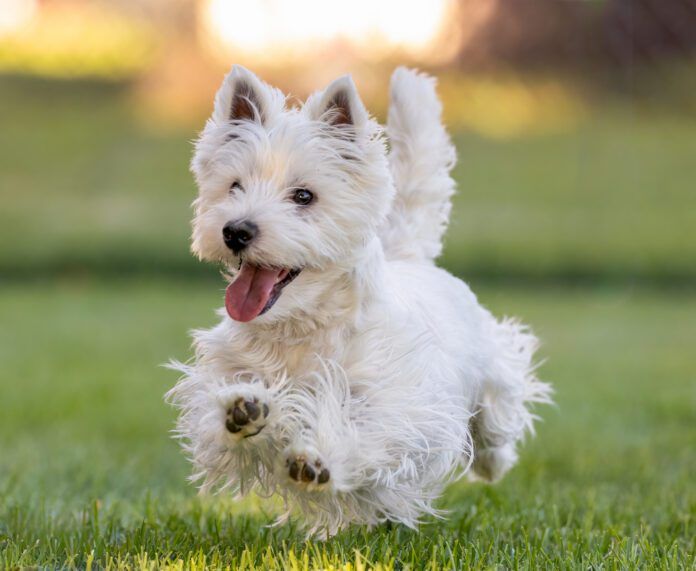
Commonly affected dogs include Maltese, West Highland White Terriers, and small Poodles, which are also often white. These predilections explain the nickname of the syndrome, but any breed or mix could be affected. Symptoms usually start in dogs under 2 years of age.
These dogs may have no tremors noted while they sleep or rest, but once they get active, tremors start up. Fortunately, these tremors do not seem to be painful, and they don’t affect your dog’s consciousness.
Treatment with corticosteroids can usually alleviate the condition. While dogs may need to start out on a fairly high dose of steroids, this can usually be tapered down eventually to a minimal dose. Prognosis is great, and these dogs tend to live normal lives. Relapses can occur though, especially if the steroid dose is weaned off totally.
Idiopathic Head Tremors in Dogs
Usually found in young dogs, idiopathic head tremors affect only the dog’s head. The rest of the body stays normal. Unlike the whole-body tremor syndrome, these tremors are more evident when the dog is resting.
The head tends to bob up sideways in horizontal or vertical movements (like saying yes or no with just a gesture and no words). While any young dog may show this tremor, the most common breeds include Doberman Pinschers, Bulldogs, French Bulldogs, Boxers, and Labrador Retrievers.
This head tremor is a relatively benign syndrome. You can often get the head tremor to stop by distracting the dog. Also, while these tremors don’t seem to respond to any treatment, they generally fade away with age.
Known Causes of Tremors in Dogs
Hypoglycemia: Some less benign causes of tremors may be related to medical problems. Low blood sugar or hypoglycemia may cause tremors. In diabetic dogs, this could be from a mismatch of calories going in and insulin dosage. Putting some Karo syrup or honey on your dog’s gums is a quick fix, but you need to get to your veterinarian.
Toxins: The ingestion of toxins can cause tremors. Common poisons include:
- Strychnine, though those tremors often progress to full-blown seizures
- Ethylene glycol (antifreeze) may also cause tremors as part of its toxic profile
- Certain poisonous mushrooms may cause tremors and some will lead to seizures
- Snail baits containing metaldehyde are quite toxic, often causing tremors leading to seizures
If you suspect, or know, your dog has gotten into something toxic, contact one of the animal poison control helplines, and head to your veterinary clinic. Pet Poison Helpline 855-764-7661 or ASPCA Animal Poison Control Center 888-426-4435.
Canine Distemper: Sadly, cases of canine distemper are on the rise as some dogs are not being appropriately vaccinated for this deadly disease. Dogs who survive are frequently left with tremors or seizure disorders. There is no specific treatment for distemper. Supportive care is provided while, hopefully, your dog’s own immune system battles the virus. Vaccination is very effective. Distemper is a core vaccine, which means it is recommended for all dogs.
Muscle Fatigue: Cramps, or spasms can occur from muscle fatigue. In these cases, your dog might have tremors in just one leg. Rest and recovery are needed. Senior dogs who overdo it with a busy day or weekend can be prone to muscle cramps.
Low Blood Calcium: A serous cause of tremors is hypocalcemia or low blood calcium. This is most commonly seen in bitches post partum and is called eclampsia. Basically, the drain of whelping and nursing puppies causes low calcium. This condition can be deadly, and your bitch needs prompt veterinary intervention. Some cerebellar disorders can cause various tremors or head bobs.
Diagnosing the Cause of Dog Tremors
Diagnosing tremors can involve a variety of tests. Perhaps the most important is a complete history. This relies on your observations. When did the tremors start? What was your dog doing when you first noticed them? Any possible exposures to toxins? Any other signs of a health problem?
Bloodwork can be important, especially if your veterinarian suspects hypoglycemia or hypocalcemia. A thorough physical exam may point out painful areas or weaknesses. If a neurologic cause is suspected, your veterinarian may refer you to a veterinary neurologist. A cerebrospinal fluid (CSF) tap an MRI might be done.
The Treatment for Dog Tremors
Treatment, if any is needed, will be customized to the likely cause. Muscle relaxants can be helpful as well as nerve-oriented pain medications such as gabapentin. Intravenous (IV) glucose or calcium can reverse low blood levels of those components. Anti-anxiety medications may settle a nervous dog.
Corticosteroids are important for cases of idiopathic tremor syndrome and may be required for life. Luckily, they are relatively inexpensive.
While tremors may be scary and frustrating for you, most dogs adapt to benign tremors and aren’t bothered at all. Having a benign head tremor myself, I can say that I don’t even notice it!
