

As an Amazon Associate I earn from qualifying purchases. Learn More
Updated September 2026
Is your Chihuahua constantly scratching, licking their paws, rubbing their face, or dealing with recurring ear problems? Allergies could be the culprit.
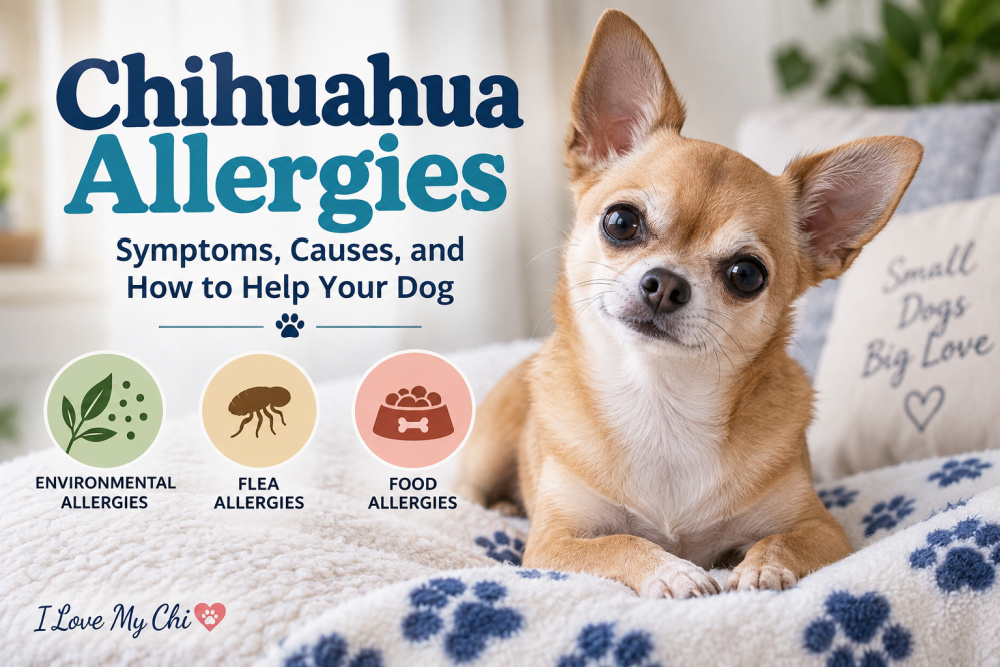
Just like people, dogs can develop allergies to things in their environment, flea bites, and even ingredients in their food. Unfortunately, figuring out exactly what is making your Chihuahua itch isn’t always easy.
The good news is that allergies can usually be managed once you and your veterinarian figure out what’s triggering the problem.
In this guide, we’ll look at the common signs of allergies in Chihuahuas, what may be causing them, how veterinarians diagnose allergies, and what you can do to help your itchy little dog feel better.
Can Chihuahuas Have Allergies?
Yes. Chihuahuas can develop allergies just like other dogs.
An allergy occurs when a dog’s immune system reacts abnormally to something that would ordinarily be harmless. Depending on the type of allergy, the trigger might be pollen, dust mites, mold, flea saliva, or something in the dog’s diet.
Allergic skin disease can be complicated. Genetics, the immune system, the skin’s protective barrier, environmental exposures, and microorganisms living on the skin can all play a role.
For many dogs, allergies aren’t something that can simply be “cured.” Instead, the goal is to identify and control triggers, relieve itching and inflammation, prevent secondary infections, and keep your Chihuahua comfortable.
Signs Your Chihuahua May Have Allergies
Itchy skin is one of the most common signs of allergies in dogs, but allergies don’t always look the same from one Chihuahua to another.
Signs can include:
- Frequent scratching
- Licking or chewing the paws
- Rubbing the face
- Red, irritated, or inflamed skin
- Hair loss or thinning hair
- Scabs or crusty areas
- Repeated skin infections
- Recurrent ear infections or irritated ears
- Darkened or thickened skin from chronic irritation
- Persistent licking of certain areas
Some dogs with adverse food reactions may also experience digestive symptoms such as vomiting or diarrhea.
One important thing to remember is that itching doesn’t automatically mean allergies. Fleas, mites, skin infections, and several other medical conditions can make a dog itchy too.
If your dog is scratching, losing hair, or developing irritated skin, check out our guide to Chihuahua skin problems for some of the other possible causes.
That’s one reason persistent itching deserves a veterinary examination rather than assuming your Chihuahua has allergies and trying one remedy after another.
What Causes Allergies in Chihuahuas?
Most allergic skin problems fall into three general categories: environmental allergies, flea allergy dermatitis, and food allergies or adverse food reactions.
Some unfortunate dogs can have more than one at the same time.
Environmental Allergies
Environmental allergies are often associated with canine atopic dermatitis, a chronic inflammatory skin condition.
Possible environmental allergens include:
- Pollen
- Grass
- Trees and weeds
- Mold
- Dust mites
- Other substances in the dog’s surroundings
Some environmental allergies are seasonal. Your Chihuahua might become itchy every spring or fall, for example.
Others can cause problems throughout the year.
Dogs with atopic dermatitis often develop problems around their paws, face, ears, legs, and belly. Recurrent bacterial or yeast skin infections are also common because damaged, inflamed skin makes it easier for secondary infections to develop.
Occasionally, recurring ear infections may be one of the main signs.
If your Chihuahua seems to have one ear problem after another, learn more about dog ear infections and what can cause them.
Flea Allergy Dermatitis
You don’t need to see a Chihuahua covered in fleas for fleas to cause a major problem.
Dogs with flea allergy dermatitis (FAD) are allergic to substances in flea saliva.
For a sensitive dog, flea bites can trigger intense itching and inflammation. Dogs often become particularly itchy around the lower back, rump, thighs, and base of the tail.
And here’s the frustrating part: you may never actually see a flea.
Your Chihuahua may groom away the evidence, and even a small number of fleas can cause significant problems in a highly sensitive dog.
That’s why consistent veterinarian-recommended flea prevention is so important for dogs with suspected flea allergies. Other pets in the household may need protection too, and an existing infestation may require treatment of the home environment.
Food Allergies
Food allergies get blamed for a lot of itchy dogs, but true food allergies aren’t as common as many people think.
When a dog does have a food allergy, the immune system is usually reacting to a protein in the diet.
And contrary to a popular misconception, grain isn’t automatically the problem.
Simply switching your Chihuahua to a grain-free food isn’t a reliable way to diagnose or treat a suspected food allergy.
Symptoms of a food allergy can look very similar to environmental allergies and may include:
- Itchy skin
- Paw licking
- Ear problems
- Recurrent bacterial or yeast infections
- Hair loss
- Skin inflammation
Some dogs can also experience gastrointestinal symptoms.
Food-related itching is often nonseasonal, meaning it occurs throughout the year.
If food is one of the suspects, you can learn more about dog food allergy symptoms and what to watch for.
How Are Food Allergies Diagnosed?
This is one area where there’s a lot of confusing information online.
There are commercial blood, saliva, hair, and other tests marketed for food allergies. However, these aren’t considered reliable ways to diagnose food allergy in dogs.
The most reliable method is a strict elimination diet followed by a food challenge.
Your veterinarian may recommend a prescription hydrolyzed diet, a carefully selected novel-protein diet, or another appropriate elimination diet.
Hydrolyzed proteins have been broken into very small components to make them less likely to be recognized by the immune system.
The important word here is strict.
During a food trial, your Chihuahua can’t sneak bites of other foods. Depending on your veterinarian’s instructions, that can mean no:
- Table scraps
- Regular treats
- Flavored chews
- Rawhide
- Pill pockets
- Flavored supplements
- Flavored medications unless approved by your veterinarian
- Food stolen from another pet
Even small amounts of another food can interfere with the trial.
Food trials typically last several weeks and sometimes longer. If the dog’s symptoms improve, the previous food is then reintroduced under veterinary guidance to see whether symptoms return.
That challenge is important because improvement during the diet alone doesn’t necessarily prove food was responsible.
How Do Veterinarians Diagnose Environmental Allergies?
There’s no single test that can simply tell your veterinarian, “Yes, this Chihuahua has atopic dermatitis.”
Diagnosis is usually a process.
Your veterinarian will consider your dog’s symptoms, history, age when the itching began, whether the problem is seasonal, and which areas of the body are affected.
They may also look for or rule out other causes, including:
- Fleas
- Mites and other parasites
- Bacterial infections
- Yeast infections
- Food reactions
- Other skin diseases
This may involve skin scrapings, cytology, or other diagnostic tests.
Once other causes of itching have been addressed or ruled out, atopic dermatitis may become the likely diagnosis.
What About Allergy Testing?
You’ve probably heard about blood allergy tests or intradermal skin testing for dogs.
These tests can be useful, but perhaps not for the reason you might think.
They don’t independently diagnose atopic dermatitis.
Instead, once environmental allergy is suspected or diagnosed, testing can help identify allergens that may be useful when developing allergen-specific immunotherapy, commonly called allergy shots or allergy drops.
So if someone offers you a simple test that supposedly identifies every food and environmental substance your Chihuahua is allergic to, be cautious.
Treating Allergies in Chihuahuas
There’s no single allergy treatment that’s right for every Chihuahua.
Your veterinarian will develop a plan based on what’s causing the problem, how severe your dog’s symptoms are, and whether other conditions such as secondary infections are present.
Treatment may include several approaches.

Controlling the Itch
Veterinarians have several medications available to help control allergic itching and inflammation.
Which medication is appropriate depends on your dog’s overall health, age, symptoms, other medications, and the type of allergy involved.
Some dogs need medication only during seasonal flare-ups, while others require long-term management.
Treating Secondary Skin and Ear Infections
Constant scratching, chewing, and licking damages the skin barrier.
Allergic dogs are also prone to secondary bacterial and yeast infections, which can make an already itchy dog even itchier.
Treating those infections can be an important part of getting an allergy flare under control.
Bathing and Skin Care
Bathing can be surprisingly helpful for some allergic dogs.
A veterinarian may recommend a particular shampoo or other topical product to help remove allergens from the coat, soothe the skin, treat an infection, or support the skin barrier.
Don’t assume that a human shampoo—even one marketed for sensitive skin—is appropriate for your Chihuahua. Dogs have different skin needs, and some products can make irritated skin worse.
Allergen-Specific Immunotherapy
Some dogs with environmental allergies may benefit from allergen-specific immunotherapy.
After appropriate allergy testing identifies relevant allergens, a customized treatment may be created and administered through injections or, in some cases, drops.
Immunotherapy isn’t an instant fix. It can take time to see results, and not every dog responds the same way.
For some dogs, however, it can become an important part of long-term allergy management.
Managing Food Allergies
Once a food allergy has been confirmed and the offending ingredient identified, treatment centers on avoiding that ingredient.
That sounds easy until you realize how many places food ingredients can hide—including treats, chews, supplements, and flavored medications.
Your veterinarian can help you choose a nutritionally complete diet your Chihuahua can safely eat long-term.
Controlling Fleas
For a Chihuahua with flea allergy dermatitis, preventing flea bites is essential.
Your veterinarian can recommend an appropriate flea preventive based on your dog’s age, weight, health, lifestyle, and other pets in the household.
Remember that treating only the itchy Chihuahua may not be enough if other animals or the environment are harboring fleas.
What Can You Do at Home?
Although home care can’t replace veterinary treatment, there are several things you can do to help reduce your Chihuahua’s exposure to possible allergens and keep their skin healthier.
Depending on your dog’s particular allergies, you might:
- Wipe their paws and belly after spending time outdoors.
- Wash dog bedding regularly.
- Vacuum frequently if dust or environmental allergens are a problem.
- Keep your Chihuahua on veterinarian-recommended flea prevention.
- Follow your veterinarian’s bathing recommendations.
- Watch closely for early signs of ear or skin infections.
- Prevent excessive licking and chewing while irritated areas heal.
- Follow elimination diets exactly as prescribed.
Keeping a simple itch diary can also be helpful.
Write down when your Chihuahua seems especially itchy, where they’re itching, what they’ve eaten, whether you’ve noticed ear problems, and anything that recently changed.
You may eventually notice patterns—for example, itching that gets worse during a certain season.
What About Benadryl?
Many dog parents automatically reach for Benadryl when they think their dog has allergies.
However, you should talk to your veterinarian before giving Benadryl or any other antihistamine to your Chihuahua.
Chihuahuas are tiny dogs, which makes accurate dosing particularly important. Your veterinarian also needs to consider your dog’s health and any other medications they’re taking.
Some over-the-counter combination products contain additional active ingredients that may be unsafe for dogs.
Antihistamines also aren’t necessarily the most effective option for controlling chronic allergic skin disease, so don’t assume Benadryl is the answer simply because your Chihuahua is itchy.
Be Careful With Home Remedies
The internet is full of home remedies for itchy dogs—apple cider vinegar, essential oils, coconut oil, herbal products, and countless other suggestions.
“Natural” doesn’t automatically mean safe.
Putting something on already inflamed or damaged skin can sometimes make irritation worse, and some substances that are harmless to people can be dangerous to dogs if absorbed or licked from their coat.
Before putting a home remedy on your Chihuahua’s skin or giving them an oral supplement for allergies, check with your veterinarian.
When Should You Take Your Chihuahua to the Vet?
Occasional scratching isn’t necessarily cause for alarm. Every dog gets an itch now and then.
It’s time to make an appointment if your Chihuahua:
- Scratches frequently or intensely
- Chews or licks their paws repeatedly
- Develops red, raw, bleeding, or crusty skin
- Loses hair
- Develops an unpleasant skin odor
- Has recurring ear problems
- Develops repeated skin infections
- Seems uncomfortable or can’t sleep because of itching
- Suddenly becomes much itchier than usual
Don’t wait until your Chihuahua has scratched or chewed their skin raw. Once secondary infection develops, the itching can become even worse.
When an Allergic Reaction Is an Emergency
Most canine allergies cause chronic itching and skin problems rather than a life-threatening reaction.
However, dogs can occasionally experience a severe allergic reaction.
Seek emergency veterinary care immediately if your Chihuahua develops symptoms such as:
- Difficulty breathing
- Sudden swelling of the face or muzzle
- Collapse or severe weakness
- Pale gums
- Repeated vomiting or diarrhea along with other signs of an allergic reaction
Because Chihuahuas are so small, I wouldn’t take a “wait and see” approach if your dog is having trouble breathing or appears to be experiencing a serious reaction.
You can learn more about allergic reactions in Chihuahuas in our separate guide.
Can Chihuahua Allergies Be Cured?
It depends on what’s causing the problem.
A confirmed food allergy may be controlled extremely well by completely avoiding the offending food.
Flea allergy dermatitis can often be managed through rigorous flea prevention.
Environmental atopic dermatitis, however, is generally a chronic condition. Rather than expecting a permanent cure, the goal is to find a management plan that keeps itching, inflammation, infections, and flare-ups under control.
That plan may need adjusting over your Chihuahua’s lifetime.
The encouraging part is that there are far more options for managing allergic skin disease today than there once were.

Frequently Asked Questions About Chihuahua Allergies
What are the most common signs of allergies in a Chihuahua?
Itching is one of the biggest clues. You may notice scratching, paw licking, face rubbing, red skin, hair loss, recurring ear infections, or repeated bacterial or yeast skin infections.
Why does my Chihuahua keep licking their paws?
Allergies are one possibility, particularly environmental allergies, but they aren’t the only cause. Pain, injury, infection, parasites, anxiety, and other problems can also cause excessive paw licking. Persistent licking should be evaluated by your veterinarian.
Allergies aren’t the only reason for licking, though. Our guide to why Chihuahuas lick so much covers both medical and behavioral causes.
Are Chihuahuas prone to food allergies?
Chihuahuas can develop food allergies, but food allergy isn’t the most common explanation for every itchy Chihuahua. Environmental allergies, fleas, infections, and other skin conditions also need to be considered.
Should I feed my itchy Chihuahua grain-free food?
Not simply because your Chihuahua is itchy. Food allergies are generally reactions to particular proteins, and grains aren’t automatically responsible. If your veterinarian suspects a food allergy, a properly controlled elimination diet is a much better diagnostic tool than randomly changing foods.
Can I give my Chihuahua Benadryl for allergies?
Don’t give Benadryl or another antihistamine without first asking your veterinarian. Accurate dosing is especially important for tiny dogs, and some products contain additional ingredients that aren’t safe for dogs.
Can a Chihuahua suddenly develop allergies?
Yes. Allergic symptoms can appear or become noticeable at different stages of a dog’s life. A dog may also have relatively mild symptoms initially that become more obvious over time.
Why is my Chihuahua itchy but doesn’t have fleas?
There are many possibilities. Environmental or food allergies, mites, bacterial or yeast infections, and other skin disorders can all cause itching. And remember that with flea allergy dermatitis, you may not actually see fleas even though flea bites are contributing to the problem.
Final Thoughts
Watching your Chihuahua scratch, chew, and lick themselves constantly is miserable—for them and for you.
Unfortunately, determining the cause can take a little detective work.
Instead of assuming the problem is food or trying one home remedy after another, work with your veterinarian to rule out parasites, infections, food reactions, and other causes of itching.
If allergies are responsible, don’t get discouraged if the first treatment doesn’t solve everything. Allergic skin disease often requires a combination of treatments, and finding the right management plan can take some trial and error.
Once you know your Chihuahua’s triggers and what helps control their symptoms, managing allergies becomes much easier.
And most importantly, your itchy little Chi can get back to doing what Chihuahuas do best—running the household and keeping their humans properly trained.




Pet Blogger
I have had dogs all my life. I have been a pet groomer, worked in a pet hotel, and a kennel, and have bred and showed dogs.

Dr. Sara Ochoa
DVM
This article has been fact-checked and approved by Dr. Sara Ochoa DVM. You can read more about her on our About page.
Post Views: 3,721