




Medically reviewed by Dr. Paula Simons, registered veterinarian
The best dog wipes for paws use plant-based fiber substrates that absorb mud and allergens rather than spreading them. They need to be fragrance-free, alcohol-free, safe if your dog licks their paws after, and still wet enough to do the job long after opening. GIVE A SH!T® wipes check all four, with a VEOCEL™ Lyocell substrate and a vet-reviewed formula built for daily contact.
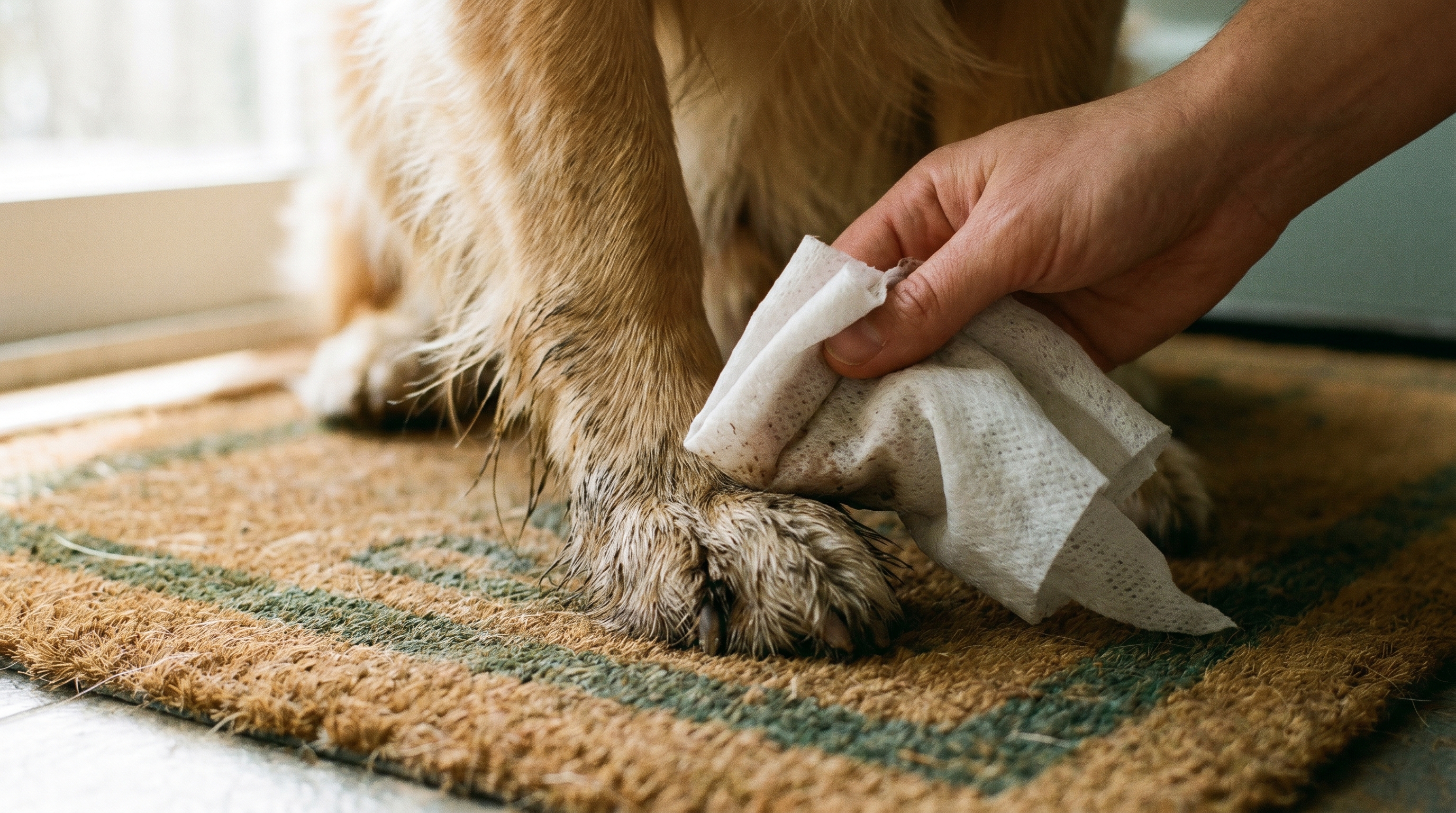
You know the moment. Your golden retriever barrels through the door after a rainy afternoon walk. Muddy paw prints track across the kitchen floor before you can even unhook the leash. You grab a wipe from the pack you opened three weeks ago, and it’s already half-dried. Useless.
This happens because most dog paw wipes prioritize shelf cost over substrate quality. The difference between a wipe that works and one that crumbles in your hand comes down to what it’s made of and how it holds moisture over time.
A Judge.me reviewer put it plainly in April 2026: “These wipes are perfect for cleaning up my dog’s paws after a muddy run!” That kind of reliability starts with the fiber, not the label.
Most pet wipes are a thinly disguised baby wipe with synthetic fragrance and an aspirational dog on the label. The GIVE A SH!T® full-body pet wipes are built on VEOCEL™ Lyocell fibers instead, which is a different material conversation entirely.
What makes a paw wipe actually safe for daily use?
A paw wipe your dog’s skin can tolerate every day needs three things: the right substrate material, a formula without drying agents, and enough texture to clean between toes without scrubbing raw.
Dr. Paula Simons, the registered veterinarian who reviewed the GIVE A SH!T® wipes formula, notes that the ingredient list matters more than packaging claims. The formula contains aloe vera, shea butter, chamomile extract, cucumber extract, oat extract, and vitamin E. No alcohol. No parabens. No fragrance that might irritate a dog who licks their paws after you wipe them.
And dogs do lick their paws. Constantly. If your wipe contains synthetic fragrances or alcohol-based preservatives, your dog ingests trace amounts every time they clean themselves.
Fragrance-free, lick-safe formulas aren’t a nice-to-have. They’re the minimum standard for daily use.
One Judge.me reviewer noted in April 2026 that the wipes “pick up so much dirt from her fur and they have a neutral smell” (Judge.me review #772750644). Neutral smell on a wipe you’re using four times a day matters more than most people think before they’ve tried it.
Why do cheap paw wipes dry out your dog’s paw pads?
Substrate material is the silent variable most buyers ignore. The cheapest dog paw wipes use synthetic polyester or polypropylene. These materials don’t absorb moisture the way plant-based fibers do. They push liquid around.
When you wipe your dog’s paws with a synthetic wipe, you’re spreading whatever dirt and allergens they picked up. You’re not lifting it away.
VEOCEL™ Lyocell fibers work differently. The fiber absorbs and holds moisture. The structure traps debris rather than redistributing it. Your dog’s paws come out cleaner with less friction, and the wipes that hold together through four muddy paws stay usable longer after opening too.
Moisture retention is directly tied to the fiber. A synthetic wipe dries out in the pack because the material doesn’t hold the solution. A VEOCEL™ Lyocell wipe stays wet because the fiber absorbs the liquid into its structure.
One customer flagged this in a Pickfu survey from April 2026: “I would have to start worrying about whether they would stay wet and effective… so the 200 pack seems like the best deal to me.” Real concern, real workaround. Buying a bigger pack shouldn’t be the fix for a fiber problem.
How often should you wipe your dog’s paws?
After every walk. That’s the honest answer if you care about keeping allergens and pesticides out of your house.
Paws pick up more than mud. Grass treatments, road salt in winter, pollen in spring. A quick wipe after each walk removes these before your dog tracks them onto your couch or licks them off their pads.
One Judge.me reviewer in April 2026 dealt with exactly this. Their dog had severe grass allergies. After wiping paws after every outdoor trip, they wrote that the wipes “help get all the grass off and he doesn’t react so bad” (Judge.me review #772750609). That’s a medical necessity for some dogs, not a grooming preference.
One thing most paw-wipe guides skip: if you use a harsh wipe four times a day, you’ll dry out your dog’s paw pads within a week. The skin between their toes cracks. They start chewing at their feet. A wipe designed for occasional mess cleanup is a different product from one built for daily after-walk use.
Daily wipes need moisturizing agents like shea butter and aloe vera built into the formula. That’s not what’s sitting in the impulse display at the PetSmart checkout.
Yes, this is the part where we mention our wipes. The formula Dr. Simons reviewed was built for this exact cadence: daily contact, multiple wipes per session, dog skin that licks itself clean afterward.
How do the best dog paw wipes compare?
| Feature | GIVE A SH!T® wipes | Generic synthetic wipes | Baby wipes |
|---|---|---|---|
| Substrate material | 100% VEOCEL™ Lyocell (wood-based). | Polyester/polypropylene blend. | Varies; often synthetic. |
| Moisture retention after opening | High; fiber structure holds the solution. | Low; dries out quickly in the pack. | Moderate. |
| Fragrance-free | Yes, all packs. | Varies by brand. | Rarely. |
| Alcohol-free | ✅ Yes. | Varies by brand. | Often contains alcohol. |
| Lick-safe formula | Vet-reviewed; lick-safe. | Check the label before use. | Human formulation; not designed for pet ingestion. |
| Wipe size | 8 x 8 inches, textured. | Smaller; often 6 x 7 inches or less. | Varies; typically smaller than 8 x 8. |
| Fiber compostability | VEOCEL™ Lyocell fibers carry independent compostability certifications on the fiber substrate. | Synthetic fibers; not compostable. | Typically synthetic; not compostable. |
| Pack sizes | 100, 200, 400, or 600. | Typically 30 to 100. | Typically 50 to 100. |
One note on the fiber compostability row: GIVE A SH!T® wipes are made with VEOCEL™ Lyocell fibers, which carry independent compostability certifications on the fiber substrate. The full formulated wipes product (fiber plus cleansing formula together) doesn’t yet hold a separate whole-product certification; that process is underway. If a competitor wipes brand makes a full-product compostability claim, ask to see the cert number.
Frequently asked questions about dog paw wipes
Are dog paw wipes safe for daily use?
Yes, if the formula is built for it. Wipes with alcohol, synthetic fragrance, or parabens can dry out paw pads with repeated daily use. Look for fragrance-free, alcohol-free, paraben-free formulas with moisturizing agents like aloe vera and shea butter. The GIVE A SH!T® formula was reviewed and signed off by Dr. Paula Simons, a registered veterinarian, specifically for daily contact use.
Can I use baby wipes on my dog’s paws?
Occasionally, a baby wipe won’t hurt. As a daily routine, it’s a problem. Dog skin sits at a pH of around 7.0; human skin sits at 5.5. Baby wipes are formulated for human skin pH. Using them daily on paw pads shifts the skin’s barrier balance over time. The other issue is fragrance: most baby wipes are scented, and those fragrances irritate a dog who licks their paws after being wiped.
How do I keep wipes from drying out in the pack?
Two things matter: the seal and the substrate. Press the seal flat after every use. But a wipe that dries out fast is usually a substrate problem, not a seal problem. Synthetic polyester or polypropylene wipes don’t hold the solution the way VEOCEL™ Lyocell fibers do. If you’re regularly tossing dried-out wipes, the fiber is the issue.
What should I look for in a paw wipe for dogs with skin sensitivities?
Fragrance-free is the starting requirement. Then alcohol-free. Then check the preservative system: some wipes use parabens or formaldehyde-releasing preservatives. The GIVE A SH!T® formula uses a preservative system built around caprylyl glycol and gluconolactone. Dr. Paula Simons, the veterinarian who reviewed the formula, noted that dogs with sensitive skin respond best to formulas where fragrance and alcohol are both fully absent.
Are paw wipes enough, or do I need to wash my dog’s paws after every walk?
For everyday allergen and mud removal after a normal walk, wipes are enough. For deep contamination like tar, paint, or certain garden chemicals, a proper rinse is better. The 8 x 8 inch textured wipes are sized to cover an entire paw in one pass rather than requiring multiple wipes per foot, which makes the post-walk routine faster for most dogs.
Do paw wipes help with dog allergies?
They help with contact allergens your dog picks up outside: grass pollen, mold spores, road salt. A Judge.me reviewer in April 2026 described this exact situation. Their dog had severe grass allergies. After wiping paws every time they came inside, it helped clear the grass off and the reaction improved (Judge.me review #772750609). Wipes don’t treat allergies. They reduce the allergen load your dog tracks inside and licks off their pads.
How many wipes do I need per week?
A dog walked twice a day, four paws per walk, gets through roughly 56 wipes a week if you use one wipe per paw. Many owners use two per session on large breeds or after wet weather. The 200-count pack covers most single-dog households for about a month. The 400 and 600 packs suit multi-dog homes or anyone who doesn’t want to reorder every few weeks.