

Medically reviewed by Dr. Catherine Nicolaou, DVM.
Quick answer: The Pandikona is a rare native hunting and guarding dog from the Kurnool hills of Andhra Pradesh, bred by local shepherds to take on wild boar and fend off wolves and leopards. Hardy, fiercely territorial and independent, it is a landrace shaped by its terrain, not a kennel-club creation, and its numbers are quietly shrinking.
In the rocky hills around Pandikona village in Andhra Pradesh, a lean, watchful dog has guarded goats and hunted boar for close to four centuries. Most Indians have never heard its name. It has no pedigree papers, no breed club, no show ring. It has something rarer: a job it has done, unchanged, since long before any of that existed.
What the Pandikona actually is
The Pandikona is a landrace, a dog shaped by work and environment rather than by breeders. It comes from Pandikona, a small rural pocket of the Kurnool district in Andhra Pradesh, where herding and hunting communities developed it over an estimated 300 to 400 years to hunt wild boar and to guard livestock from wolves and leopards. It descends from India’s ancient pariah-type dogs, the same primitive stock behind much of the country’s native canine heritage, and is said to carry historical ties to the Vijayanagara empire.
That origin matters, because it explains everything about the dog: the hardiness, the independence, the suspicion of strangers, and the fact that it is still, at heart, a working village dog rather than a pet.
The “Indian Doberman” label, and why it misleads
Black-and-tan Pandikonas are sometimes marketed as the “Indian Doberman.” It is a catchy nickname and a misleading one. The Pandikona has no relation to the Doberman Pinscher, a modern German breed; the resemblance is only in colour. Like the Bully Kutta being confused with the American Bully, this is a case of a native Indian dog borrowed a foreign name it never earned. It is its own breed, older than the comparison.
Pandikona facts at a glance
- Also called: Pandikona hunting dog, sometimes the “Indian Doberman”
- Origin: Pandikona, Kurnool district, Andhra Pradesh
- Type: primitive landrace hunting and guarding dog
- Height: roughly 50–66 cm (20–26 in) for males, a little less for females
- Coat: short and low-maintenance; fawn, cream, white, or black with white patches, with brindle the rarest
- Temperament: loyal, intelligent, independent, strongly territorial, wary of strangers, affectionate with its own people
- Lifespan: around 12–15 years; landrace hardiness usually means few inherited health problems
- Best suited to: rural or semi-rural homes with space and an experienced, active owner; not an apartment or first-time dog
- Recognition: none (not recognised by the Kennel Club of India or any major registry)
What a Pandikona looks like
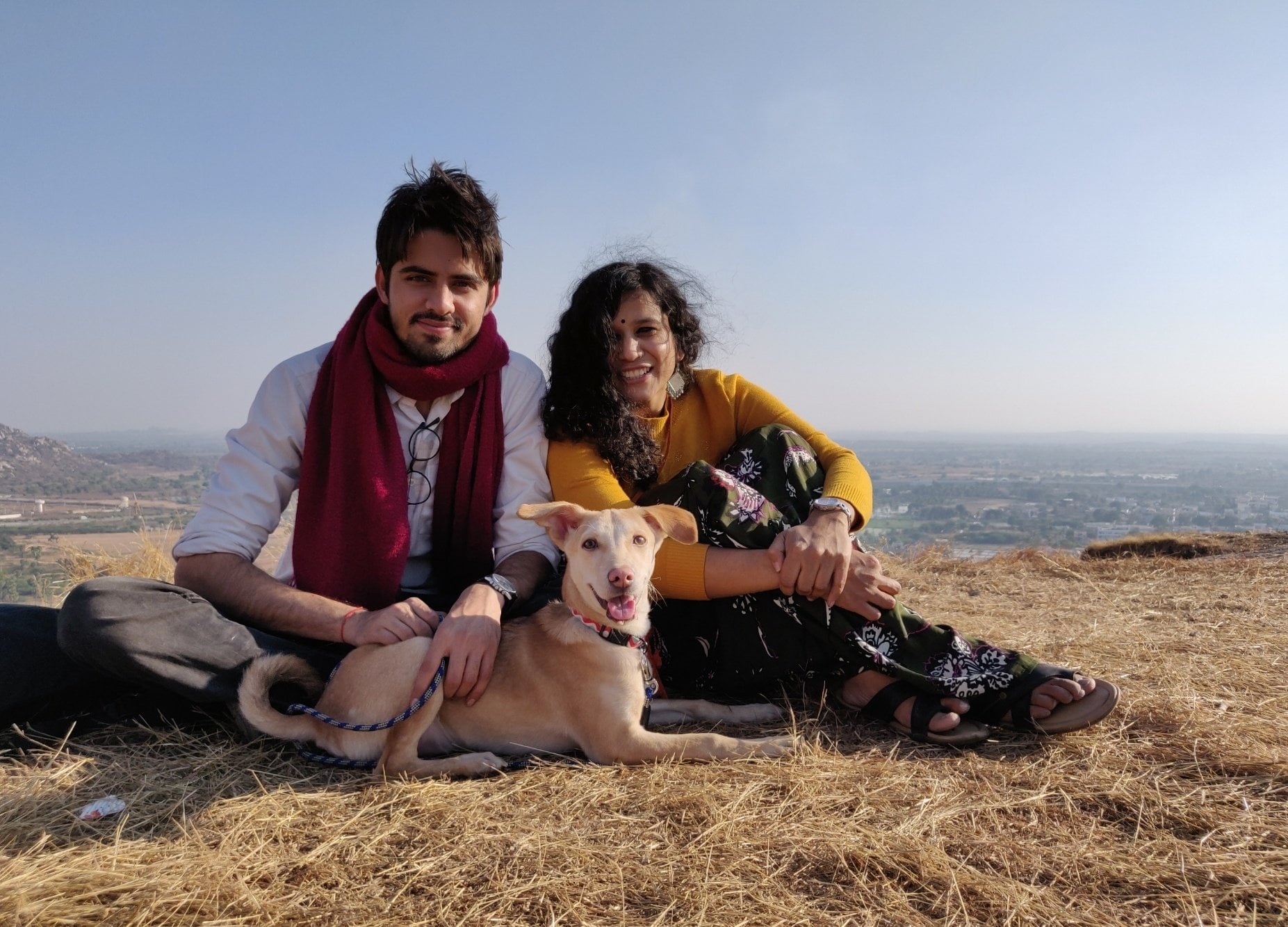
The Pandikona is a medium-sized, athletic dog built for stamina over rough country: lean and muscular, with a short easy-care coat and an alert, upright bearing. Coats run fawn, cream, white or black-and-white, with brindle the rarest of all. There is nothing exaggerated in its build. Everything about it is functional, the mark of a dog refined by survival rather than fashion.
Living with a Pandikona: the honest version
This is a working dog with a working dog’s mind. Pandikonas are intensely loyal to their families and show a territorial, guarding instinct startlingly early, often as young pups. They are intelligent but independent, bred to make their own decisions on a hunt, which means they are not naturally biddable in the way a Labrador is. With their own people they are affectionate and gentle; with strangers, reserved and watchful.
That makes the Pandikona a poor fit for a small flat or a first-time owner, and a wonderful one for an active, rural or semi-rural home that can give it space, a job and firm, early socialisation. It needs to move, and it needs a role. Give it neither and its guarding drive turns into a problem.
Pandikona health (vet-reviewed)
Here is the upside of a landrace. Because the Pandikona was never bred for a look, it has largely escaped the inherited diseases that plague designer breeds, and is generally a robust, long-lived dog with few genetic problems. That is not a reason to skip veterinary care. Every Pandikona still needs its core vaccinations, routine deworming, tick and flea control, and protection from the heat. Its hardiness is a head start, not a guarantee.
A breed quietly going extinct
The real Pandikona story in 2026 is not its temperament; it is its survival. The population is small and shrinking, confined mostly to its home region, and it faces the same slow erasure as many of India’s native dogs: indiscriminate crossbreeding, a national obsession with imported breeds, and almost no public awareness that the dog exists at all. There is no kennel-club recognition to protect it and no organised conservation programme of any scale. What is keeping it alive is a handful of local herders and enthusiasts who still value the working dog for what it does.
This is exactly why writing native breeds down, accurately and without romance, matters. A dog the country has never heard of cannot be missed when it is gone.
Pandikona vs India’s other native dogs
- Pandikona vs Indian pariah dog — the Pandikona is a regional landrace refined from pariah stock for hunting and guarding; the Indian pariah is the broader, ancient free-ranging type behind it.
- Pandikona vs the southern sighthounds — unlike the pure sighthounds of Tamil Nadu, the Pandikona is as much a guard as a hunter, hunting by sight and scent and staying to protect the home.
- Pandikona vs the “Indian Doberman” tag — no link to the German breed; the name is marketing, not lineage.
Pandikona FAQs
Is the Pandikona a recognised breed? No. It is an indigenous landrace from Andhra Pradesh, not recognised by the Kennel Club of India or any major registry, and its numbers are declining.
Is the Pandikona the same as a Doberman? No. The “Indian Doberman” nickname comes only from the black-and-tan colouring of some dogs. The Pandikona is an ancient native breed with no relation to the German Doberman Pinscher.
Is the Pandikona a good family dog? For the right home, yes. It is loyal and affectionate with its family, but its strong guarding drive and independence suit an experienced owner with space, not an apartment or a first-time owner.
Are Pandikonas healthy? Generally, yes. As a landrace bred for work rather than looks, it tends to be hardy and long-lived with few inherited problems, though it still needs routine vaccination, deworming and heat care.
Adopt, don’t shop. For the full picture of the country’s desi dogs, see our guide to India’s native dog breeds.