

When you purchase through links on our site, we may earn a commission at no extra cost to you. Learn more.
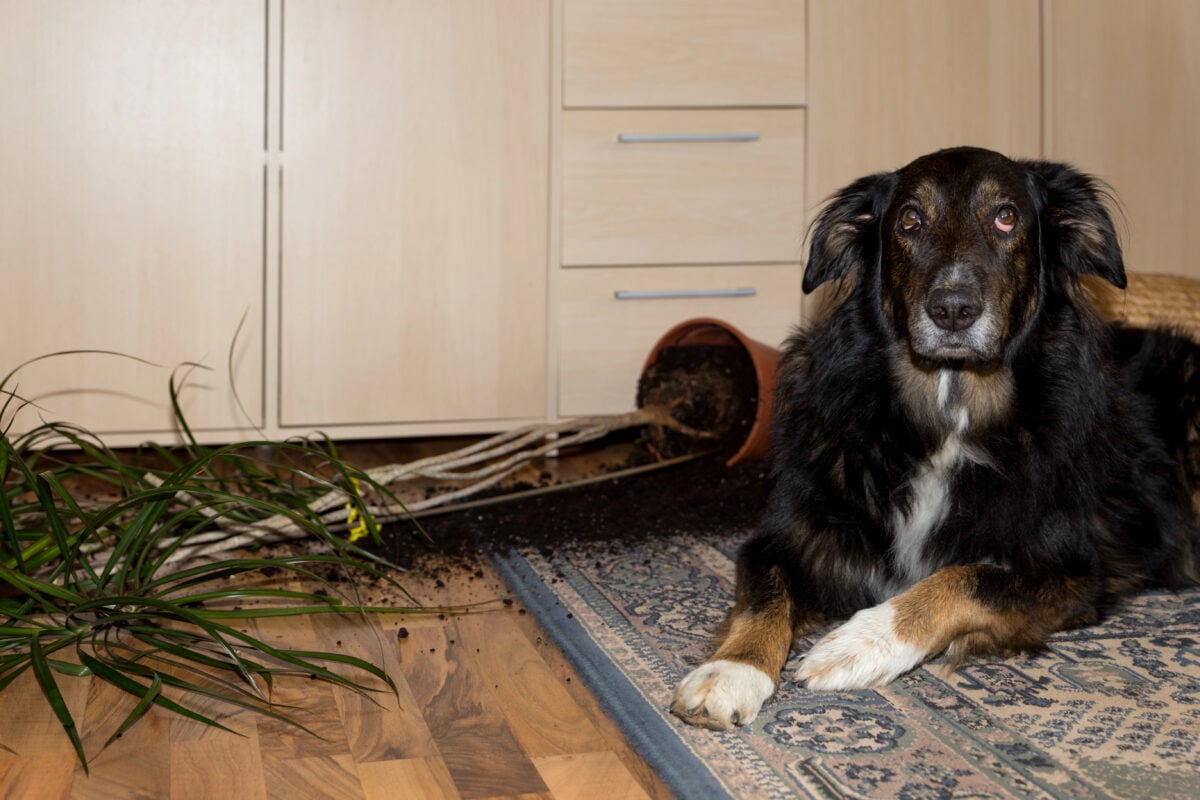
You walk into the room and find the trash can tipped over, toilet paper shredded across the floor, or a chewed shoe beside your dog. Before you even say a word, they turn away, pin back their ears, and avoid eye contact.
They know exactly what they did, right?
Maybe not. Dogs absolutely respond to our emotions and behavior, but that classic “guilty look” might not be what you expect. Here are 8 dog behaviors that look like guilt but often mean something else, plus what your dog may actually be trying to tell you.
Caught Red-Pawed: Do Dogs Actually Feel Guilty?
That lowered head, tucked tail, and sideways glance can look an awful lot like remorse. But while dogs experience a wide range of emotions, there’s no clear evidence that the familiar “guilty look” means they understand they did something wrong and regret it.
Research suggests that this so-called “guilty look” is actually a response to owner cues, aka how we react. In one well-known study, dogs showed “guilty” behaviors when their owners scolded them, regardless of whether the dogs had actually disobeyed. In fact, the effect was stronger when the dog had actually obeyed.
This doesn’t mean your dog has no idea that something is up after they do something they shouldn’t. Dogs are remarkably good at reading our tone, facial expressions, posture, and routines. They can also learn from past experiences that certain situations, like trash scattered across the kitchen floor, tend to change how their human behaves.
So that sheepish expression is communicating something. It just may be closer to “Uh-oh, you’re upset” than “I deeply regret what I did.”
12 Dog Behaviors That Look Like Guilt But Usually Aren’t
Once you know what to look for, many of the behaviors we associate with guilt can tell a very different story. Dogs use their entire bodies to communicate, and a tucked tail or turned head can mean something very different from “I’m sorry.”
Here are 12 behaviors that can make a dog look guilty and what they may actually be communicating.
1. Avoiding Eye Contact
You find the remains of a paper towel roll scattered across the living room, look at your dog, and they immediately turn their head away. It’s easy to interpret that refusal to meet your gaze as guilt, but looking away is a common way dogs de-escalate an uncomfortable interaction.
Direct eye contact can feel intense or threatening, so turning the head or averting the eyes may be your dog’s way of saying, “I don’t want any trouble.”
You may also notice what is colloquially known as “whale eye,” where your dog turns their head away while keeping their eyes on you, exposing the whites around their eyes. This is a clear sign your dog is feeling discomfort, stress, or fear, especially when accompanied by other tense body language.
Quick Tip: Because no single signal tells the whole story, pay attention to what your dog’s eyes are doing alongside their ears, tail, posture, and movement. Our guide to dog body language can help you put all those signals together.
2. Hiding Or Creating Distance
Some dogs don’t stick around to face the music. They retreat behind the couch, head for another room, crawl under a table, or simply move away from you.
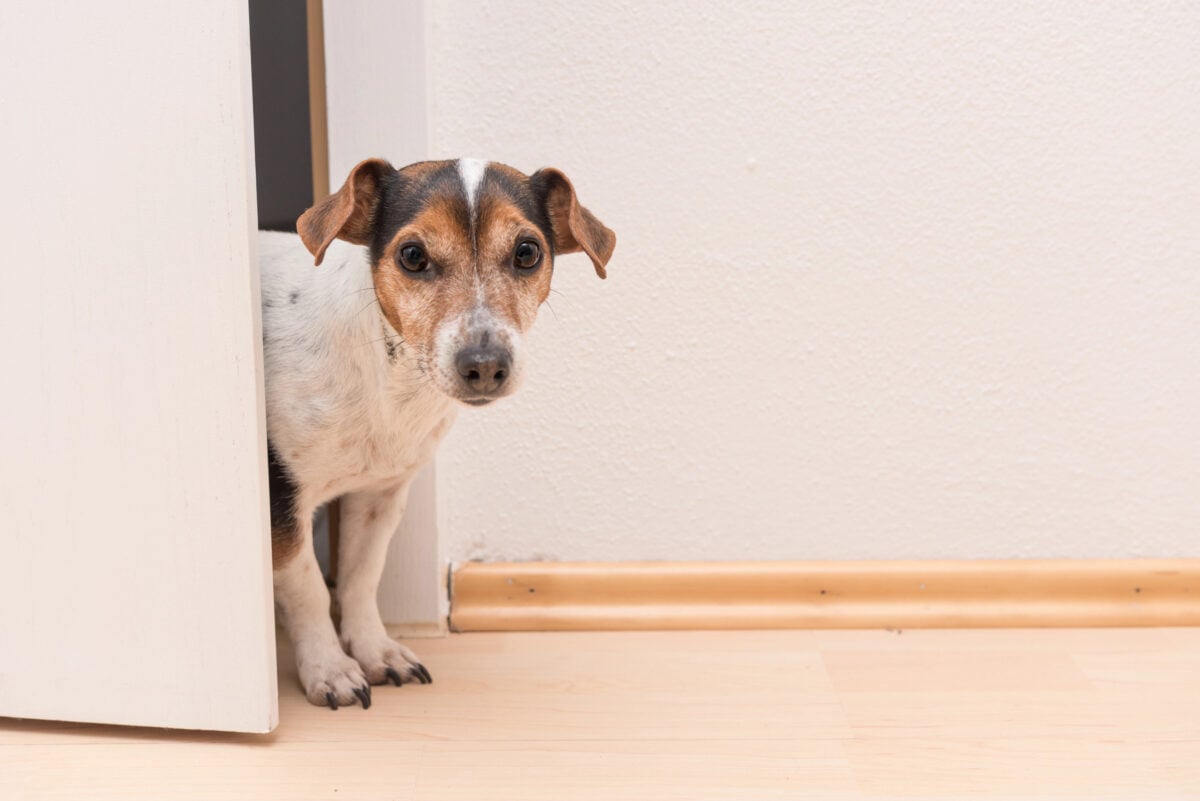
That retreat can look suspiciously like a dog who knows they’re in trouble, but creating distance is also a natural response when a dog feels worried, overwhelmed, or unsure about what will happen next.
Did You Know? Creating distance can be part of a dog’s flight response, an instinctive attempt to get away from something that feels uncomfortable or threatening. Learn more about fight, flight, and freeze/fret in our guide to what dogs are scared of.
3. Making Themselves Look Small
The classic “busted” pose often involves more than the face. Your dog may crouch, lower their head and shoulders, lean backward, or practically melt toward the floor.
Making the body smaller is commonly associated with appeasement, fear, or uncertainty. Rather than confessing to the chewed shoe, your dog may be trying to appear less threatening and reduce tension between you.
Watch: As this Golden approaches, notice the lowered body and head, ears held back, partially closed eyes, and lip licking. Dogs often combine multiple body-language signals at once, which can make that familiar “guilty” expression especially convincing.
4. Pinning Their Ears Back
Flattened or pulled-back ears are practically a staple of the guilty-dog look. But ears back aren’t a canine confession.
Dogs move their ears for many reasons, and pulled-back ears can accompany fear, anxiety, appeasement, excitement, or even friendly social interactions. Their other body language provides important context.
Warning: Ears pinned tightly back alongside a crouched body, lip licking, or attempts to retreat can signal that your dog is frightened or highly uncomfortable. A scared dog can quickly escalate towards defensive behavior. Learn more about fear-related behavior and other potential causes in our guide to sudden dog aggression.
5. Licking Their Lips Or Nose
A quick flick of the tongue can be easy to miss. Dogs may lick their lips or nose when they’re feeling stressed, uncertain, or trying to diffuse tension, even when there’s no food around.
Context matters. Your dog licking their lips after dinner is very different from repeatedly flicking their tongue while you’re standing over them asking, “Who got into the trash?”
6. Freezing Or Becoming Very Still
You discover a destroyed couch cushion, turn toward your dog, and suddenly they become a statue. That stillness can easily look like, “Uh-oh, I’ve been caught,” but freezing is an important stress response.
When a dog feels overwhelmed or unsure how to respond, they may stop moving altogether while they assess the situation. A stiff body, tucked tail, ears back, trembling, or refusal to move can accompany that response.
7. Lifting A Front Paw
A raised front paw can be a subtle sign of uncertainty or anticipation. When the paw lift appears alongside other stress or appeasement signals, it can be part of your dog’s response to an uncomfortable situation.
8. Tucking Their Tail
A tail tucked between the legs can make even the most innocent dog look like they’re remorseful. But tail position is much more useful for understanding how your dog feels in the moment than determining whether they regret something they did earlier.
A lowered or tightly tucked tail commonly accompanies fear, stress, or uncertainty. You might also notice your dog lowering their body or moving cautiously at the same time.
Tip: Don’t assume a wagging tail means everything is fine. Dogs can wag when they’re uncertain or emotionally aroused, too, so look at the entire body rather than the tail alone.
9. Shaking Or Trembling
Trembling can occur when dogs are frightened, stressed, or highly aroused. If the trembling begins when an interaction becomes tense and appears alongside behaviors like crouching, avoiding eye contact, lip licking, or trying to get away, your dog may be overwhelmed rather than remorseful.
Watch: The owner can easily spot which dog looks “guilty” from the mix of shaking, fleeing, and other behaviors. That doesn’t necessarily mean the dog actually feels guilty. They may have learned from past experiences that a mess like this predicts an unhappy owner and tension.
10. Yawning Or Sneezing
A yawn seems like it should mean “I’m tired,” but dogs may also yawn during stressful or uncomfortable situations. It’s one of those subtle behaviors that’s easy to overlook when you’re focused on the shredded couch cushion.
Sneezing can be even more confusing. Dogs may sneeze during play, excitement, or social interactions, and an occasional sneeze isn’t evidence that your dog is stressed. Sneezing can sometimes occur alongside other appeasement-type behaviors during a tense interaction.
11. Rolling Over And Exposing Their Belly
Dogs may roll onto their backs and expose their bellies during appeasement, particularly when they feel uncertain or want to reduce tension. In that context, rolling over can look remarkably like a dog dramatically surrendering after being “caught.”
The rest of the body helps distinguish an uncomfortable dog from one eagerly requesting affection. A loose, wiggly dog who seeks contact is very different from a dog who rolls over and becomes stiff, avoids eye contact, pins their ears back, or tucks their tail.
Watch: This Boxer rolls onto their back but remains very still and avoids eye contact as their owners interact with them. Belly exposure isn’t always an invitation for affection. Look at the dog’s entire body to understand how they’re feeling.
12. Flashing A “Grin”
Few things make a guilty dog look more human than pulling back their lips and flashing what appears to be a nervous smile. It can look so deliberate that you might swear they’re trying to charm their way out of trouble.
Some dogs display what’s commonly called a submissive grin, and despite all those visible teeth, this expression can be an appeasement gesture rather than a threat. As always, look at the rest of the dog’s body language to distinguish a loose, appeasing grin from a tense warning display.
Watch: This Aussie displays several behaviors we just covered, including lip licking, paw lifting, shaking, sneezing, and grinning. These are referred to as appeasement gestures, and together can suggest stress and an attempt to reduce tension, not necessarily guilt.
So Why Does My Dog Look Guilty?
By now, you’ve probably noticed a pattern: the “guilty look” is often less about what your dog did earlier and more about what they’re experiencing right now.
Your dog doesn’t necessarily understand that they did something “wrong.” Instead, they’re reacting to you.
A change in your tone, facial expression, posture, or movements can tell them very quickly that something is different and you’re unhappy.
But My Dog KNOWS What They Did!
This is where things get tricky. What if your dog starts looking guilty before you’ve even discovered the evidence? You walk through the door, they won’t look at you, and suddenly you know to start checking the trash cans.
Surely that means they remember what they did.
Not necessarily. Dogs are incredibly observant and quick to learn patterns. If scattered trash has previously been followed by an upset owner, your dog may learn that trash on the floor + human walks in = tension is coming.
There’s an important difference between knowing that certain situations predict an unhappy owner and understanding that a past action was “wrong.” Your dog may have learned the first without necessarily grasping the second.
Think of it this way: Your dog may know something is about to happen without thinking, I shouldn’t have done that.
That doesn’t make dogs any less emotionally connected to us. If anything, it shows just how closely they watch us and learn our routines, reactions, and moods.
What To Do Instead Of Scolding Your Dog
Finding your favorite shoe in pieces is frustrating, but scolding your dog after the fact doesn’t clearly show them what you wanted them to do instead. If enough time has passed, they may associate your anger with what’s happening at that moment rather than the earlier behavior.
Focus on preventing another opportunity and teaching the behavior you want:
- Manage the environment. Put tempting shoes away, secure the trash, block access to off-limits areas, and supervise when necessary.
- Ask why it happened. Boredom, teething, excess energy, anxiety, lack of supervision, and incomplete house training can all contribute to unwanted behavior.
- Teach an alternative. Reward your dog for making the choice you want, whether that’s chewing their own toy, settling on a mat, or leaving something alone. Consistent obedience training can help establish those expectations.
- Provide appropriate outlets. A dog looking for something to do is much more likely to invent their own entertainment. Brain games, interactive toys, and chew toys can provide productive physical and mental stimulation.
Got A Four-Legged Shredder? Puppies explore the world with their mouths, and chewing is a normal part of development. If shoes, furniture, and everything else seem fair game, see our tips for stopping destructive puppy chewing.
When A Behavior Change Deserves A Closer Look
Looking away when you discover an overturned trash can is one thing; suddenly hiding, cowering, having accidents, destroying things, or behaving differently without an obvious reason is another.
Pay closer attention when a behavior is new, persistent, getting worse, or happening in situations where you wouldn’t expect it. Changes in behavior can sometimes be related to stress, anxiety, changes in routine, pain, illness, or age-related changes.
For example, a previously house-trained dog who suddenly starts having accidents isn’t necessarily “acting guilty” because they know they shouldn’t go inside. The accident itself could be a sign that something has changed, particularly if changes in appetite, thirst, energy, mobility, sleep, or other physical symptoms accompany it.
What About Rescue Dogs?
Past experiences can shape how a dog responds to tension, raised voices, sudden movements, or other situations. This may be especially relevant for rescue dogs whose histories aren’t fully known.
A dog who cowers, hides, freezes, or becomes highly appeasing when someone is upset may be responding to a learned fear from an earlier experience, not guilt over something they just did. Not every rescue dog has experienced trauma, so focus on the behavior you’re seeing rather than assuming what happened in their past.
When To Call Your Vet
If your dog’s behavior changes suddenly or you notice other physical or behavioral symptoms, contact your veterinarian. Pain, illness, cognitive changes, or other medical problems can sometimes appear first as changes in behavior.
Once medical causes have been ruled out, persistent fear, anxiety, destructive behavior, or other concerns may benefit from help from a qualified trainer or veterinary behaviorist.
Frequently Asked Questions
Still convinced your dog knows exactly what happened to that missing sandwich or shredded pillow? These common questions dig a little deeper into what dogs understand, remember, and learn from our reactions.
Don’t see your question? Respond in the comments, and we’ll get back to you!
Do Dogs Know When They’ve Done Something Wrong?
Dogs can learn that certain behaviors are allowed while others lead to an unwanted response, but that isn’t necessarily the same as understanding that something was morally “wrong.”
They learn rules largely through associations, consequences, and reinforcement. Teaching and rewarding the behavior you want is more useful than assuming your dog understands why you’re upset.
Why Does My Dog Look Guilty Before I Say Anything?
You don’t have to say a word for your dog to notice that something has changed. Dogs pay close attention to facial expressions, posture, movements, routines, and other environmental cues. You may be staring at the overturned trash can or moving differently without realizing it.
Past experiences matter, too. If similar scenes have previously resulted in an unhappy owner, your dog may recognize the situation and anticipate your reaction before you speak.
Why Does My Dog Hide After Doing Something Bad?
Hiding doesn’t necessarily mean your dog feels ashamed. Creating distance can be a response to fear, stress, uncertainty, or anticipated conflict.
If your dog expects an uncomfortable interaction, retreating under a table or into another room may simply be their way of avoiding it.
Do Dogs Understand When You Scold Them?
Dogs certainly recognize an angry tone, tense posture, or other signs that you’re upset. What they may not understand is why you’re upset, particularly if you’re scolding them for something that happened earlier.
Correcting a dog well after finding a mess can therefore create fear or confusion without clearly teaching them what they should have done differently. Prevention, redirection, and rewarding desired behavior are generally more useful for changing future behavior.
How Long Does A Dog Remember Doing Something Wrong?
There’s no simple time limit because different types of canine memory work differently. Dogs can form long-lasting associations and remember people, places, routines, and learned behaviors, but remembering an event isn’t the same as understanding later that the behavior violated one of your rules.
So, if you come home to a shredded pillow from hours earlier, don’t assume your dog’s sheepish expression proves they’ve been sitting there regretting their decision. In reality, they may simply recognize the situation and anticipate what happens next.
Your Dog Is Always Communicating
That “guilty” face may not be an admission of wrongdoing, but it is still communication. The better you become at reading your dog’s body language, the easier it is to recognize what they’re feeling and respond appropriately.
Of course, understanding the message is only half the battle when your shoes keep mysteriously disappearing. Consistent obedience training an help teach the behaviors you want, while the right dog toys can give curious chewers a much better target than your favorite pair of sneakers.