






Golden Retrievers are genuinely easy dogs to love. They’re gentle, social, and endlessly enthusiastic about everything, including food. That enthusiasm, combined with a breed-wide tendency toward weight gain, means feeding a Golden isn’t something you can leave to chance. Too much food too early damages growing joints. Too little in adulthood results in muscle loss and a dog that simply isn’t thriving.
This Golden Retriever feeding chart is built for Indian dog owners who want practical guidance, not just generic quantities copied off the back of a food bag.
Why Golden Retrievers Need Careful Feeding Throughout Their Lives
Most dog owners know that puppies and seniors need special attention. What often gets missed is that Golden Retrievers have a few breed-specific tendencies that affect how you should approach feeding at every stage.
According to a study published in PLOS ONE, Golden Retrievers have one of the highest obesity rates among dog breeds, with some surveys suggesting over 60% of adult Goldens in developed countries are overweight or obese. India doesn’t have equivalent data, but the pattern holds in Indian households too, where table scraps and generous treating are common.
Goldens also have a genetic predisposition to certain cancers, hip dysplasia, and elbow dysplasia. Maintaining a lean body weight through proper feeding has a direct protective effect on joint health and may reduce inflammation linked to cancer risk, according to research summarised by the Morris Animal Foundation’s Golden Retriever Lifetime Study.
Getting the feeding chart right for a Golden isn’t just about weight. It’s about the quality of the dog’s entire life.
Golden Retriever Feeding Chart by Life Stage
Puppy Feeding Chart: 2 Months to 12 Months
| Age | Daily Meals | Approx. Daily Quantity (Dry Food) |
| 2–3 months | 4 meals | 150–200g |
| 3–6 months | 3 meals | 200–270g |
| 6–9 months | 3 meals | 270–340g |
| 9–12 months | 2–3 meals | 320–380g |
Puppies between 3 and 6 months are in a particularly sensitive growth window. Overfeeding during this phase doesn’t make a Golden puppy grow faster; it causes fat cell development and rapid skeletal growth that puts disproportionate pressure on joints. Stick to the chart, resist the puppy eyes, and don’t add extra meals just because they seem hungry.
Adult Feeding Chart: 1 Year to 8 Years
| Weight of Dog | Daily Dry Food (Low-Moderate Activity) | Daily Dry Food (High Activity) |
| 25–28 kg | 270–320g | 340–380g |
| 28–32 kg | 310–360g | 370–420g |
| 32–36 kg | 350–400g | 410–460g |
| 36+ kg | 390–440g | 450–510g |
Indian Goldens are often slightly smaller than Western breed standards, with many females sitting in the 25–30kg range and males around 30–36kg. Adjust your portion baseline to your dog’s actual weight, not what the breed standard says they should weigh.
Spayed and neutered Goldens have noticeably slower metabolisms. If your dog has been desexed, drop the daily quantity by 10–15% and monitor monthly.
Senior Feeding Chart: 8 Years and Above
| Age | Daily Dry Food | Notes |
| 8–10 years | 260–320g | Switch to senior formula; monitor weight closely |
| 10+ years | 230–290g | Add joint supplements; offer smaller, more frequent meals |
Goldens age earlier than some breeds. By 8, most dogs are noticeably slower on walks and may show early joint stiffness. Senior food formulas are lower in calories and higher in joint-supporting nutrients, which is worth the switch even if your dog still seems energetic.
Feeding Your Golden Retriever in India: Food Options That Work
Commercial Dry Food (Kibble)
A quality large-breed kibble covers all nutritional bases and is the most practical option for most Indian households. For Goldens specifically, look for food with DHA for coat health, glucosamine and chondroitin for joints, and a real meat protein as the first ingredient.
Recommended: Drools Focus Starter Super Premium Dry Dog Food
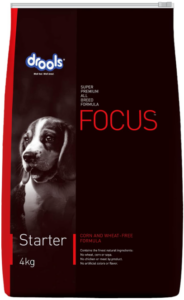
A solid option for Golden puppies, with appropriate protein levels and DHA to support early development. Widely available online and through most Indian pet stores.
Home-Cooked Meals
Golden Retrievers do well on home-cooked food provided the diet is planned with some care. A practical Indian home-cooked meal for a Golden:
- Protein (40–50%): Boiled chicken (boneless), eggs, fish like rohu, paneer in small amounts
- Carbohydrates (30–35%): Plain white rice or boiled sweet potato
- Vegetables (15–20%): Carrots, pumpkin, beans, spinach; avoid onion, garlic, and grapes
- Fat source: Fish oil capsule daily; a small amount of coconut oil occasionally
The major gap in purely home-cooked diets for Goldens is omega-3 fatty acids. Goldens are known for their coats, and poor omega-3 intake directly shows up as dull fur and dry skin. A daily fish oil capsule added to the meal addresses this directly.
Golden coats also need consistent brushing to stay in good shape, especially during seasonal shedding in the cooler months.
Recommended: HANK Deshedding Brush for Dogs

Built specifically for double-coated breeds like Goldens. It pulls out the loose undercoat without damaging the topcoat, which reduces the amount of fur around the house significantly and keeps the coat looking healthy between baths.
Raw Feeding (BARF)
Raw feeding has a small but growing community among Indian Golden owners. Raw meaty bones (chicken necks, chicken frames) provide excellent calcium and dental health benefits. Never give cooked bones. BARF diets aren’t suitable for households with young children due to bacterial contamination risk.
Indian Climate and Seasonal Feeding Adjustments
Summer (March to June): Goldens are double-coated dogs originally from Scotland’s cool climate. Indian summers are genuinely hard on them. During peak summer, appetite drops are normal. Don’t force meals. Offer food in the early morning and after sunset. Adding water to kibble improves hydration during this period.
Monsoon (July to September): Goldens tend to regain appetite during the monsoon. Watch for skin and ear infections, which are common in humid conditions. Diet doesn’t directly cause these, but Goldens with poor nutrition are more susceptible.
Winter (November to February): For Goldens in North India, winter is when they thrive. Activity increases, appetite increases, and coat quality visibly improves. This is the season where you can slightly increase portions for active dogs.
Reading Your Golden’s Body Condition
A Golden Retriever’s coat makes it easy to miss weight gain until it becomes significant. The fur hides a lot. You need to use touch, not just sight.
Rib test: Lay both hands flat along the ribcage. Press gently. You should feel distinct ribs under a thin layer of muscle and fat. If you need to press hard to find them, the dog is overweight. If they’re visible without touching, the dog is underweight.
Waist visibility from above: Even through the coat, a healthy Golden should show a visible waist tuck behind the ribcage when viewed from directly above. If the outline is a uniform barrel shape, that’s a weight problem.
Check monthly. Goldens gain weight subtly and consistently, and by the time it’s visually obvious, it’s already been building for months.
Common Feeding Mistakes Golden Retriever Owners Make in India
Free feeding: Leaving food out all day is a reliable path to obesity with this breed. Goldens will eat whenever food is available, not just when they’re hungry. Scheduled meals twice a day are non-negotiable.
Too many treats during training: Goldens are one of the most trainable breeds precisely because food motivates them so strongly. Heavy training periods can double daily caloric intake through treats alone. Use small treat sizes and count them as part of the daily food budget.
Feeding table scraps: Indian cooking isn’t designed for dogs. Spiced dal, oily sabzi, and curried meats all contain ingredients that cause digestive upset or worse.
Switching food without transition: Any food change needs a 7–10 day blend period. Doing it overnight causes diarrhoea that owners then mistake for a food intolerance.
Conclusion
Following a consistent Golden Retriever feeding chart adjusted for your dog’s age, weight, and the Indian climate is one of the most practical things you can do for their long-term health. Start with the portion guidelines here, do the rib test monthly, and make adjustments based on what your dog’s body is actually telling you rather than what they’re asking for with their eyes.
FAQs
How many times a day should I feed my Golden Retriever?
Puppies up to 6 months need 3 meals daily. From 6 to 12 months, 2–3 meals work well. Adult Goldens should have 2 meals a day: morning and evening. One large meal increases bloat risk and makes the dog food-obsessed throughout the day.
My Golden is gaining weight despite being on the right portion size. What should I check?
First, account for treats, training rewards, and any table scraps. Second, check whether your dog has been spayed or neutered — desexed dogs need 10–15% fewer calories. If portions are clean and activity is consistent but weight is still rising, a thyroid check at the vet is worth doing.
Can I mix kibble and home-cooked food?
Yes, many Indian dog owners do this successfully. A common approach is kibble as the base meal with a small amount of home-cooked protein added for variety. Just make sure total caloric intake stays within the daily range — adding home-cooked food on top of a full kibble portion will lead to weight gain over time.
Do Golden Retrievers need supplements?
A dog on a good quality commercial food doesn’t strictly need supplements. Senior Goldens benefit from glucosamine and chondroitin for joint health. Dogs on home-cooked diets need a daily multivitamin and omega-3 source.
Is rice good for Golden Retrievers?
Plain boiled rice is easy to digest and works well as a carbohydrate source for Goldens. As a regular diet staple, it’s fine as long as protein intake is adequate — rice on its own doesn’t provide the amino acids or nutrients a Golden needs.