

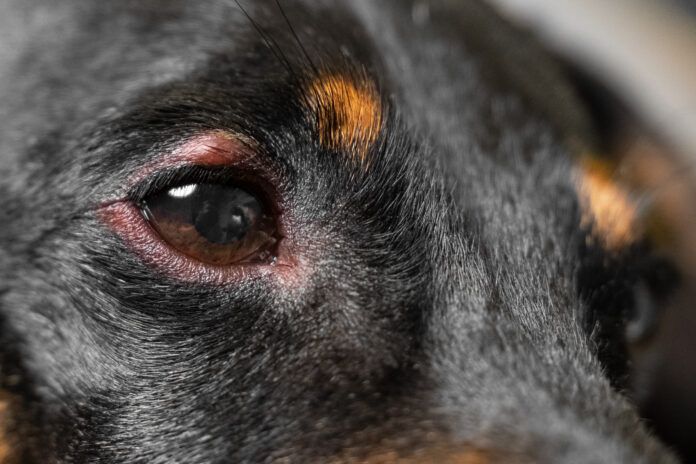
Have you experienced your dog getting a stye on his eye? It is painful. How do you know whether it’s a veterinary emergency or not? That may require your veterinarian.
A dog stye is a painful red bump on your dog’s eyelid. It typically results from when an oil gland or hair follicle on your dog’s eyelid gets blocked and then infected. This can affect dogs of any age, but it’s usually more likely to occur on older dogs as well as certain breeds such as those with brachycephalic features.
Most mild dog eye styes can easily be treated at home, provided you be mindful of watching for worsening symptoms. It is, however, important to make sure that it is indeed a stye versus another eye condition such as eyelid infection or tumor or a chalazion, which is a usually non-painful lump inside of the eyelid.
Is That a Stye on My Dog’s Eye?
A stye in a dog is on the outside of the eyelid. It is usually inflamed and can look red or pink around the edges of the eyelid. There will be increased blinking or squinting notable in the dog. Your dog may paw at his eye, and there may be increased discharge.
If these symptoms are mild, you can attempt to treat this yourself. If it interferes with your dog’s quality of life, a veterinary visit is in prompt order! Provided that the stye is on the milder side and you practice good hygiene while treating it, it may clear up in a few days to a week. This treatment is a bit intrusive, and not all dogs will welcome it without restraint. Therefore, teaching your dog some cooperative care practices is like putting money in the bank for when you need it.
Steps to Take Caring for a Dog Stye
- Use a warm wet washcloth (not hot please!) with excess water wrung out to gently pat the area where the stye is. You can hold it there for about a minute if your dog is comfortable with such. You can also gently massage that area to promote drainage again if your dog is comfortable with this process. Do this two to three times a day. It should go without saying that the water needs to be a safe and comfortable temperature for your dog and the pressure used should be very light.
- Ask your vet’s opinion on saline solutions or nonprescription eye washes that are safe for dogs so that you can try that at home before a vet visit. Please do not choose something like this with veterinary approval.
- If your dog is fussing over the stye with any amount of pawing, you may need to consider using an Elizabethan collar or similar device that stops the dog from getting to the eye.
- If the stye is worsening at all or not showing signs of improvement within a week, please consider a veterinary visit ASAP. Caring for your dog’s eyesight is an important part of their health-care program.
