There’s something very summer about watching a dog lose their mind with happiness at the beach. Sand flying, waves splashing, absolutely zero impulse control in sight. But good beach safety for dogs involves a little more than tossing a towel in the car and hoping for the best.
Between heat, hot sand, salt water, sharp shells, strong currents, bacteria, and the weird mystery things dogs always try to eat near shorelines, beaches come with more hazards than most people realize.
The good news is that most beach-related problems are pretty preventable with a little planning (and realistic expectations about your dog’s decision-making skills).
And honestly, you don’t even need an ocean beach for most of this advice to matter. Lake beaches count too, especially the grassy ones where dogs inevitably find mud, goose poop, and whatever dead fish nature decided to gift everyone that day.
Make Sure the Beach Actually Allows Dogs
This sounds obvious, but beach rules are all over the place.
Some beaches allow dogs year-round. Others only allow them during off-season months or at certain hours. Some require leashes no matter how well-behaved your dog is. Others have designated dog-friendly areas.
Checking ahead saves you from that deeply annoying moment where you unload towels, chairs, coolers, toys, and a very excited dog…only to see a giant “NO DOGS” sign at the entrance.
Also worth checking:
- Whether the beach has shade
- Whether there’s fresh water available
- If lifeguards are present
- Water quality advisories
- Local algae warnings
- How crowded it typically gets
Because not every dog enjoys “summer fun.” Some dogs enjoy quietly judging strangers from a reasonable distance.
(Freya would absolutely fall into that category.)
Bring More Water Than You Think You Need
Dogs get dehydrated quickly at the beach, especially when they’re running nonstop in hot weather.
And unfortunately, many dogs try to solve this problem by drinking ocean water. Anyone who has ever watched any movie where people are stranded at sea knows that this is definitely not ideal.
Too much salt water can cause vomiting, diarrhea, dehydration, and in severe cases, salt toxicity. Lake water isn’t necessarily safer either, depending on bacteria or algae levels.
Bring plenty of cool fresh water and a portable bowl, and encourage regular drink breaks before your dog gets overly thirsty.
A collapsible travel bowl (I like the two-pack below) or insulated water bottle designed for dogs makes this much easier, especially if you’re walking a long distance from the parking area.

We earn a commission if you make a purchase, at no additional cost to you.
Watch Out for Hot Sand
People remember hot pavement. They forget sand can become lava by mid-afternoon.
If it’s too hot for your bare feet, it’s too hot for your dog’s paws.
Burned paw pads are painful and slow to heal, and beach sand heats unevenly, so one area may feel fine while another is scorching.
Try to visit during cooler times of day:
- Early morning
- Late afternoon
- Evenings
You can also bring:
Some dogs tolerate boots beautifully. Others, like Freya, react like you’ve attached cursed objects to their feet and collapse dramatically onto the ground.
You probably already know which category your dog falls into.
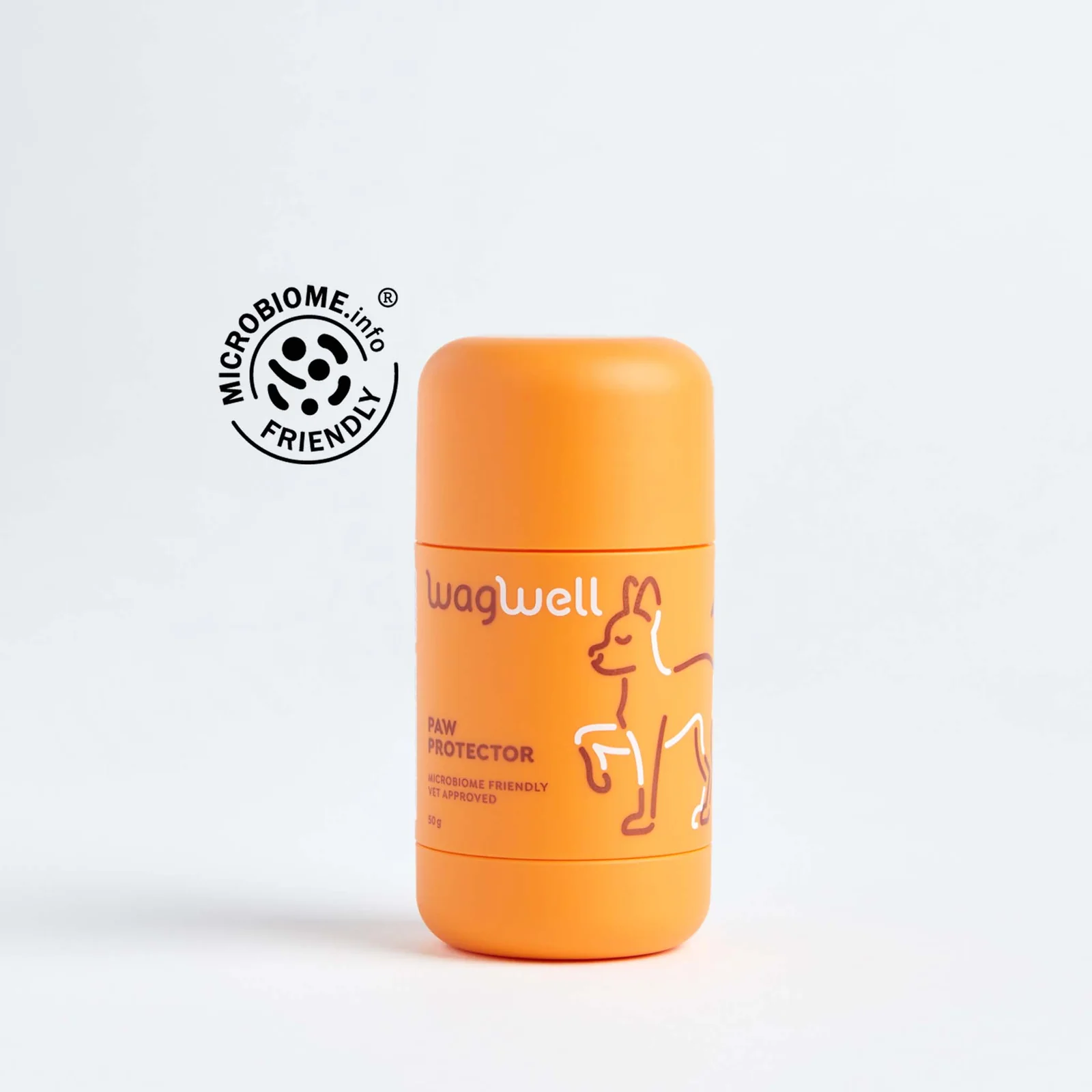
My Favorite Dog Paw Balm
WagWell Paw Protector
Designed to protect and nourish your dog’s paws, WagWell Paw Protector Hydrating Dog Paw Cream offers a natural defense against environmental challenges. This vet-approved, microbiome-friendly formula creates a protective barrier against salt, snow, and hot pavement while conditioning and moisturizing paw pads.
We earn a commission if you make a purchase, at no additional cost to you.
Don’t Assume Your Dog Can Swim Safely
This one surprises people. A dog being able to swim does not automatically mean they’re safe in open water.
Ocean currents, undertows, sudden drop-offs, waves, and even strong lake currents can exhaust dogs quickly. Some dogs panic once they’re beyond shallow water, especially if waves start hitting them in the face.
Even strong swimmers can get into trouble.
A properly fitted dog life jacket is honestly one of the smartest things you can bring, particularly for:
- Senior dogs
- Short-nosed breeds
- Small dogs
- Dogs new to swimming
- High-energy dogs with absolutely no self-preservation instincts
The handle on the back is also incredibly useful when your dog decides they would like assistance exiting the water immediately and with great urgency.
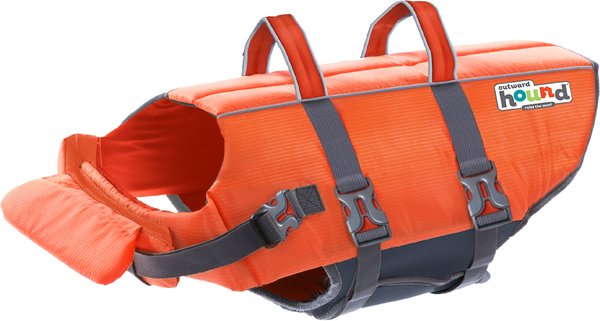
My Favorite Life Jacket
Outward Hound Granby Splash Orange Dog Life Jacket, Large
This high-buoyancy life jacket offers strong floatation support for new and experienced swimmers. Bright colors with reflective accents enhance visibility, while top grab handles make it easy to lift and assist your dog. A front neck float helps keep your pal’s head above water.
We earn a commission if you make a purchase, at no additional cost to you.
Be Careful With Fetch in the Water
Some dogs will play fetch until they physically collapse if given the opportunity.
They don’t pace themselves. They don’t hydrate voluntarily. They don’t think, “Perhaps I should rest for a few minutes.”
They just keep going.
Repeated sprinting and swimming in heat can lead to exhaustion or heatstroke surprisingly fast. Water play can actually mask overheating because dogs look cooler while still overexerting themselves.
Take frequent breaks and watch for signs like:
- Excessive panting
- Glassy eyes
- Weakness
- Wobbling
- Bright red gums
- Slowing down suddenly
- Vomiting
And skip the endless “one more throw” cycle. Your dog will never be the one to call time on the game.
Learn the Signs of Heatstroke
Heatstroke is one of the biggest beach dangers for dogs.
Dogs don’t cool themselves efficiently, and beaches combine several heat factors at once:
- Direct sun
- Reflective sand
- High humidity
- Physical activity
- Warm air temperatures
- Excitement-induced overexertion
Some dogs are especially vulnerable:
- Seniors
- Puppies
- Thick-coated breeds
- Flat-faced breeds
- Dogs with heart or respiratory issues
Signs of heatstroke include:
- Heavy or frantic panting
- Thick drool
- Vomiting
- Diarrhea
- Confusion
- Collapse
- Bright red or pale gums
If you suspect heatstroke:
- Move your dog into shade immediately
- Offer cool (not ice-cold) water
- Use cool wet towels on paws, belly, and groin
- Contact a vet immediately
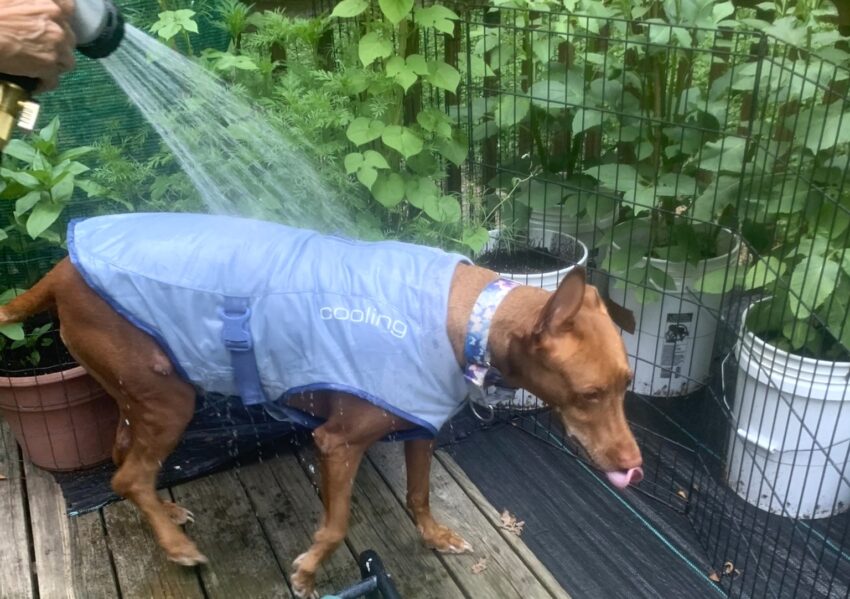
Portable cooling vests, cooling towels, and pop-up shade tents can help reduce heat stress, especially on long beach days.
One note about cooling vests- you actually need to keep them wet (or at least damp). Freya has one that we love, but I’ve noticed that when it’s totally dry it keeps her warm in the winter. That’s great for getting more life out of the vest (especially since this is the only coat she’ll wear without throwing a tantrum), but not so great if it’s trapping heat on a hot day.
Watch for Blue-Green Algae
This is a big one at lakes and ponds.
Blue-green algae (cyanobacteria) can look like:
- Green paint floating on the surface
- Thick scum
- Pea soup water
- Green streaks near shorelines
It can produce toxins that are extremely dangerous to dogs, even in small amounts.
Dogs are especially at risk because they:
- Swim in it
- Drink contaminated water
- Lick algae off their fur afterward
If the water looks questionable, skip it entirely. Local advisories are worth checking before heading out, especially during very hot weather.
Honestly, if a lake looks like a forgotten spinach smoothie, trust your instincts.
This is a really good video explaining what to look for (skip to about 38 seconds in, the chapter on Characteristics).
Rinse Your Dog Off Afterward
Salt, sand, lake bacteria, and debris can all irritate your dog’s skin and coat.
And if your dog has allergies or sensitive skin, beach residue can trigger itching pretty quickly.
A quick rinse helps remove:
- Salt
- Sand
- Bacteria
- Algae residue
- Sunscreen residue
- Tiny shell fragments
Pay extra attention to:
- Paws
- Belly
- Ears
- Tail area
Dog ears, especially floppy ears, trap moisture easily after swimming. That damp environment is basically an engraved invitation for ear infections.
A gentle ear cleaner designed for dogs can help after water-heavy outings.
Yes, Dogs Can Get Sunburned
Dogs with light-colored fur, thin coats, or exposed pink skin can absolutely get sunburned.
Common problem spots:
- Nose
- Ear tips
- Belly
- Around the eyes
Use a pet-safe sunscreen if your dog will be in direct sun for extended periods.
And no, human sunscreen is not automatically safe. Some ingredients (like zinc oxide) can be toxic if licked.
Shade breaks matter too. A beach umbrella or portable canopy helps more than people realize.
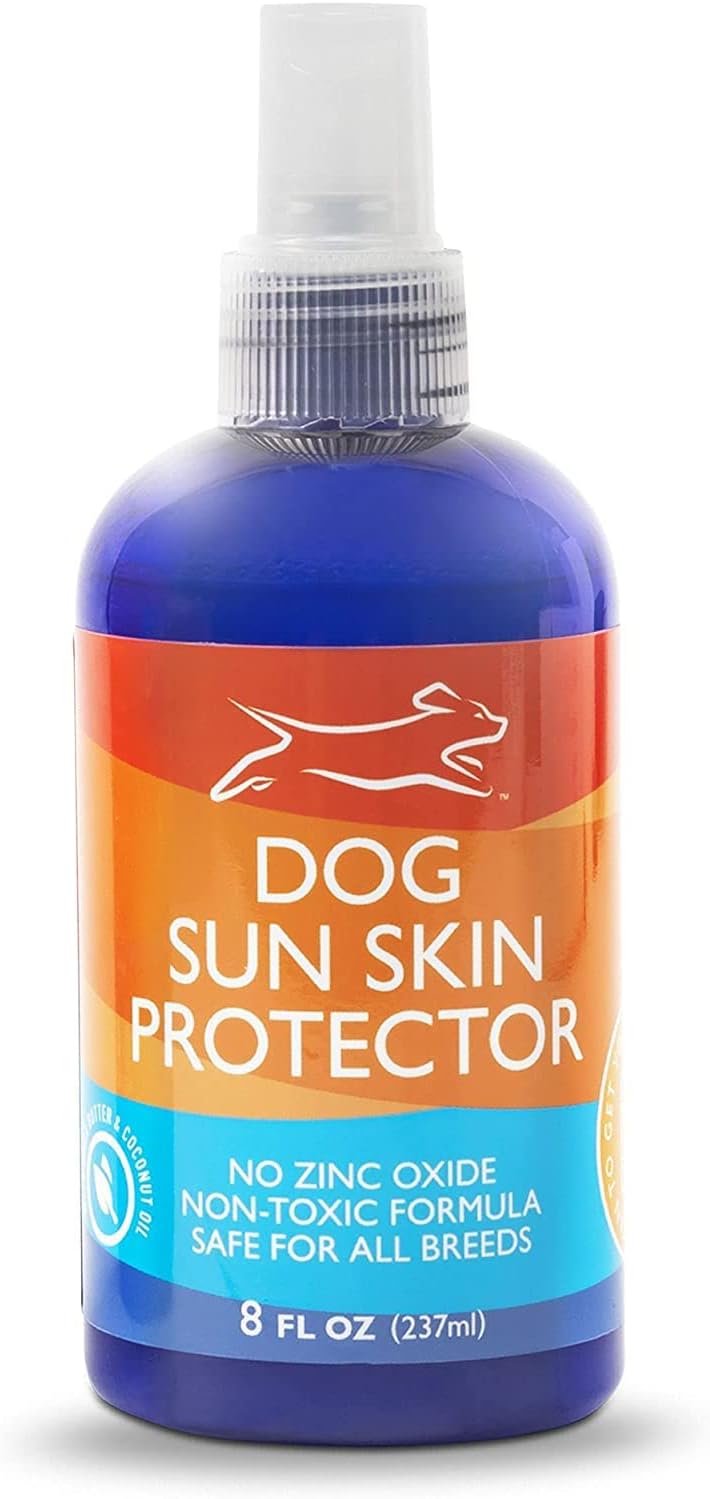
My Favorite Sunscreen for Dogs
Emmy’s Best Pet Products Sun Skin Protector Dog Spray
rotect your dog’s skin and coat from the sun with Emmy’s Best Pet Products Sun Skin Protector Dog Spray. This sunscreen for dogs is naturally-derived, non-greasy, and non-toxic, specially designed for your canine companion.
We earn a commission if you make a purchase, at no additional cost to you.
Be Mindful of Wildlife and Beach Debris
Beaches are full of things dogs should not eat but desperately want to investigate.
Examples include:
- Dead fish
- Jellyfish
- Crab remains
- Sharp shells
- Fishing hooks
- Seaweed
- Trash
- Cookout leftovers
Some dogs treat beaches like an all-you-can-eat buffet curated entirely by raccoons.
Keeping a close eye on scavenging behavior is important, especially if your dog tends to inhale questionable objects before you can react.
Check Your Dog for Hidden Sand Problems
Sand gets everywhere.
Including places you genuinely wish it wouldn’t.
Check:
- Paw pads
- Between toes
- Ears
- Eyes
- Skin folds
Packed sand between paw pads can cause irritation and tiny abrasions, especially after a long day walking.
Some dogs also end up with stomach upset from swallowing too much sand while playing fetch or digging.
Which, unfortunately, can lead to what vets sometimes refer to as sand impaction. Not exactly the beach souvenir anyone wants.
Don’t Forget Beach Etiquette
Not everyone loves dogs, even very good dogs. And honestly, not every dog loves every other dog either.
Keep your dog under control, respect leash rules, and pay attention to body language around unfamiliar dogs and people.
A beach full of overstimulated dogs can get chaotic quickly.
Also:
- Pick up after your dog
- Prevent excessive barking
- Don’t allow charging up to strangers
- Give nervous dogs space
- Avoid crowded areas if your dog gets overwhelmed
A quieter section of beach is usually more enjoyable for everyone anyway.
Lake Beaches Count Too
A lot of dog owners automatically think “ocean” when they hear beach safety, but lake beaches come with their own issues.
Especially the grassy ones.
You’re more likely to deal with:
- Ticks
- Mud
- Goose droppings
- Hidden sticks
- Fishing gear
- Algae
- Snakes in some regions
But they’re also often calmer and less overwhelming than packed coastal beaches, which can make them great for dogs who don’t enjoy crowds or crashing waves.
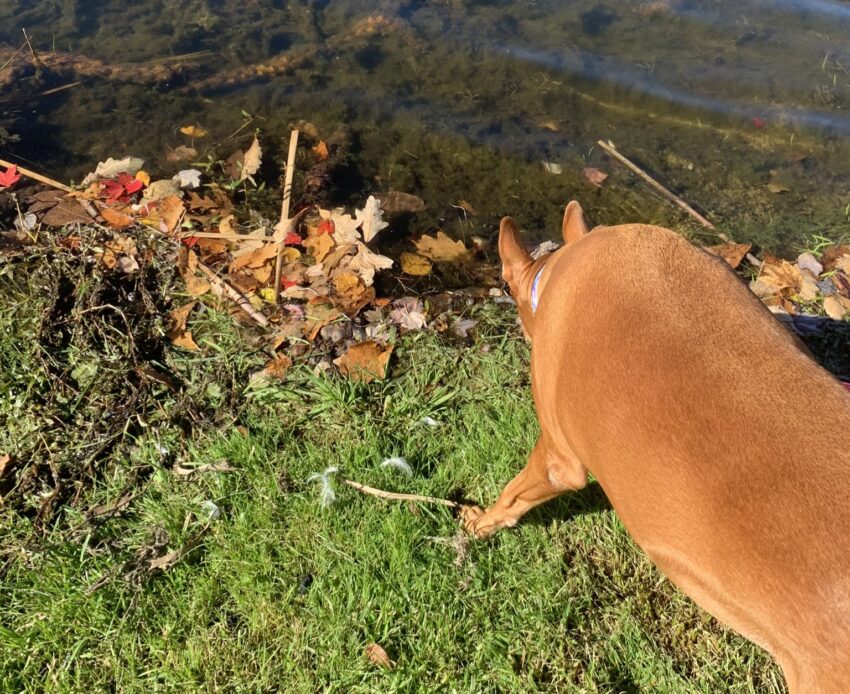
Freya loves her lake walks, but I do worry about goose poop and bird flu. I try to steer her clear of it, which is hard when there are 50 geese on the lake using the beach as a bathroom. Thankfully she ignores it now, although she is oddly fascinated by regular bird poo for some reason.
Final Thoughts
Beach days with dogs can be incredibly fun, but they go best when you plan around your dog’s limits instead of assuming they’ll naturally know when to slow down or avoid danger. Because they won’t.
Bring water. Bring shade. Watch the heat. Keep an eye on the water conditions. And maybe accept ahead of time that your car interior will contain sand until approximately October. That part is basically unavoidable.