

When you purchase through links on our site, we may earn a commission. Here’s how it works.
Have you ever made eye contact with a Doodle and immediately felt like you were being evaluated?
Like, not in a cute way. In a “this dog is looking into my soul” kind of way.
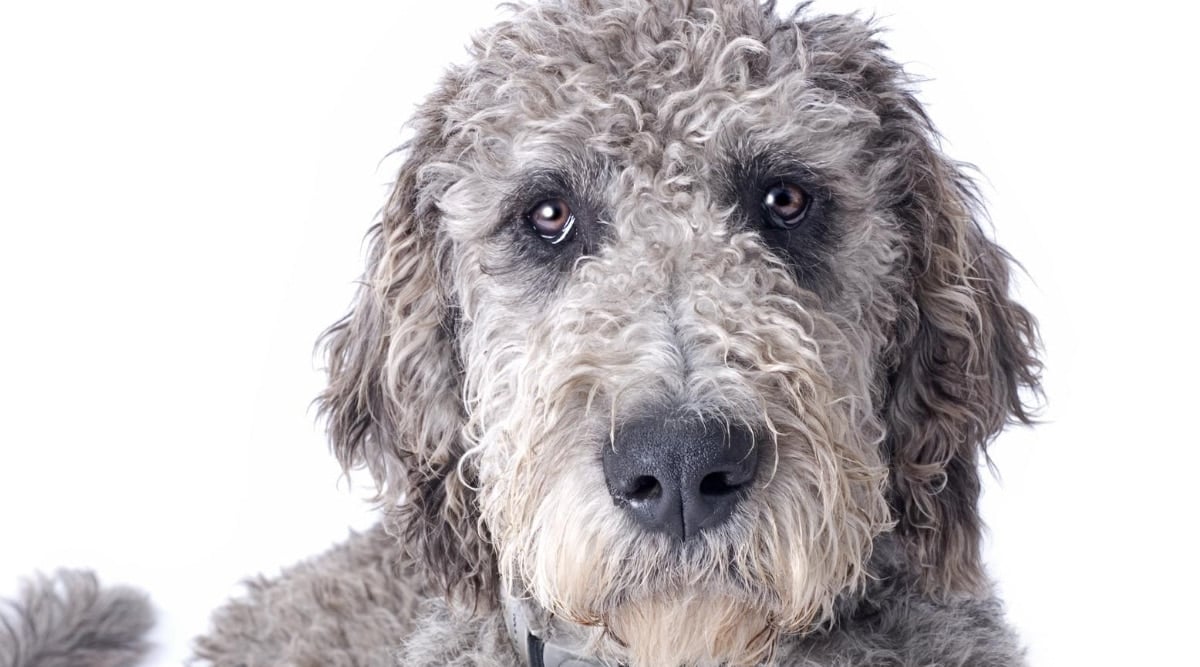
It’s not just the fluff or the teddy-bear face. It’s the eyes, the expression, the way they sit there and watch you like they’re following along — and possibly judging your decisions.
And once you notice it, it’s hard to unsee.

Wait, What’s A “Doodle,” Exactly?
If you’ve somehow avoided the internet for the last decade (or have been living a peaceful, algorithm-free life under a rock), “Doodle” is the catch-all name for Poodle mixes, often called designer dogs.
The most common ones include:
They’re known for fluffy coats, highly expressive faces, and an uncanny ability to look like they’re about to join your conversation.
The Internet Is Obsessed With Doodles Looking & Acting Human
At some point, the internet became obsessed with Doodles doing very human things.
Not just cute like the typical dog, but sitting like a person. Watching you like they’re following the conversation. Reacting in ways that feel just a little too… aware.
And once you notice it, you start seeing it everywhere.
You’ve probably seen at least one of these and had the exact same reaction: You stop scrolling and watch a second longer than you meant to. And then think: “Why does this feel like a person?”
Scroll Your Feed & You’ll See It Everywhere
Once your brain locks onto it, it’s hard to ignore.
Spend a few minutes scrolling, and it starts to feel oddly consistent:
- A Goldendoodle perched on the couch like they pay rent
- A Labradoodle holding eye contact, like it’s waiting for you to finish your sentence
- A Bernedoodle pausing mid-action with an expression that looks thoughtful
Not just cute but recognizable.
And then some push it just a little further.
Standing upright for no clear reason. Walking in a way that looks… intentional.
Not clumsy or chaotic. Just slightly too composed for a dog.
Open any of those videos, and the comment section fills up immediately.
And what’s interesting isn’t just that people react. It’s how similar (and polarized) the reactions are.
What People Always Say About Doodles
- “That is a reincarnated human.”
- “He understands everything.”
- “Why do I feel like he’s judging me?”
- “You can see into their soul.”
People aren’t just reacting to a dog being funny. They’re reacting to something that feels uncannily familiar—just slightly outside what they expect from a dog.
It’s Not Just What They’re Doing
It’s easy to assume it’s just the behavior. The sitting, staring, and little pauses.
But plenty of dogs do those things. They just don’t hit the same way.
It’s How They Look While Doing It
And that’s where Doodles start to stand out.
- Rounded, teddy bear-style faces
- Big, forward-facing eyes you can actually see
- Soft, balanced features that feel unusually composed
So when a Doodle sits still or holds eye contact, it feels deliberate.
Why Do Doodle Dogs Look So Human?
Before you even get to the behavior, there’s something about how Doodles look that sets this whole thing in motion.
It’s not one feature. It’s the combination, like your brain is quietly adding things up and arriving at a slightly confusing conclusion.
It Starts With The “Teddy Bear” Effect
Some of this comes down to grooming.
That soft, rounded “teddy bear” style smooths out the sharper angles you’d normally expect on a dog’s face.
The muzzle looks shorter, the cheeks look fuller, and the overall shape feels softer and more balanced.
Instead of looking rugged or animal-like, the face starts to feel polished.
It gives the impression that this dog didn’t just roll out of bed — they scheduled a grooming appointment and asked for something “clean, but approachable.”
The Eyes Do Most Of The Work
Then there’s the part your brain notices immediately, even if you don’t realize it.
The eyes.
Unlike many dogs whose eyes are partially hidden by fur or shadows, Doodles often have:
- Large, visible eyes
- Forward-facing placement
- Large irisis with visible whites
- Long lashes that create a strikingly human gaze
This matters more than you’d think because the moment your brain clearly sees eyes, it starts trying to read them.
Now you’re not just glancing at a dog, you’re making eye contact.
There’s Actually A Scientific Reason For This
What feels like a coincidence isn’t entirely random.
In 2019, researchers studying dogs and wolves found something surprising: Dogs have evolved facial muscles specifically to communicate with humans.
In particular, they developed a muscle that allows them to raise their inner eyebrows, creating expressions that look more familiar and easier for us to interpret.
That subtle movement makes their faces appear:
- More expressive
- More emotionally readable
- More human-like
So when a Doodle gives you that look, your brain is responding to signals it’s been wired to recognize.
Soft, Suspiciously Well-Balanced Features
There’s one more piece that quietly ties all of this together.
Balance.
Doodle faces tend to have:
- Rounded contours
- Centered features
- Symmetry that feels visually “complete”
Nothing looks too sharp or feels out of place.
And your brain loves that because humans are wired to recognize and respond to balanced, symmetrical faces — something we associate with familiarity and trust.
Put It All Together, And It Starts To Feel Different
None of these traits is unusual individually. Plenty of dogs have big eyes, soft fur, and expressive faces.
But Doodles tend to stack all of them at once.
So, instead of seeing a dog and moving on, your brain pauses. Because it’s picking up on cues that feel familiar, but don’t quite belong in the category it expects.
And that’s where the whole “almost human” feeling starts to take shape.
It’s Not Just The Face — It’s How They Act
The look gets your attention, but the behavior is what makes it stick.
The Head Tilt That Feels Like a Follow-Up Question
The head tilt is universally cute, but with Doodles, it can feel oddly specific.
You say something, they tilt their head, and suddenly it doesn’t just look like curiosity. It looks like they’re processing; they didn’t quite catch that, and they’d appreciate it if you could repeat yourself, maybe a bit slower this time.
Sitting Or Standing Like A Human
Then there’s the way they position themselves. Not flopped, sprawled, or halfway off the couch like most dogs.
Instead, Doodles have a habit of:
- Sitting upright on the couch like they’ve claimed a spot
- Standing upright on two legs
- Holding a posture that feels a little too composed for someone who just ate a sock last week
It changes the whole vibe. They don’t just exist in the room. They seem eerily present.
The Little Gestures That Feel Weirdly Intentional
And then there are the small things that somehow make it worse (or better, depending on your perspective).
- A paw placed gently on your arm like they’re making a point
- A slow nuzzle that feels oddly well-timed
- Quietly shifting closer without making a big deal about it
None of these behaviors are entirely unique to Doodles.
But combined with everything else — the eye contact, the posture, the expression — they stop feeling random. They start to feel… deliberate, like this dog has thoughts and is choosing not to share all of them.
Why Some People Love It (And Others Feel Slightly Weird)
Once you notice this whole “almost human” thing, people tend to split into two groups.
Not dramatically — no one’s arguing about it at dinner. But internally, there’s usually a reaction.
Some People Love The Connection
For a lot of dog owners, this is the best part.
That eye contact, the way Doodles seem to “follow” what’s happening, the quiet little gestures — it all feels like a deeper connection.
- They look at you like they’re listening
- They react in ways that feel oddly well-timed
- They seem to pick up on your mood without much effort
It creates this sense that they understand you. And for a lot of people, that’s exactly what they want.
- “Both of my Doodles are humans dressed in dog costumes because they are the best!”
- “My human children swear I love my doodle more than them…”
- “Mine sits like a person in the car. Any drive through I go in the worker at the window thinks he’s a kid in the back seat.”
- “I’ve had many dogs in my life, I’ve never had a dog use his front paws like hands and arms as much as Louie does.”
- “I’m always looking for the zipper because there has to be a person in there.”
Why It Feels Slightly Off (Or Even Creepy) To Others
And then there’s the other reaction. Not always dislike or even discomfort. Just a quiet sense that something feels a little off.
Usually, it comes down to the same things:
- The all-too-human eyes
- The expressions that feel a little too readable
- The way they posture unlike other dogs
It starts to blur a line your brain is used to keeping pretty clear. Most people don’t think about this consciously. They just feel it.
This Is When People Start Saying Things Like:
- “I think he’s transitioning into a skinwalker.”
- “ur dog is cute but oddly terrifying.”
- “That is an old man in a dog body, and no one will ever be able to convince me otherwise.”
- “I swear every golden doodle looks nervously suspicious.”
Why Your Brain Starts Reading Doodles Like People
At this point, it can start to feel like Doodles are doing something unusual. But what’s really happening is something your brain does all the time — just more noticeably here.
Humans Are Wired To Read Faces
Your brain is incredibly fast at reading faces. The moment it sees eyes, expressions, and subtle movement, it automatically starts asking:
- What are they feeling?
- What are they about to do?
You don’t consciously choose to do this; it just happens.
We Read Animals, Too
There’s a name for it: anthropomorphism, the tendency to assign human thoughts, emotions, and intentions to non-human things.
It shows up in everyday moments:
- Talking to your dog like they understand full sentences
- Assuming they “feel guilty” after doing something wrong
- Interpreting a look as judgment, curiosity, or concern
It’s just how humans make sense of behavior.
Doodles Make It Especially Easy
Doodles happen to hit a very specific combination of cues that make them easier to read than most dogs:
- Clear, visible eyes
- Facial movements that are easy to interpret
- Rounded, balanced features your brain recognizes
- Behavior that feels well-timed and responsive
A Softer Version Of The “Uncanny Valley” Effect
You might have heard of the uncanny valley, the idea that nonliving things that look almost human can feel a little strange.
With Doodles, it’s much softer than that. They don’t actually look human.
But they can get close enough — in eye contact, expression, and posture — that your brain briefly hesitates while it sorts what it’s seeing.
Why It Feels So Real
Once your brain shifts into that “social interaction” mode, it’s hard to switch it off.
That’s why those moments stick.
And why a perfectly normal dog doing perfectly normal things can feel just a little more human than you expect.
It’s Not Just Doodles (But They’re the Perfect Storm)
Doodles aren’t the only dogs that can give off this “almost human” vibe. They’re just the most consistent at it.
Plenty of other breeds check one or two of the same boxes:
- Poodles – highly expressive faces and alert eye contact
- Cavalier King Charles Spaniels – big, soft eyes that practically do all the work for them
- Shih Tzus – rounded faces and that slightly serious, observant look
- Border Collies – famously intense eye contact that feels a little too focused at times
But here’s the difference: most of those breeds bring one strong trait to the table. Doodles tend to bring all of them.
Are Doodles Actually More “Human-Like”?
The short answer is not really. Doodles aren’t more emotional or more aware.
And they’re definitely not sitting there understanding your life choices. They’re still dogs doing very normal dog things.
Why Doodles Get Strong Reactions In General
Part of this has less to do with behavior and more to do with visibility. Doodles are everywhere.
Once a certain look becomes instantly recognizable, people start noticing it more. And Doodles have one of the most consistent, recognizable looks of any “type” of dog right now.
Then the internet takes over. Videos that show unusual posture, expressive reactions, or anything that feels a little “too human” get shared more. This means those moments are what people keep seeing.
Doodles also sit in a space where people already have opinions.
Some people love:
- Their look
- Their personality
- How expressive they seem
Others are more focused on:
- Grooming upkeep
- Training expectations
- Or how different mixes are bred
You don’t have to feel strongly either way to notice this. It just means Doodles tend to spark more conversation than most dogs.
Frequently Asked Questions
Still not convinced your Doodle isn’t secretly thinking things about you? Fair. Let’s run through a few common questions. If you’ve got one we didn’t cover, drop it in the comments.
Why Does My Dog Stare At Me Like A Person?
Dogs use eye contact to communicate, especially with people they’re bonded to.
With more expressive breeds (like Doodles), that eye contact can feel more intense simply because their eyes are easier to see and their expressions are easier to read.
So what feels like a deep, meaningful stare is usually just your dog paying attention and possibly waiting to see if food is involved.
Are Doodles More Emotional Than Other Dogs?
Not necessarily. Doodles aren’t proven to be more emotional. They’re just very expressive.
Their facial features, eye contact, and body language make it easier for humans to interpret what they’re doing, which can make them seem more emotionally attuned than other breeds.
Is It Normal To Feel A Little Weird About A Dog’s Eye Contact?
Yes, completely. That slight “wait, what was that?” feeling is your brain noticing something that doesn’t fit neatly into its usual categories.
It’s not fear or dislike; it’s just a quick moment of confusion when something feels a little more human-like than expected.
Do Dogs Actually Understand Human Emotions?
To a degree, yes.
Dogs are very good at reading tone, body language, and facial cues. They can pick up on whether you’re happy, stressed, or upset, even if they don’t understand the situation itself.
So while they’re not analyzing your life choices, they are paying attention to how you’re feeling.
Why Do Doodles Seem More “Aware” Than Other Dogs?
A lot of it comes down to perception.
Because Doodles are so expressive and easy to read, their reactions can feel more intentional or thoughtful. In reality, they’re behaving like any attentive, social dog. You’re just getting clearer signals from them.
Are Doodles Actually Healthier?
Many of the bigger claims about Doodles, including health-related ones, come down to perception more than reality. Despite the idea of “hybrid vigor,” popular Doodle mixes aren’t automatically healthier than purebred dogs. Learn more in our article, Are Designer Dogs Healthier Than Purebreds?
So which camp are you in about Doodles — loveable or a little creepy? Tell us in the comments. No judgment.