

Labradors are often described as low-maintenance dogs, and in some ways that’s true. They don’t need haircuts. They don’t require professional grooming every month. But low-maintenance is not the same as no maintenance, and Labrador owners who assume the two are equivalent eventually end up with a dog that smells, has ears prone to infection, nails that click on every floor, and a coat that sheds enough fur to build a second dog.
This guide covers the actual Labrador retriever grooming tips that matter, especially for Indian conditions where humidity, heat, and outdoor exposure create specific challenges the breed’s double coat is not naturally prepared for.
Understanding the Labrador Double Coat
Labs have a dense undercoat beneath a shorter, water-resistant outer coat. This combination was designed for cold water retrieval in Newfoundland. In Indian heat and humidity, that same coat traps moisture, develops odour faster, and sheds more heavily than owners expect.
The shedding is not neatly seasonal for Indian Labs — most Labs in India shed moderately year-round, with heavier periods in the spring-to-summer transition and post-monsoon. During peak shed, brushing every day is not excessive. The rest of the year, three to four times a week is generally adequate.
Brushing: The Most Important Grooming Task
A slicker brush handles the topcoat well, but you need an undercoat rake or deshedding brush to reach the dense inner layer where most of the loose fur actually accumulates. Running a slicker brush alone over a Labrador gives you a false sense of having done the job — the undercoat mat is still building underneath.
Brush against the direction of hair growth first to loosen the undercoat, then with the grain to smooth the topcoat. Pay particular attention to the area behind the ears, under the armpits, and around the collar — these spots mat and tangle faster than the rest of the coat.
For owners who walk their Labs in parks or open areas, checking for ticks after every outdoor session is worth building into the routine. The Lab’s dense coat makes ticks easy to miss at a glance.
Recommended: HANK Dog Harness with 3M Reflective Strips
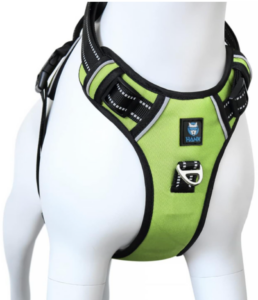
Post-grooming walks are when Labs are at their best-looking. A well-fitted harness also keeps the coat from being compressed unevenly at the neck, which matters for a breed that develops neck pressure points from collar-only walking over time.
Bathing: How Often and How to Do It Right
Every 4 to 6 weeks is the standard for most Labs in India. Bathing too frequently strips the natural oils from the coat and skin, leading to dryness, flaking, and paradoxically — more odour, because the skin compensates by producing more oil.
During the monsoon, you may need to bathe more frequently because the coat picks up mud, dampness, and that specific wet-dog smell that builds up in humid conditions. During summer, some owners shorten the interval to once every 3 weeks simply because the dog is sweating more and spending more time outdoors.
Wet the coat thoroughly before applying any product — the undercoat is dense and does not soak through immediately. Use a dog-specific shampoo and work it through with your fingers down to the skin, not just across the surface. Rinsing needs to be thorough too, as any product left in the undercoat causes skin irritation over the following days.
Dry the coat as completely as possible, particularly in the skin folds around the neck and behind the ears. A Lab that stays damp in those areas is at higher risk for fungal skin infections, which are common in Indian humidity.
Ear Care: The One Area Owners Consistently Underestimate
Labradors are prone to ear infections. Their floppy ears reduce airflow into the ear canal, creating a warm, moist environment where yeast and bacteria thrive. In India’s heat and humidity, this becomes more of an issue than it would be in temperate climates.
Check inside the ears weekly. A healthy Labrador ear is light pink, slightly waxy, and has no smell. If you notice a dark discharge, an unpleasant smell, or the dog shaking their head frequently or scratching at one ear, that’s an infection that needs veterinary attention.
Clean the visible part of the ear canal with a vet-recommended ear cleaner once every 2 weeks. After every bath and after any swimming, dry the inside of the ears with a cotton ball. Water sitting in a Labrador’s ear canal is one of the fastest routes to an ear infection.
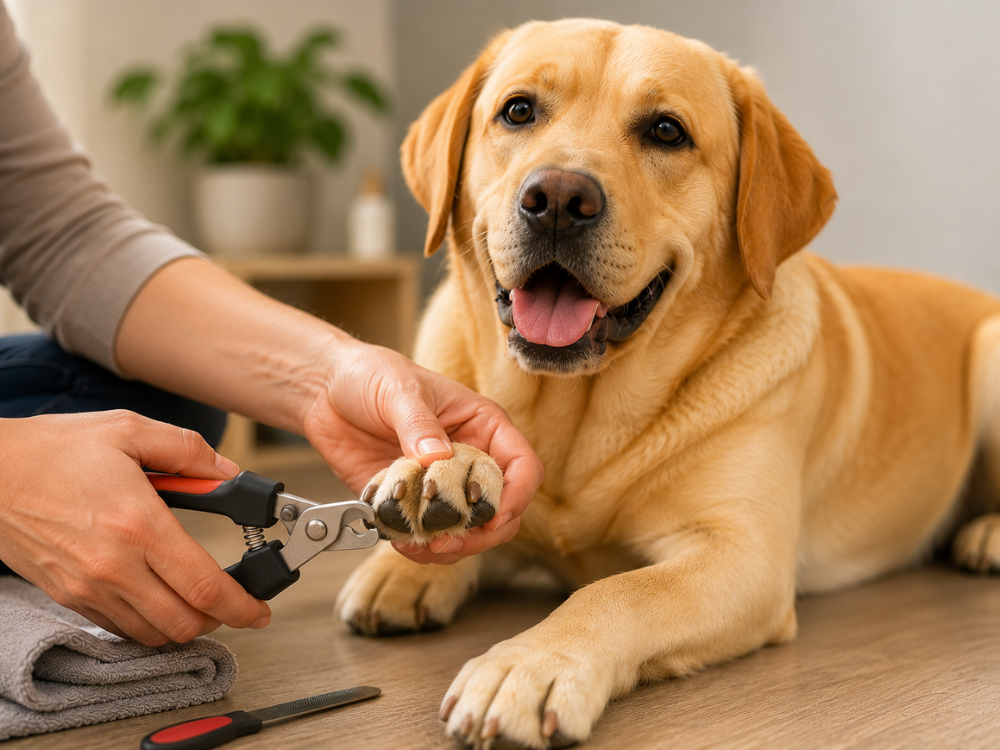
Nail Trimming: How to Get It Done Without Drama
If you can hear the nails clicking on tile or wood floors, they’re overdue. Nails that are too long change the way a dog distributes weight across their paws, and in a large breed like the Lab, that shift affects gait and joint health over time.
Trim every 3 to 4 weeks. Use a proper dog nail clipper or grinder. If your Lab has clear nails, you can see the pink quick inside and know exactly where to cut. Dark nails are harder — cut small amounts at a time, checking the cut surface for a dark oval centre that indicates you’re getting close to the quick.
If your Lab resists nail trimming, the most effective fix is desensitisation over a week or two — touching the paws frequently, letting the dog see and sniff the clippers, and doing one nail per session until comfort builds.
Conclusion
Good Labrador retriever grooming is less about any single technique and more about frequency and consistency. Get the brushing and ear checks into your weekly rhythm and the bathing and nail trimming into a monthly one, and most of the problems that bring Labs to the vet for preventable skin and ear conditions simply do not develop. If you’re just starting out with a Lab puppy, build these habits in the first few months when the dog is most receptive to being handled.
FAQs
My Lab sheds constantly and brushing does not seem to help. What am I doing wrong?
Probably using only a surface brush. A slicker brush alone does not reach the dense undercoat where most shedding originates. Add an undercoat rake or deshedding tool to your routine and brush against the grain first to loosen the inner layer.
How do I stop my Lab from getting ear infections?
Dry the ears thoroughly after every bath and every swim, clean the visible canal with a vet-recommended ear cleaner every two weeks, and check for early signs (smell, dark discharge, head shaking) weekly. Labs in India are at higher risk than in temperate climates because the humidity prevents the ear canal from drying naturally.
Can I use human shampoo on my Labrador?
No. Human shampoos are formulated for human scalp pH, which is more acidic than dog skin. Using them disrupts the dog’s skin barrier, causes dryness, and leads to increased oil production and odour over time. Use a dog-specific shampoo.
Is it okay to shave a Lab in summer to help with the heat?
Generally not recommended. The double coat provides insulation against heat in addition to cold. Removing it disrupts the coat’s ability to regulate temperature and exposes the skin to sun damage. Regular brushing to remove the dead undercoat during summer is more effective.