

As an Amazon Associate I earn from qualifying purchases. Learn More
Updated July 2026
If you’ve ever seen your Chihuahua suddenly become weak, shaky, or unusually sleepy, it can be frightening. One possible cause—especially in young puppies—is hypoglycemia, or low blood sugar.
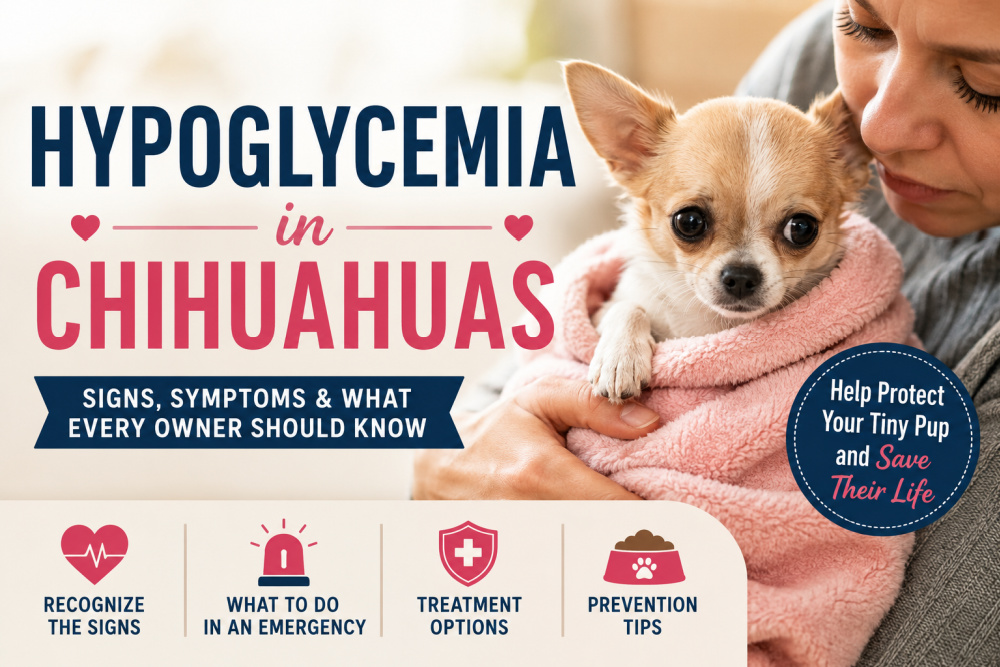
Because Chihuahuas are one of the smallest dog breeds, they are more prone to hypoglycemia than many larger dogs. Their tiny bodies burn through energy quickly, and if they don’t eat often enough or become stressed or sick, their blood sugar can drop to dangerous levels.
The good news is that hypoglycemia is often treatable when it’s recognized early. Knowing the warning signs and acting quickly could even save your Chihuahua’s life.
What Is Hypoglycemia?
Hypoglycemia simply means that the amount of glucose (sugar) in your dog’s bloodstream has fallen too low.
Glucose is your Chihuahua’s primary source of energy. Every organ depends on it, but the brain is especially sensitive to low blood sugar. When glucose levels drop too far, the brain and muscles can’t function properly, which is why affected dogs may suddenly seem weak, confused, or even collapse.
While hypoglycemia can affect dogs of any breed, it’s especially common in tiny Chihuahua puppies.
Why Are Chihuahuas More Prone to Hypoglycemia?
Several factors make Chihuahuas more susceptible than many other dogs.
Their tiny bodies store very little glycogen, which is the body’s backup supply of glucose. They also have incredibly fast metabolisms, meaning they burn through calories quickly.
A Chihuahua puppy can use up its energy reserves surprisingly fast, especially if it:
- Skips a meal
- Plays hard for an extended period
- Gets chilled
- Experiences stress
- Becomes ill
- Has vomiting or diarrhea
Adult Chihuahuas can also develop hypoglycemia, but it’s much less common. When it happens in an adult dog, it’s often a symptom of another medical condition rather than simply missing a meal.
Which Chihuahuas Are Most at Risk?
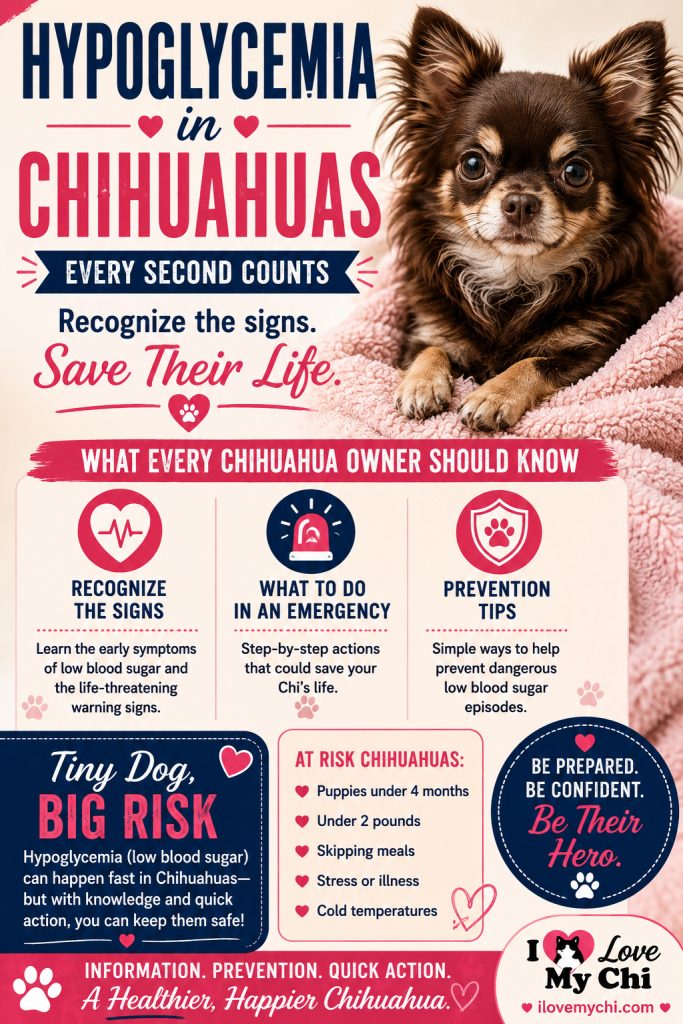
Although any Chihuahua could experience low blood sugar, the highest-risk dogs include:
- Puppies younger than 4 months
- Puppies weighing less than 2 pounds
- Newly weaned puppies
- Puppies adjusting to a new home
- Puppies that aren’t eating well
- Sick or recovering puppies
- Chihuahuas with intestinal parasites
- Dogs recovering from surgery
The smaller the puppy, the more closely you’ll want to monitor eating habits and energy levels.
Common Causes of Hypoglycemia
Low blood sugar isn’t always caused by missing a meal. Several things can trigger it.
Some of the most common causes include:
Rare insulin-producing tumors in adult dogs
Going too long between meals
Stress or excitement
Excessive exercise or play
Becoming cold
Poor nutrition
Vomiting or diarrhea
Internal parasites
Severe infections
Liver disease
Certain medications
Diabetes treatment complications
Signs of Hypoglycemia in Chihuahuas
One of the most important things you can do as a Chihuahua owner is recognize the early warning signs.
Early Symptoms
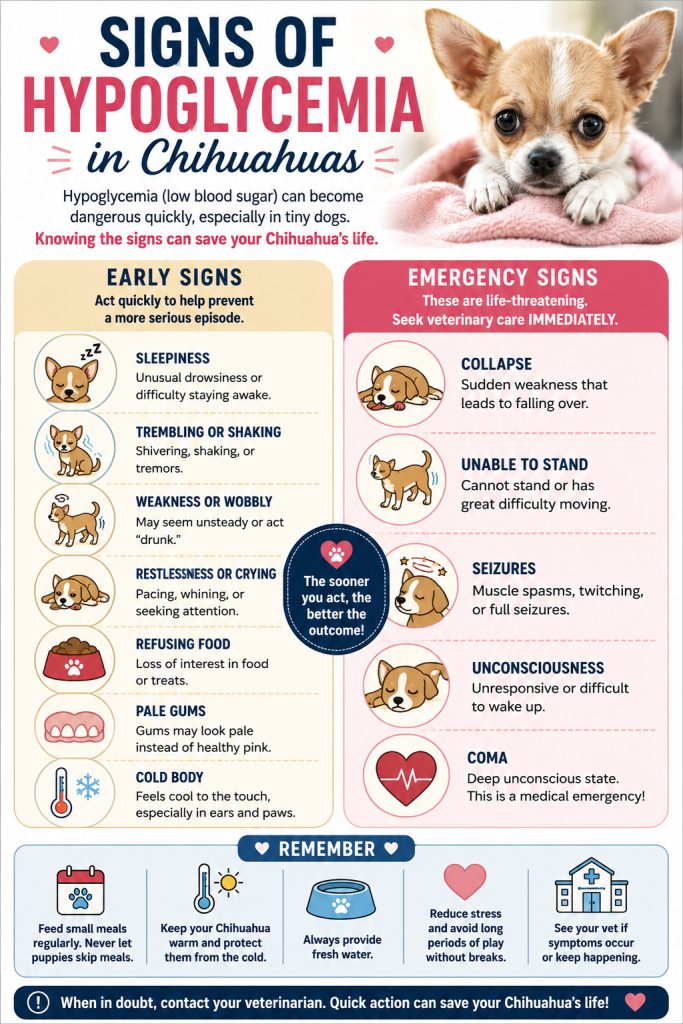
If your Chihuahua has mild hypoglycemia, you may notice:
- Sleepiness
- Weakness
- Shaking or trembling
- Acting “drunk” or wobbly
- Lack of coordination
- Confusion
- Restlessness
- Crying or whining
- Refusing food
- Pale gums
- Feeling cold
Sometimes these symptoms come on gradually. Other times they can appear within minutes.
Emergency Symptoms
As blood sugar continues to fall, symptoms become much more serious.
Seek emergency veterinary care immediately if your Chihuahua:
- Collapses
- Cannot stand
- Has seizures
- Becomes unconscious
- Goes into a coma
These signs are life-threatening and require immediate treatment.
What Should You Do If You Suspect Hypoglycemia?
If your Chihuahua suddenly becomes weak or shaky, try not to panic.
Instead:
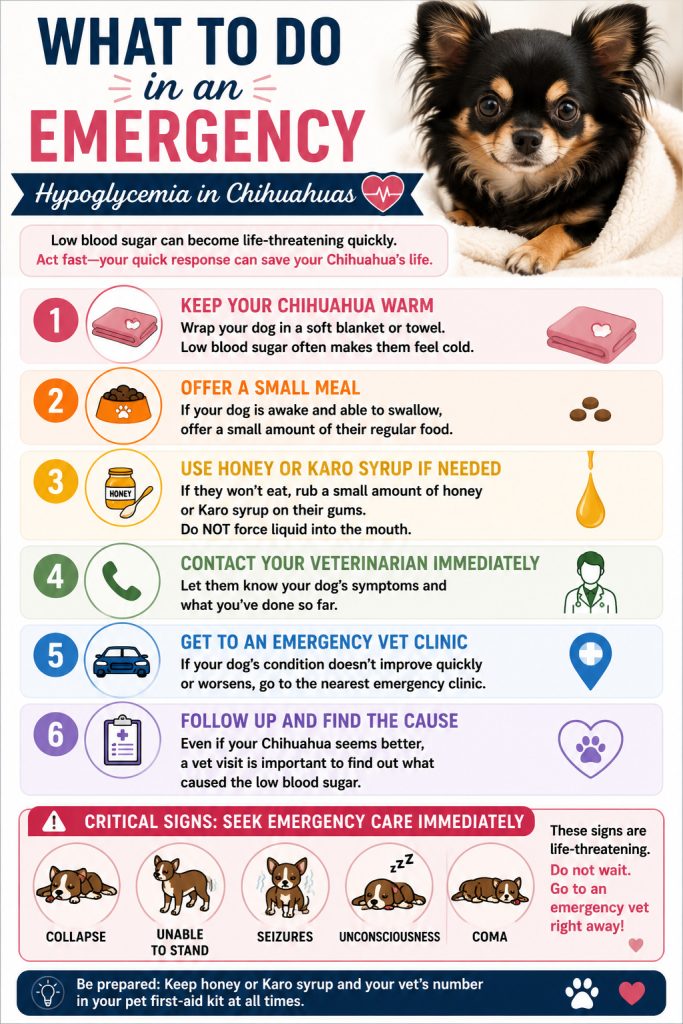
- Keep your dog warm by wrapping them in a soft blanket or towel.
- If your dog is awake and able to swallow, offer a small meal.
- If they won’t eat, rub a small amount of honey or Karo syrup on the gums.
- Call your veterinarian right away.
- If your dog is having seizures, collapsing, or becoming unresponsive, head to the nearest emergency veterinary clinic immediately.
Never force food or liquids into the mouth of a dog that is unconscious or unable to swallow. This can cause choking or aspiration.
Even if your Chihuahua seems to recover after receiving sugar, it’s still important to have them examined by a veterinarian to determine what caused the episode.
How Veterinarians Diagnose Hypoglycemia
Your veterinarian will usually begin by checking your dog’s blood glucose level with a quick blood test.
Depending on your Chihuahua’s age and symptoms, additional testing may include:
- Complete blood work
- Urinalysis
- Liver function testing
- Parasite screening
- Imaging studies if an underlying disease is suspected
For puppies, the cause is often simply immature energy reserves. In adults, your veterinarian will usually want to investigate further to rule out more serious medical conditions.
Treatment
Treatment depends on how severe the episode is.
Mild cases may only require feeding your Chihuahua and monitoring them closely.
More severe cases often require hospitalization where the veterinarian can administer intravenous glucose and fluids while monitoring blood sugar levels.
If another illness caused the hypoglycemia, treating that underlying condition is just as important as correcting the low blood sugar.
How to Prevent Hypoglycemia
Fortunately, many cases of hypoglycemia—especially in puppies—can be prevented.
Some simple steps include:
- Feed young Chihuahua puppies four to six small meals each day.
- Don’t allow puppies to skip meals.
- Keep fresh water available at all times.
- Avoid long periods of strenuous exercise.
- Keep puppies warm, especially during cold weather.
- Minimize stressful situations whenever possible.
- Schedule regular veterinary checkups.
- Treat intestinal parasites promptly.
- Keep a small bottle of honey or Karo syrup in your pet first-aid kit for emergencies.
As your Chihuahua matures, the risk usually decreases significantly.
When It Might Be Something Else
Many illnesses can cause symptoms that look similar to hypoglycemia.
Weakness, trembling, collapse, or confusion can also be caused by:
- Heart disease
- Liver disease
- Neurological disorders
- Toxin exposure
- Heatstroke
- Severe dehydration
- Certain infections
That’s why it’s important not to assume every episode is simply low blood sugar. A veterinary examination is always the safest choice.
Frequently Asked Questions
Can adult Chihuahuas get hypoglycemia?
Yes, but it’s much less common than in puppies. When adult dogs develop hypoglycemia, veterinarians often look for an underlying illness that’s causing the low blood sugar.
Can hypoglycemia be fatal?
Yes. If severe hypoglycemia isn’t treated quickly, it can lead to seizures, coma, brain damage, or death.
Is honey safe for treating hypoglycemia?
A small amount rubbed on the gums can provide a quick source of sugar for a conscious dog experiencing low blood sugar. However, it is only a temporary measure and should never replace veterinary care.
How often should Chihuahua puppies eat?
Most Chihuahua puppies should eat four to six small meals each day until they’re older and better able to regulate their blood sugar.
Can stress cause hypoglycemia?
Yes. Stress increases energy demands, and tiny Chihuahua puppies can burn through their glucose reserves surprisingly quickly during stressful situations such as moving to a new home or traveling.
Final Thoughts
Hypoglycemia is one of those conditions that every Chihuahua owner should know about, especially if you have a young puppy. It can develop quickly, but recognizing the warning signs and acting fast can make all the difference.
Feeding regular meals, keeping your puppy warm, minimizing stress, and knowing what to do in an emergency can help protect your little companion during those vulnerable early months.
Thankfully, most Chihuahua puppies outgrow their tendency toward hypoglycemia as they mature. Until then, a little extra vigilance goes a long way toward keeping your tiny friend happy, healthy, and safe.
Click to find about other chihuahua health problems.




Pet Blogger
I have had dogs all my life. I have been a pet groomer, worked in a pet hotel, and a kennel, and have bred and showed dogs.


Paula Simons
DVM
This article has been reviewed, fact-checked, and approved by Dr. Paula Simons DVM. You can read more about her on our About page.
Post Views: 10,504