





As an Amazon Associate I earn from qualifying purchases. Learn More
A dog doesn’t experience the world the way humans do. While people rely heavily on vision, dogs process their environment almost entirely through their sense of smell. They have roughly 300 million olfactory receptors compared to about 6 million in humans, making their scent detection exponentially more refined.
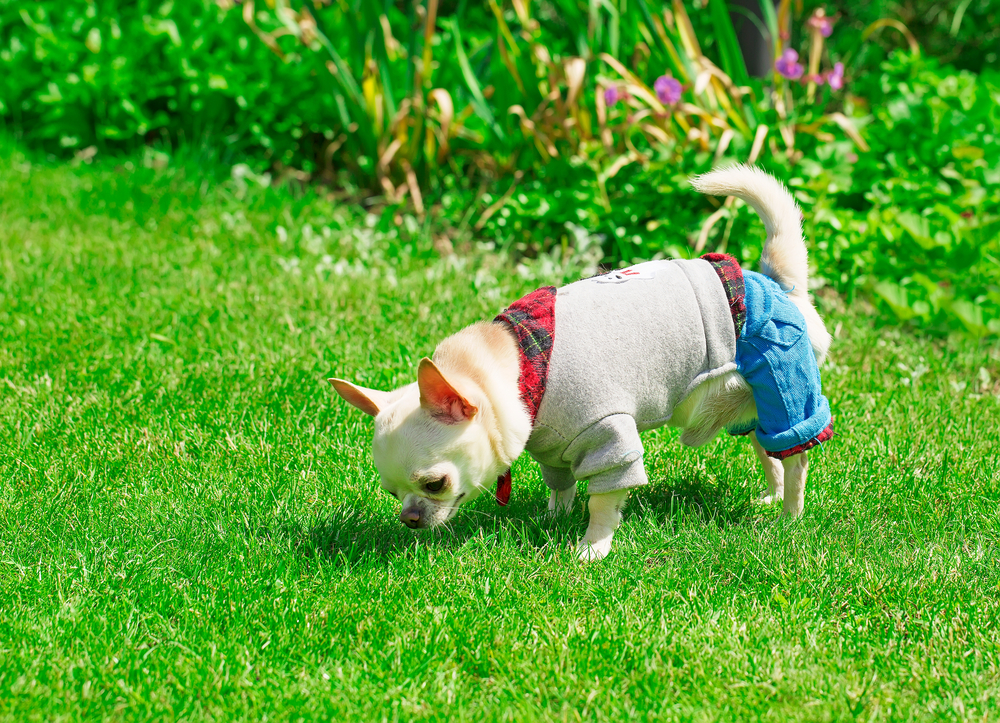
Much of this power comes from specialized anatomy. Scent receptors line the nasal cavity, while Jacobson’s organ, also called the vomeronasal organ, sits at the roof of the mouth and detects pheromones, the chemical signals animals use to communicate identity, mood, and reproductive status. A dog’s wet nose isn’t just a health indicator, either; the moisture traps scent particles, making each sniff more informative. This is also why behaviors that might seem mysterious, like the popular question “can dogs see ghosts?”, often have sensory explanations rooted in biology rather than the supernatural.
A Dog’s World Is Built Around Scent
Why Smell Matters More Than Sight
The sheer scale of a dog’s olfactory system means that scent isn’t just one input among many; it’s the primary lens through which dogs interpret everything around them. Where a human might glance at a park bench and move on, a dog reads a detailed chemical record of who sat there, when, and in what state of mind. Smell, in this sense, functions more like a language than a simple sense.
What Wet Noses and Scent Organs Actually Do
The wet surface of a dog’s nose actively improves scent collection by trapping airborne particles before they reach the olfactory receptors inside the nasal cavity. The vomeronasal organ, sometimes called Jacobson’s organ, adds another layer entirely by detecting pheromones that carry social and reproductive information. Together, these systems give dogs a chemical picture of their environment that no amount of human observation could replicate.
What Dogs See and Hear That We Miss


Smell may dominate, but a dog’s vision and hearing are equally worth understanding, especially because both differ from human perception in ways that explain a lot of everyday behavior.
How Canine Vision Differs From Ours
Canine vision is built around different priorities than human sight. Dogs see the world in a blue-yellow color spectrum rather than the full range humans perceive, because their rods and cones are distributed differently. They have fewer cones, which handle color, but far more rods, giving them stronger low-light vision.
The tapetum lucidum, a reflective layer behind the retina, amplifies available light further. Dogs also have a wider peripheral vision range and superior motion detection, which explains why a distant rustling catches their attention almost instantly.
Why Sound Gives Dogs an Early Warning
Canine hearing extends well beyond the human range, reaching frequencies up to around 65,000 Hz compared to roughly 20,000 Hz in people. Dogs can also rotate their ears independently to locate a sound’s source with precision, detecting movement or change at distances that wouldn’t register for humans at all.
Touch, Taste, and Reading Human Emotion
Touch plays a quieter but meaningful role in a dog’s sensory experience. Whiskers detect subtle changes in airflow and nearby objects, while paw pads register ground texture, temperature, and vibration. Body contact, whether leaning against a person or brushing against another dog, carries social information that shapes behavior and strengthens bonds.
Taste, by contrast, is comparatively underdeveloped. Dogs have far fewer taste buds than humans, making this sense less central to how they interpret their environment.
Where dogs genuinely excel is in emotionally perceiving their surroundings through layered cues. Canine cognition integrates scent, vocal tone, posture, and facial tension simultaneously, allowing dogs to read human moods with surprising accuracy. Understanding your dog’s physical cues alongside this helps explain many everyday behaviors that might otherwise seem unpredictable.
How a Dog’s Senses Work Together
Dogs rarely rely on a single sense at a time. During a walk, for example, a dog is simultaneously reading ground scents, tracking distant sounds, and registering movement at the edge of its field of view. Each input feeds into a wider picture.
This multisensory integration is central to canine cognition. The sense of smell may dominate, but it works alongside motion detection and hearing to support navigation, communication, and split-second decision-making. A dog deciding whether to approach another animal, a person, or an unfamiliar object is drawing on all of these channels at once. The result is a sensory experience far richer than any single system could produce.
What This Means for Living With Dogs
Dogs navigate a sensory experience that runs parallel to ours but rarely overlaps with it. Canine hearing picks up frequencies humans miss entirely, canine vision prioritizes motion over color, and scent carries information that no human nose could process.
Interpreting dog behavior through this lens, rather than through human assumptions, makes everyday moments easier to understand. A dog that freezes mid-walk or fixates on a wall isn’t being strange; it’s simply responding to a world it perceives very differently from the person holding the leash

Post Views: 47