

As an Amazon Associate I earn from qualifying purchases. Learn More
Updated September 2026
Does your Chihuahua have breath so bad that you turn your head when they come in for a kiss?
You’re definitely not alone. Bad breath is common in dogs, and Chihuahuas can be especially prone to dental problems because they have so many teeth packed into such a tiny mouth.
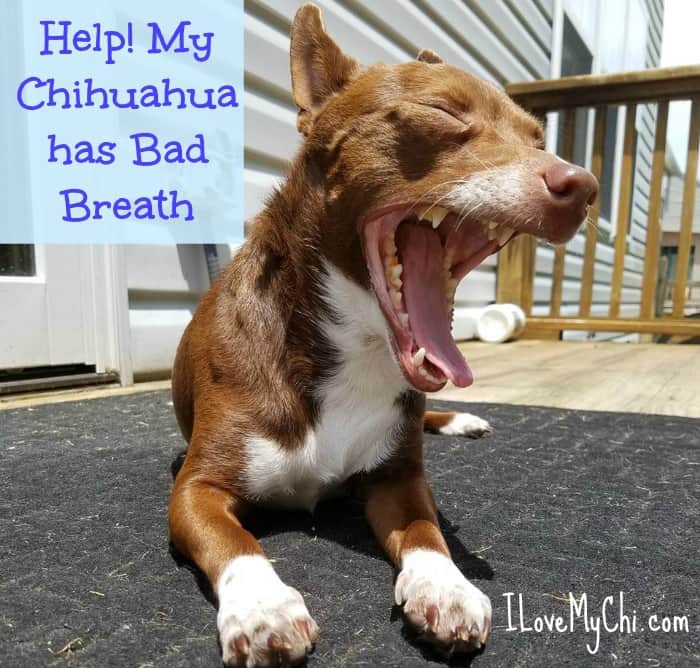
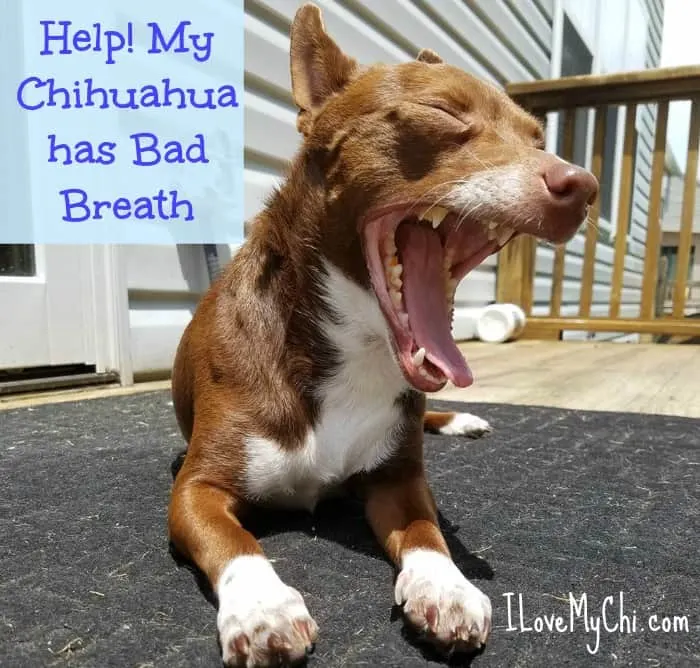
But here’s something important to know: really bad breath shouldn’t simply be considered normal for a Chihuahua.
Sometimes the cause is fairly innocent. Maybe your little darling just raided the cat’s litter box or found something disgusting in the yard. Dogs aren’t exactly known for having sophisticated taste!
But persistent bad breath can also be one of the first signs of dental disease. In some cases, it can even be associated with a health problem elsewhere in the body.
So instead of simply covering up your Chihuahua’s stinky breath, it’s important to figure out why it smells bad in the first place.
Is Bad Breath Normal in Chihuahuas?
A little “doggy breath” is one thing. Breath that consistently smells awful is another.
Bad breath, also called halitosis, is often caused by bacteria, plaque, and tartar accumulating in your dog’s mouth.
According to the American Animal Hospital Association (AAHA), bad breath is often the first sign pet parents notice when a dog has dental disease.
Periodontal disease begins when plaque and bacteria accumulate on the teeth and under the gumline. As it progresses, it can cause inflammation, infection, pain, loose teeth, and eventually tooth loss.
That’s why a breath mint—or the doggy equivalent—isn’t always the answer.
If your Chihuahua’s breath suddenly becomes terrible or stays that way despite regular dental care, it’s a good idea to have your veterinarian take a look.
Why Are Chihuahuas So Prone to Dental Problems?
Unfortunately, Chihuahuas have several things working against them when it comes to dental health.
An adult dog normally has 42 teeth. That’s a lot of teeth to fit inside a Chihuahua-sized mouth!
Small and toy breeds are particularly susceptible to periodontal disease. Their teeth may be crowded together, making it easier for plaque and tartar to accumulate and harder to keep the teeth clean.
Chihuahuas may also retain some of their baby teeth after their adult teeth come in. This can cause even more crowding and create little spaces where food, plaque, and bacteria collect.
All of this means dental care isn’t just about keeping your Chihuahua’s breath smelling better. It’s an important part of keeping them healthy and comfortable.
Common Causes of Bad Breath in Chihuahuas
There are quite a few things that can make a Chihuahua’s breath smell bad.
Plaque and Tartar
Plaque is a sticky film containing bacteria that continually forms on the teeth. If it isn’t removed, it can harden into tartar (also called calculus).
You may notice a yellow or brown buildup on your Chihuahua’s teeth, particularly near the gumline.
Periodontal Disease
Periodontal disease affects the tissues that surround and support the teeth.
Along with bad breath, you may notice red or bleeding gums, tartar buildup, loose teeth, or changes in the way your dog eats.
Unfortunately, dogs are quite good at hiding dental pain, so don’t assume everything is fine just because your Chihuahua is still eating.
An Infected, Broken or Decaying Tooth
A damaged or infected tooth can produce some seriously nasty breath.
If your Chihuahua suddenly develops unusually foul breath—particularly if they also seem reluctant to chew, chew only on one side, paw at their mouth, or drool more than usual—have your veterinarian check their mouth.
Something Stuck in the Mouth
Occasionally, food, hair, or another foreign object can become lodged between the teeth or elsewhere in the mouth and begin to smell.
Eating Something Disgusting
And then we have the obvious possibility.
Dogs eat gross things.
Garbage. Dead things. Poop.
And yes, the cat’s litter box.
If you have a cat, you probably already know that some dogs regard the litter box as an all-you-can-eat buffet.
Needless to say, this doesn’t do much for their breath.
Oral Growths or Tumors
Growths inside the mouth can sometimes cause bad breath, particularly if the tissue becomes irritated, infected or ulcerated.
Any unusual lump, swelling, discoloration or sore in your Chihuahua’s mouth should be examined by a veterinarian.
Health Problems Outside the Mouth
Most cases of persistent bad breath originate in the mouth, but occasionally the cause may be elsewhere in the body.
Certain health conditions, including kidney disease, liver disease, and diabetes, can sometimes change the way a dog’s breath smells.
That’s another reason persistent or unusual bad breath deserves more attention than simply trying to cover up the odor.
Why Does My Chihuahua’s Breath Smell Like Fish?
This is a surprisingly common question.
Fishy breath doesn’t point to one specific diagnosis. Dental disease, something your dog ate, bacteria in the mouth or even your Chihuahua licking a fishy-smelling area of their body can potentially affect the smell of their breath.
Rather than trying to diagnose the problem by smell alone, take a look at your Chihuahua’s mouth if they will comfortably allow it.
If you see tartar, red gums, swelling, damaged teeth, or anything unusual—or if the odor persists—schedule a dental exam.
Why Does My Chihuahua’s Breath Smell Like Poop?
Well…there’s one obvious possibility.
Did your Chihuahua actually eat poop? Some dogs love eating poop.
Coprophagia, which is the technical term for eating feces, isn’t unusual in dogs. And if your dog raids the litter box, eats another dog’s poop, or samples their own, their breath may advertise the evidence for a while.
However, don’t automatically assume that’s the reason.
Extremely foul breath that smells fecal can also accompany significant dental or oral disease. If you can’t connect the smell to something your dog ate, or it doesn’t go away, have your veterinarian check your Chihuahua’s mouth.
Signs Your Chihuahua Should See a Vet for Bad Breath
Make an appointment with your veterinarian if your Chihuahua has persistent bad breath, particularly if you notice any of these signs:
- Heavy yellow or brown tartar buildup
- Red, swollen, or bleeding gums
- Loose teeth
- Broken or damaged teeth
- Dropping food while eating
- Difficulty chewing
- Chewing on only one side of the mouth
- Pawing or rubbing at the mouth
- Excessive drooling
- Blood coming from the mouth
- Facial swelling
- A lump, growth, or unusual area inside the mouth
- Decreased appetite
- Unexplained weight loss
- A sudden, significant change in the smell of their breath
And remember, a dog can have dental pain and still eat.
Our dogs can’t tell us they have a toothache, and many will continue eating despite significant mouth pain.
How to Get Rid of Your Chihuahua’s Bad Breath Safely
Once you’ve ruled out a dental or medical problem that needs treatment, there are several things you can do at home to help keep your Chihuahua’s mouth healthier.
1. Brush Your Chihuahua’s Teeth
I know. Some of you are probably thinking, You want me to do WHAT?
Depending on your Chihuahua’s opinion of the matter, tooth brushing can range from surprisingly easy to an event requiring negotiations, bribes, and possibly protective gear.
But brushing is one of the best things you can do for your dog’s dental health.
Ideally, your Chihuahua’s teeth should be brushed every day.
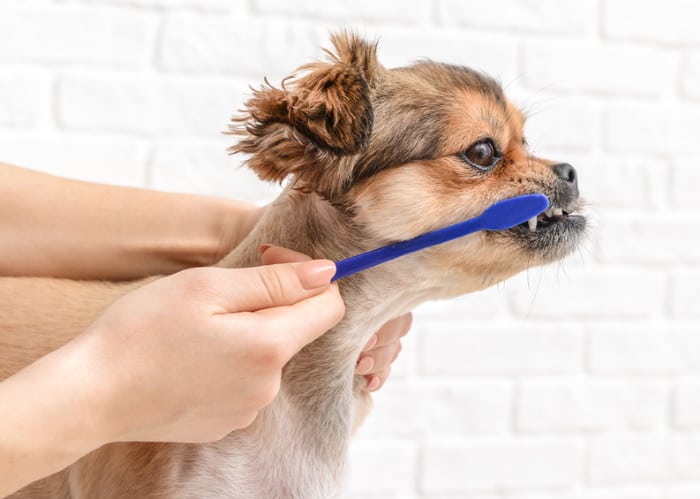
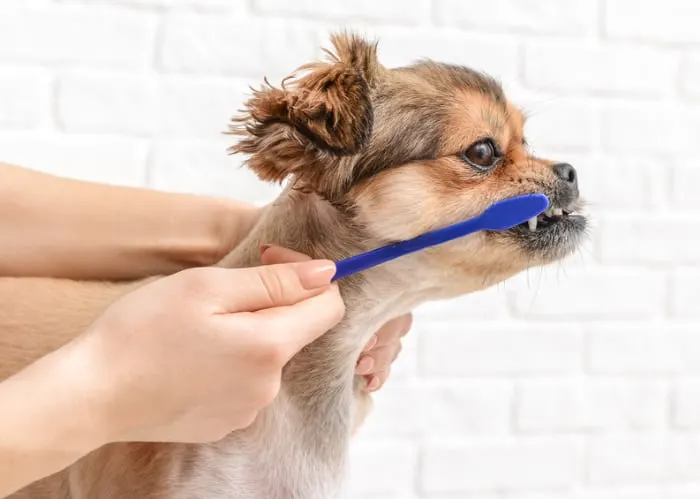
Use a soft toothbrush designed for pets or another appropriately sized soft-bristled toothbrush. Chihuahua mouths are tiny, so you may need to experiment to find something small enough to maneuver comfortably.
And always use toothpaste made specifically for dogs. Never use human toothpaste.
Human toothpaste isn’t designed to be swallowed and may contain ingredients that aren’t safe for dogs.
Fortunately, dog toothpaste comes in flavors dogs tend to find much more appealing than mint. Chicken-flavored toothpaste may sound revolting to us, but your Chihuahua may disagree.
Concentrate primarily on the outside surfaces of the teeth, particularly around the gumline.
If your Chihuahua has never had their teeth brushed before, introduce the process slowly. Start by letting them get comfortable with you touching their muzzle and lips, then gradually work toward touching and brushing the teeth.
Don’t turn it into a wrestling match. You want tooth brushing to become a normal part of their routine rather than something they run from every time they see you holding a toothbrush.
Important: Brushing removes soft plaque. It will not remove heavy tartar that has already hardened onto the teeth. If your Chihuahua already has substantial tartar or sore, inflamed gums, talk with your veterinarian before starting a brushing routine.
2. Look for the VOHC Seal
Walk through a pet store or search online and you’ll find a staggering number of products claiming to clean dogs’ teeth and freshen their breath.
How do you know which ones actually do something?
One helpful thing to look for is the Veterinary Oral Health Council (VOHC) Seal of Acceptance.
The VOHC reviews evidence submitted for products designed to help control plaque and/or tartar. Products that meet its requirements can earn the VOHC Seal.
There are VOHC-accepted products in several categories, including:
- Dental chews and treats
- Dental diets
- Water additives
- Toothpastes and gels
- Powders
- Toothbrushes and dental wipes
You can see the current list here:
Veterinary Oral Health Council: Accepted Products for Dogs
Just remember that these products aren’t a substitute for veterinary treatment if your Chihuahua already has dental disease.
3. Try Dental Chews
Dental chews can be another helpful part of your Chihuahua’s oral-care routine.
I give my dogs an Arks Natural dental chew every morning after breakfast, and none of them have stinky breath. It really seems to help with their breath, and they certainly never complain about getting their morning treat!
Whatever dental chew you choose, make sure you select the correct size for your Chihuahua’s weight and follow the package instructions.
And supervise your dog while they chew.
A dental chew should supplement tooth brushing and veterinary dental care—not replace them.
4. Consider a Dental Diet
You may have heard that dry dog food automatically cleans a dog’s teeth better than wet food.
It’s not quite that simple.
Ordinary kibble shouldn’t be considered dental care just because it’s crunchy. There are, however, specially formulated dental diets designed to help control plaque and/or tartar.
Some have earned the VOHC Seal.
If your Chihuahua has ongoing dental problems, ask your veterinarian whether a dental diet would be appropriate.
5. Consider a Dental Water Additive
If brushing your Chihuahua’s teeth every day isn’t realistic—or you want something to use in addition to brushing—a dental water additive may be another option.
Several water additives have earned the VOHC Seal for helping control plaque or tartar.
Make sure the product is specifically formulated for dogs and follow the directions carefully.
And keep an eye on your Chihuahua’s drinking habits when introducing anything to their water. If they dislike the taste and start drinking less, discontinue it. Access to fresh water is more important.
6. Keep the Gross Stuff Out of Reach
If your Chihuahua regularly raids the garbage, litter box, or backyard poop supply, prevention may improve their breath considerably.
Use covered trash cans, keep litter boxes somewhere the dog can’t reach, and pick up poop in the yard promptly.
Your Chihuahua may consider this a terrible injustice.
Their breath will disagree.
Be Careful With Extremely Hard Chews
Some things marketed as dog chews are hard enough to damage teeth.
Bones, antlers, Himalayan yak cheese dog chews, and other extremely hard chews may result in fractured teeth.
A good rule of thumb is that if you’re worried a chew is too hard for your Chihuahua’s teeth, ask your veterinarian about safer alternatives.
A broken tooth is certainly not worth a few minutes of entertainment.
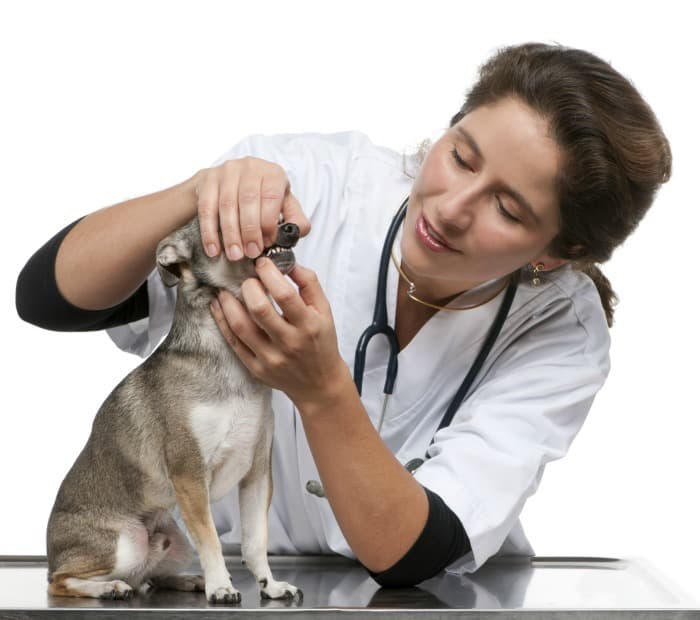
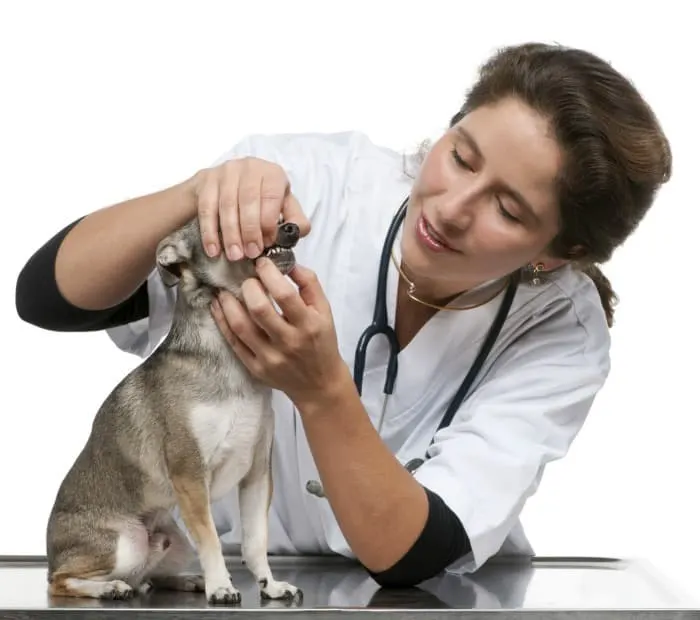
When Does a Chihuahua Need a Professional Dental Cleaning?
Even with excellent home care, your Chihuahua may eventually need a professional dental cleaning.
If your dog has significant tartar, periodontal disease, infected teeth, or other dental problems, brushing and dental treats can’t fix what’s already happening underneath the gumline.
A complete veterinary dental procedure is much more than scraping visible tartar from the surface of the teeth.
Depending on your Chihuahua’s needs, veterinary dental care may include:
- A thorough oral examination
- Cleaning above and below the gumline
- Dental X-rays
- Polishing the teeth
- Probing around the teeth for periodontal pockets
- Treatment or extraction of diseased teeth when necessary
Why Does My Chihuahua Need Anesthesia for a Dental Cleaning?
This understandably worries many pet parents, particularly those of us with older Chihuahuas.
But anesthesia allows the veterinary team to thoroughly examine your dog’s mouth, take dental X-rays, and safely clean below the gumline—where periodontal disease actually occurs.
Anesthesia-free dental cleanings may make the visible portion of the teeth look cleaner, but they cannot provide the same complete examination and treatment beneath the gumline.
Your veterinarian can discuss your Chihuahua’s individual health, recommended pre-anesthetic testing, and the risks and benefits of the procedure with you.
And yes, veterinary dental work can be expensive.
Sometimes you just have to swallow hard and pay for it.
But treating painful dental disease can make an enormous difference in a dog’s comfort and quality of life.
How Often Does a Chihuahua Need a Dental Cleaning?
There’s no one schedule that’s right for every Chihuahua.
Some dogs accumulate tartar much faster than others. Age, genetics, tooth crowding, home dental care, and previous dental disease can all make a difference.
Instead of assuming your Chihuahua needs a cleaning every specific number of months or years, have your veterinarian examine their teeth during routine wellness visits and recommend dental care based on what they find.
Because Chihuahuas are prone to dental disease, staying on top of those exams is particularly important.
Can You Prevent Bad Breath in Chihuahuas?
You can’t guarantee that your Chihuahua will never develop dental disease, but you can greatly improve their odds of maintaining a healthier mouth.
A good dental-care routine includes:
- Checking your Chihuahua’s mouth regularly
- Brushing their teeth daily when possible
- Using dog-safe toothpaste
- Choosing evidence-backed dental products such as those with the VOHC Seal
- Having your veterinarian check their teeth at regular exams
- Scheduling professional dental treatment when needed
- Avoiding extremely hard objects that may fracture teeth
- Keeping poop, garbage, and other disgusting delicacies out of reach
Start dental care as early in life as you can. It’s much easier to convince a puppy that tooth brushing is just another normal thing humans do than to introduce a toothbrush to an opinionated 10-year-old Chihuahua!
That said, it’s never too late to start taking better care of your dog’s teeth.
Frequently Asked Questions
Why does my Chihuahua’s breath smell so bad?
The most common causes include plaque, tartar, gingivitis, and periodontal disease. Bad breath can also result from a damaged or infected tooth, something your dog ate, a foreign object in the mouth or, less commonly, another health condition. Persistent bad breath should be checked by your veterinarian.
Can bad breath mean my Chihuahua has a rotten tooth?
Yes. A badly damaged, infected, or diseased tooth can cause very foul breath. Other signs may include chewing differently, dropping food, pawing at the mouth, drooling, facial swelling or reluctance to eat hard foods. However, some dogs with painful dental disease show very few obvious symptoms.
How often should I brush my Chihuahua’s teeth?
Daily brushing is ideal for controlling plaque. Use a soft toothbrush and toothpaste made specifically for dogs.
Can I use human toothpaste on my Chihuahua?
No. Human toothpaste isn’t intended to be swallowed and may contain ingredients that aren’t safe for dogs. Always use toothpaste formulated for pets.
Do dental chews really help bad breath?
They can help as part of an overall dental-care routine, particularly when you choose a product that has earned the VOHC Seal for plaque and/or tartar control. However, dental chews won’t cure periodontal disease or an infected tooth.
Does dry dog food clean a Chihuahua’s teeth?
Regular dry kibble shouldn’t be relied upon to clean your Chihuahua’s teeth. Specially formulated dental diets are different and may help control plaque or tartar. Some dental diets have earned the VOHC Seal.
Why does my Chihuahua still have bad breath after I brush their teeth?
If bad breath persists despite regular brushing, your Chihuahua may already have tartar or dental disease that home brushing can’t remove. There may also be a damaged or infected tooth or another oral problem. Schedule a veterinary dental exam.
How often should my Chihuahua have a professional dental cleaning?
There isn’t one schedule that applies to every Chihuahua. Your veterinarian can examine your dog’s teeth and recommend professional cleanings based on their age, dental health, tartar accumulation and individual risk factors.
Final Thoughts
It’s tempting to laugh off Chihuahua bad breath as just another part of living with a dog—especially when we know some of the disgusting things our dogs are willing to put in their mouths.
But persistent bad breath can be your first clue that something isn’t right.
The good news is that there’s a lot we can do to protect our Chihuahuas’ teeth.
Regular veterinary dental exams, professional cleanings when needed, daily brushing, and evidence-backed dental products can all help keep your Chihuahua’s mouth healthier.
And healthier teeth and gums don’t just mean better-smelling kisses.
They mean a happier, more comfortable little dog—which is far more important.




Pet Blogger
I have had dogs all my life. I have been a pet groomer, worked in a pet hotel, and a kennel, and have bred and showed dogs.


Paula Simons
DVM
This article has been reviewed, fact-checked, and approved by Dr. Paula Simons DVM. You can read more about her on our About page.
Post Views: 10,137