

Most small breed feeding guides treat the Dachshund like any other compact dog. That’s a mistake. The Dachshund has a structural vulnerability that no other popular breed shares quite as acutely: an extremely long spine on very short legs, supported by a body that gains weight disproportionately around the abdomen. Extra weight on a Dachshund doesn’t just make them round and slow. It significantly increases the risk of intervertebral disc disease (IVDD), a spinal condition that can cause paralysis and requires expensive, intensive surgery to treat.
The Dachshund feeding chart in this guide is built around that specific reality. Portions that keep the dog lean, a feeding structure that accounts for their small but enthusiastic appetite, and India-specific adjustments for climate and food availability.
Why Portion Control Matters More for Dachshunds Than Most Breeds
IVDD is the defining health concern for the breed. According to a study published in Frontiers in Veterinary Science (https://www.frontiersin.org/articles/10.3389/fvets.2020.00230/full), Dachshunds are 10 to 12 times more likely to suffer from disc disease than any other breed. Excess body weight is consistently identified as one of the modifiable risk factors — not the cause, but a significant contributor to severity and frequency of episodes.
A Dachshund carrying even 10% more body weight than ideal is placing measurably more stress on discs that are already structurally predisposed to herniation. For a 9kg Dachshund, that’s less than 1kg of excess weight making a clinical difference. This is why the feeding chart below is slightly stricter than what you’d use for a Beagle or Cocker Spaniel of the same weight.
Dachshund Feeding Chart by Age
All quantities below are for dry commercial kibble. Home-cooked portions differ and are covered in the next section.
Puppy Stage: 2 Months to 12 Months
| Age | Daily Meals | Approx. Daily Quantity (Dry Food) |
| 2–3 months | 4 meals | 60–90g |
| 3–6 months | 3 meals | 90–130g |
| 6–9 months | 3 meals | 120–155g |
| 9–12 months | 2–3 meals | 140–175g |
Dachshund puppies look small but their appetite is not proportionate to their size. The 4-meal schedule at 2–3 months is essential — their stomachs are tiny and large portions cause digestive upset. The other thing to watch: Dachshund puppies grow quickly in length before they fill out in body mass. That longer frame becomes weight-bearing very early, so overfeeding during this window causes problems that show up in the back years before the dog is considered senior.
Adult Stage: 1 Year to 7 Years
| Weight of Dog | Daily Dry Food (Low Activity) | Daily Dry Food (Moderate Activity) |
| 7–9 kg | 130–155g | 160–185g |
| 9–11 kg | 150–175g | 180–205g |
| 11–13 kg | 170–195g | 200–225g |
Standard Dachshunds typically sit in the 7–12kg range. Miniature Dachshunds are smaller, usually 4–5kg, and need proportionally adjusted portions — roughly 60–70% of the standard chart values.
There is no high-activity column for adult Dachshunds deliberately. The breed’s low build and back vulnerability means prolonged high-intensity activity isn’t recommended. A Dachshund doing regular 20-minute walks and some indoor play is a moderate activity dog.
Senior Stage: 7 Years and Above
| Age | Daily Dry Food | Notes |
| 7–9 years | 120–150g | Reduce by 10% if activity has dropped |
| 9+ years | 110–135g | Senior formula preferred; watch for mobility changes |
Senior Dachshunds develop the IVDD risk their genetics always carried. By 7–8 years, many show early signs — hesitation on stairs, reluctance to jump, occasional yelping when picked up. Keeping weight lean at this stage isn’t precautionary anymore; it’s directly protective. A lighter senior Dachshund with a disc problem has significantly better surgical outcomes and recovery than an overweight one.
What to Feed a Dachshund in India
Kibble
A good small or medium-breed dry food is the most practical choice. Look for formulas with a named animal protein as the first ingredient, moderate fat content (12–15% on dry matter basis), and ideally some joint-supporting nutrients like omega-3 or glucosamine for adult and senior dogs.
Avoid large-breed kibble for Dachshunds. Large-breed formulas are calibrated for very different nutritional needs and aren’t appropriate for a small breed.
Home-Cooked Meals
Home-cooked food works well for Dachshunds with careful planning. A practical daily meal structure for an adult standard Dachshund:
- Protein (40–50%): Boiled chicken without skin, eggs (1 per day), small amounts of fish like rohu
- Carbohydrates (30–35%): Plain rice; sweet potato in small amounts for fibre
- Vegetables (15–20%): Pumpkin, carrots, spinach, beans; no onion, garlic, or grapes
- Fat: Fish oil capsule daily for omega-3; a small amount of coconut oil occasionally
The omega-3 component is particularly important for Dachshunds. Fish oil supplementation is associated with reduced inflammation, which matters for a breed where spinal disc inflammation is a recurring concern.
Feeding Habits That Protect the Dachshund Spine
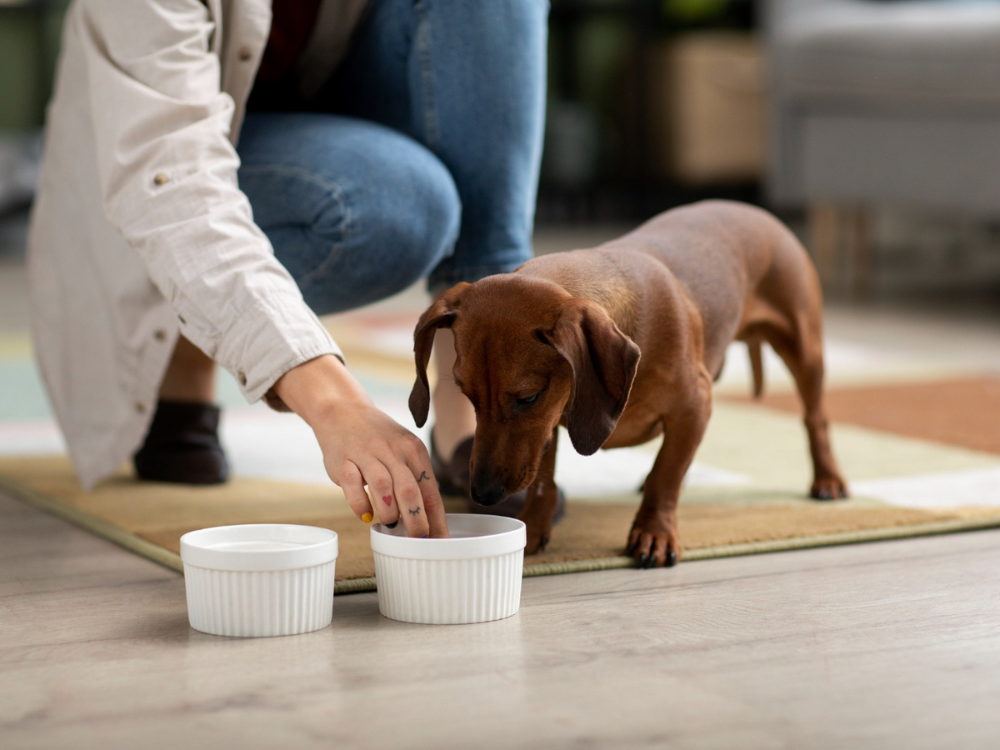
Raised feeding bowls: Standard floor-level bowls require the dog to bend their neck down significantly, which puts repeated flexion stress on the cervical discs. A bowl elevated to chest height reduces that stress across thousands of meals over the dog’s lifetime.
No jumping on and off furniture after meals: Many Dachshund owners let their dogs on the sofa or bed and don’t think twice about it. The risk isn’t the sofa — it’s the jump down. Repeated landing impact on short legs transmits load straight to the spine. A small ramp or set of dog steps makes a measurable difference.
Two meals a day, not one: Single-meal feeding increases the chance of gastric distension and creates longer hunger gaps that drive scavenging and overeating when food arrives.
Dachshunds and Indian Summer Heat
Dachshunds are German dogs built for cool European climates. India’s summer is hard on them, especially the dark-coated smooth-haired variety that absorbs more heat. Appetite drops in April through June are normal and shouldn’t be compensated for with extra treats or wet food additions that push the calorie count up.
During peak summer, consider a cooling mat under the feeding area. A dog that overheats after eating is more likely to be restless, pant excessively, and develop stress-related digestive issues.
Recommended: D&C PAWS Pet Cooling Mat
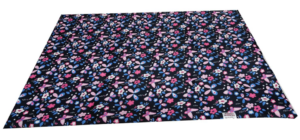
Gel-based, no electricity needed, and sized appropriately for small breeds. Dachshunds that sleep and rest on a cool surface during summer show fewer signs of heat-related lethargy. It doubles as a post-meal rest spot, which is useful for a breed that should rest quietly after eating.
The other India-specific concern is the sleeping surface. Dachshunds should not sleep on hard floors. A firm but cushioned surface is important for spinal support over the long term.
Recommended: ZEXSAZONE Summer Round Donut Calming Dog Bed
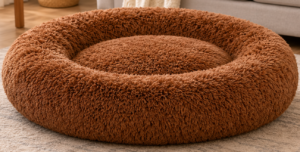
The raised rim provides neck and back support, which matters for a long-spined breed. The donut shape encourages the natural curled sleeping position that keeps the Dachshund’s spine in a neutral alignment. Genuinely relevant to their structural needs, not just a comfort item.
How to Tell If the Portions Are Right
The rib test: Run both hands along the ribcage with light pressure. You should feel each rib distinctly with a thin fat covering. For Dachshunds specifically, look at the abdominal profile from the side. A healthy Dachshund has a visible tuck upward behind the ribcage. If the belly hangs level with or below the chest, the dog is carrying excess weight.
From above, there should be a visible narrowing at the waist. Dachshunds accumulate fat along the spine and abdomen in a way that can make a noticeably overweight dog still look normal to owners who’ve adjusted to the shape over time. The monthly rib check is the only reliable recalibration.
Conclusion
A consistent Dachshund feeding chart matters more for this breed than almost any other because the stakes of getting it wrong aren’t just about weight — they’re about spinal health over a 12–16 year lifespan. Start lean, stay lean, and treat any upward weight drift as something to address immediately rather than gradually. The difference between a Dachshund that lives actively into its teens and one that faces spinal surgery at 6 years old is partly genetic, but diet and weight management are the part you control.
FAQs
My Dachshund always acts hungry. How do I know if I’m underfeeding?
Do the rib test. If you can feel each rib with light pressure a nd the dog has visible waist definition, the portions are adequate and the hunger behavior is normal breed enthusiasm for food. Dachshunds are food-motivated even when well-fed. If the ribs are hard to feel and the belly is level with the chest, increase portions modestly.
Can Dachshunds eat curd rice or plain rice daily?
Plain boiled rice is fine as the carbohydrate component of a home-cooked meal. Curd in small amounts — a tablespoon — is generally tolerated and provides some probiotic benefit. Neither should be the majority of the meal. The protein component is the part that needs to be consistent and adequate, not the carbs.
Are Dachshunds prone to any food allergies I should watch for?
More than average for a small breed, yes. Skin itching, recurring ear infections, paw licking, and loose stools that persist after deworming are all common presentations of food sensitivity in Dachshunds. The most common triggers are chicken and certain grains. If those symptoms appear, a protein rotation — switching to fish or lamb for 8 weeks — is worth trying before assuming a medical cause.
Should I give my Dachshund bone broth or supplements for joint health?
Plain, unsalted bone broth in small amounts is a useful food addition for Dachshunds, particularly seniors. Omega-3 supplementation through fish oil is the most evidence-supported dietary addition for managing spinal inflammation. Glucosamine and chondroitin are worth adding after age 5–6, either through a senior kibble formula or as a separate supplement.
At what age should I switch my Dachshund to senior food?
Seven years is the standard transition point. Some vets recommend 6 for the standard variety given their early IVDD risk profile. Senior formulas are lower in calories and often include joint-supporting nutrients. Make the switch gradually over 10 days to avoid digestive disruption.