There is a moment every Cocker Spaniel lover has encountered. You get up from the couch for a bathroom break. You are gone for exactly two minutes. You open the door to find your Cocker Spaniel starting up (or maybe trying to scratch the door down). Is this anxiety or just a Cocker Spaniel being true to their breed personality?
Cocker Spaniels are naturally velcro dogs because they were bred to work closely with people, but not every clingy Cocker has true separation anxiety. The difference is whether your dog can settle and self-soothe when alone or whether separation triggers real distress like pacing, barking, destruction, panting, or panic behaviors. Most Cockers live somewhere in the gray zone between normal breed clinginess and clinical separation anxiety, and that’s where structure, confidence-building, and place training can make a major difference.
If you have ever wondered whether your Cocker Spaniel is “too attached,” you are not alone. I hear from Cocker parents about this constantly. One dog follows them into the bathroom. Another cries when they grab their keys. Another refuses to settle unless physically touching them. And then there’s the dog who barks incessantly or chews things up when left alone.
But over time, I learned something important: devotion and distress are not the same thing. That distinction matters because the approach is not the same. A velcro Cocker who simply prefers being near you needs something very different than a dog experiencing true separation anxiety.
Some of the links in this article are affiliate links. As an Amazon Associate, I earn from qualifying purchases. I am also an Etsy and Chewy affiliate.
What Is a Velcro Dog and Are Cocker Spaniels Velcro Dogs?
A velcro dog is exactly what it sounds like: a dog who sticks to their person. Follows you from room to room. Positions themselves so they can see you at all times. Parks themselves on your feet when you sit down. Monitors your every move with the quiet intensity of a very small, very fluffy private investigator.
Yes, Cocker Spaniels are velcro dogs. This is not a coincidence or a personality quirk. It is centuries of selective breeding doing exactly what it was designed to do. Cocker Spaniels were bred to work closely alongside hunters in the field, flushing birds from dense cover while staying within range of their person. They were built to stay near you.
That deeply bonded, attentive nature is part of what makes the breed. Your Cocker Spaniel following you to the bathroom is not automatically a red flag of separation anxiety.
For example, Sir Alvin will:
- Follow me to the bathroom
- Lay next to the tub while I shower
- Watch me from the window if I go out without him (rare)
- Stare at me while I work
Fun fact: Our Cocker Spaniels are never alone. I work from home, and we made a concerted decision not to leave our dogs alone. It works for us. However, Cockers are Cockers, and all of them have been incredibly attached to us.
You get the idea, and maybe your Cocker Spaniel clings to you and is with you a lot or all the time.
Cockers are also extra sensitive dogs. They tend to respond best to patience, routine, positive reinforcement, and clear expectations. Harsh corrections or punishment can worsen anxious attachment, especially in a breed that already reads human emotions so closely.
Never lay your hands on your dog to spank or harm them in any capacity.
Signs It’s Just Cocker Spaniel Personality
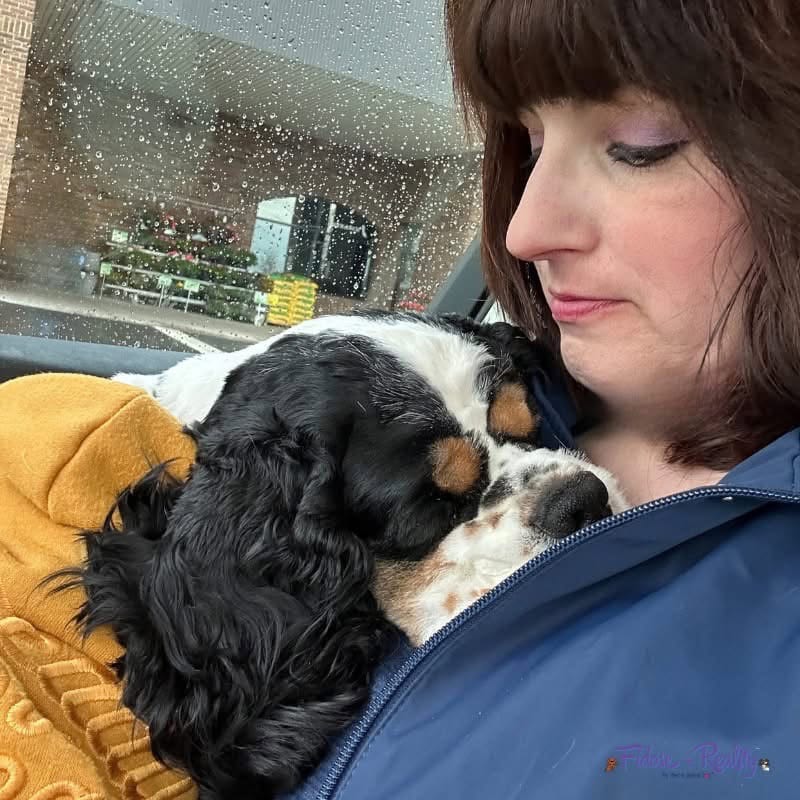
Not every clingy Cocker Spaniel has separation anxiety. Sometimes your dog is simply bonded, observant, and very committed to being involved in your business. They consider it their job and it’s in their DNA to be with you and be clingy!
Your Cocker Follows You But Can Still Relax
A velcro Cocker may follow you from room to room, but once you stop moving, they can settle. They may lie near you, watch you, or nap close by without escalating into distress.
Your Dog Can Self-Soothe Nearby
If your Cocker can relax with a toy, chew, bed, mat, or training platform while you are in the room, that is a good sign. They may prefer being close, but they are not panicking.
Excited Greetings Are Not Always Anxiety
Many Cockers greet their people like they have returned from a five-year expedition. That alone does not mean separation anxiety. The bigger question is what happened while you were gone. Did the dog:
- Panic and bark a lot in your absence?
- Drool excessively while alone ?(this is where an in-home video camera is your second-best friend)
- Pace nonstop?
- Become destructive?
- Refuse food or water while alone?
- Howl and panic in your absence?
There Is No Destruction, Vocalizing, or House Soiling
If your dog is not barking nonstop, destroying things, having accidents, drooling, trembling, or panicking when alone, you may be dealing with normal velcro dog behavior rather than true separation anxiety.
What Worked for Me and My Cocker Spaniel
In trying to determine whether Sir Alvin was experiencing true anxiety or simply acting like a typical Velcro Cocker, I wanted to see if he could learn to settle independently inside our home.
I won’t lie, friends: I love when my dogs cling to me. There’s something incredibly comforting about having them at your feet while you work or curled up beside you while watching television.
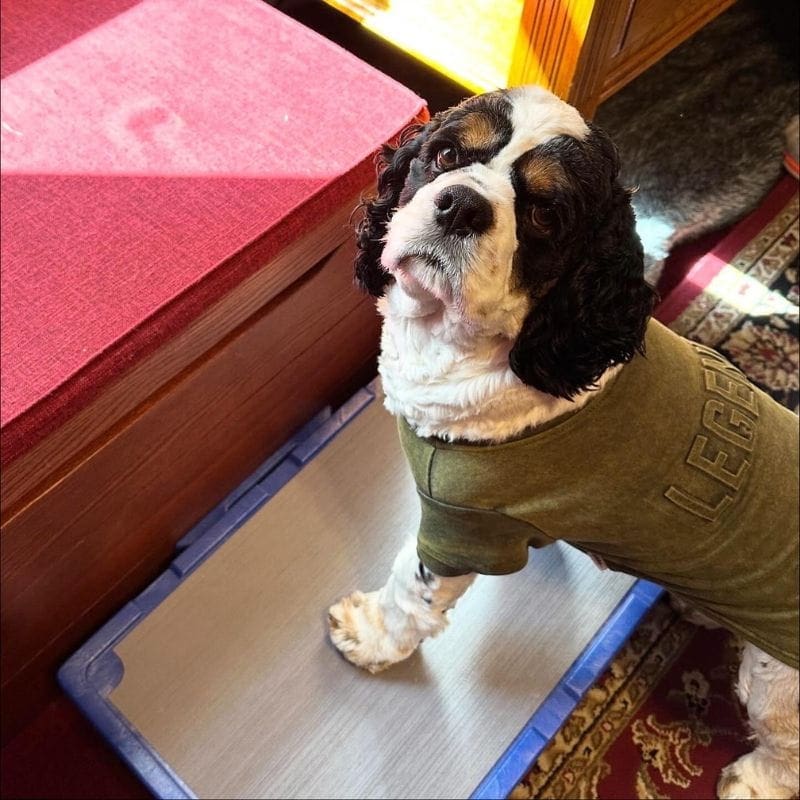
So I brought his KLIMB training platform with the Restore Dog Bed topper from BLUE-9 into my home office. The setup looks like this and has honestly been one of the best investments I’ve made:
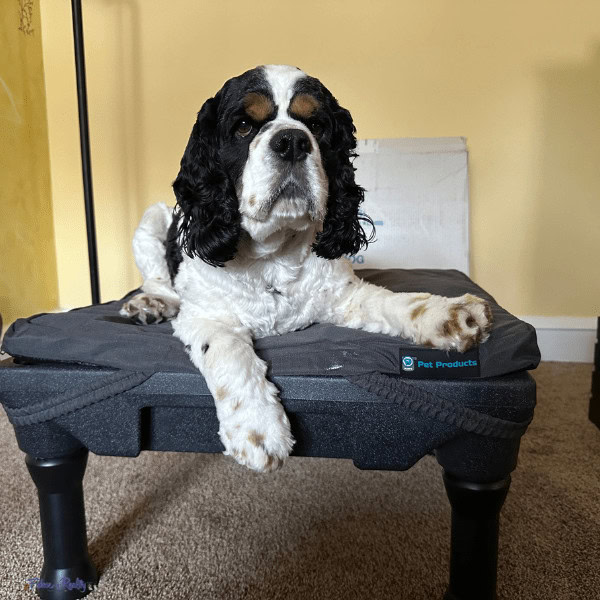
What surprised me most was how much having his own designated space helped. The durable, water-resistant bed transformed Alvin’s training setup into a calming retreat where he could relax, settle, and simply be near me without needing to be physically attached to me at all times.
It also gave him a predictable “place” during Zoom calls, workdays, and everyday household activity, which helped him learn that calm independence was okay, too.
Bonus: I love that I can take the cutest photos ever of him, too!
What Are the Signs of Separation Anxiety in Cocker Spaniels?
True separation anxiety is a genuine stress response. It is not stubbornness, drama, spite, or manipulation. A dog with separation anxiety is experiencing real distress when left alone or separated from their attachment person.
Pre-Departure Anxiety
Your dog begins showing stress before you leave. They may pace, pant, shadow you, tremble, or react the moment you pick up your keys, put on shoes, grab a bag, or start your leaving routine.
Vocalization When Alone
Barking, howling, whining, or crying that happens specifically when your dog is alone can be a sign of separation-related distress, especially if it continues beyond the first few minutes.
Destructive Behavior Linked to Absence
A bored dog may chew anytime. A dog with separation anxiety usually destroys things during your absence. Scratching doors, chewing door frames, tearing up blinds, or trying to escape can all point to panic.
House Soiling Despite Being Trained
If your reliably house-trained Cocker has accidents only when left alone, that can be a sign of distress.
Physical Stress Symptoms
Panting, drooling, trembling, pacing, and wide-eyed panic during separation are not normal clinginess. Those are signs your dog may be struggling emotionally.
Inability to Settle Even When You Are Home
If your dog cannot relax even when you are sitting still nearby, that is worth paying attention to.
Important: If you are seeing several of these signs consistently, talk to your veterinarian or a certified veterinary behaviorist. True separation anxiety often needs a real behavior plan, and in some cases, medication or the proper canine CBD with your vet’s approval may be part of that plan.
What Pet Cameras Can Reveal About Your Dog’s Behavior
One of the most helpful ways to determine whether your Cocker Spaniel is experiencing true separation anxiety or simply a strong attachment is to observe what happens after you leave the house.
As described above, some dogs briefly vocalize, watch the door, or pace for a few minutes before settling down normally. Others may continue escalating and show ongoing signs of distress that should not be ignored.
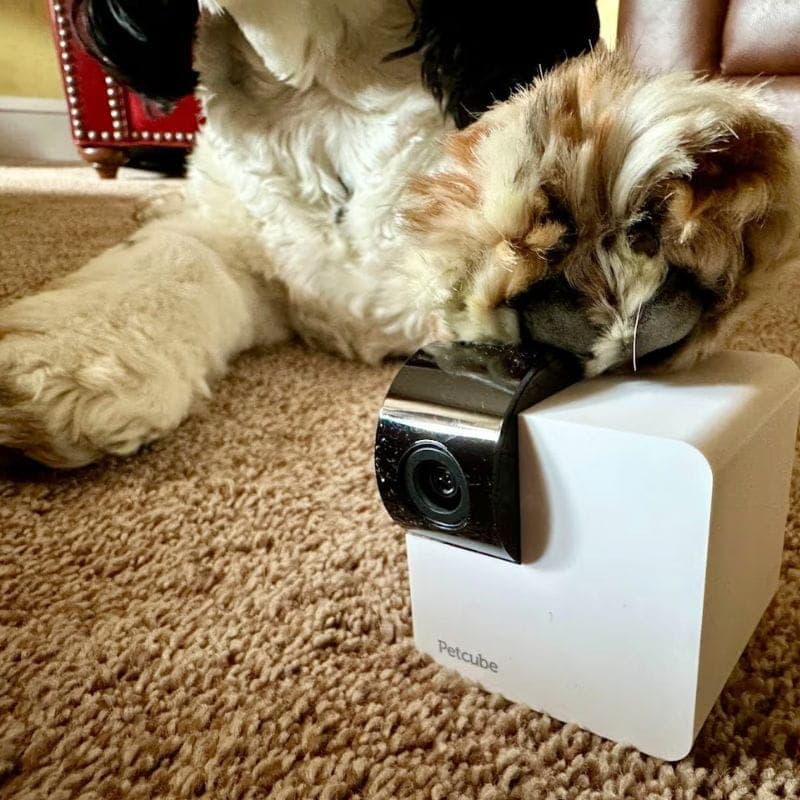
A pet camera can help you see the difference between a dog who eventually relaxes and one who remains in a prolonged state of panic. And the good news is, pet cameras have come down considerably in price in recent years. Pet parents can watch on a downloadable phone app.
Sometimes what we imagine is happening while we are away is very different from reality. For some pet parents, camera footage provides reassurance and peace of mind. For others, it can help identify patterns and behaviors worth discussing with a trainer or veterinary behavior professional.
Even a simple indoor camera setup can provide valuable insight into your dog’s emotional state when left alone. Peace of mind is there in case you want to check on your dog during a thunderstorm, keep tabs on them while you are away, and gain a better overall understanding of their behavior, routines, and ability to settle independently.
I’ve tested several pet cameras over the years, and here are my three favorites, which are ideal for most budgets:
- PetCub Cam 360– An affordable, easy-to-use pet camera with 1080p HD video, two-way audio, motion alerts, and 360° coverage that helps pet parents monitor and interact with their pets remotely for added peace of mind.
- Furbo 360° Mini Dog Camera – It allows pet parents to monitor their dogs remotely with 360-degree video, two-way audio, barking alerts, and treat-tossing features designed to help dogs feel connected and engaged while home alone.
- Tapo 2K+ Indoor/Outdoor Wired Security Camera – Another affordable indoor pet camera with motion detection, two-way audio, night vision, and smartphone access, allowing pet parents to monitor their dog’s behavior and activity remotely.
Cocker Spaniel Clingy Behavior vs. Separation Anxiety
So is your Cocker Spaniel clingy, or does she have true separation anxiety? The key distinction is whether your dog can settle and recover. A clingy Cocker wants proximity. A dog with separation anxiety experiences distress.
| Clingy Behavior | Possible Separation Anxiety |
| Follows you from room to room | Panics when you prepare to leave |
| Wants to be next to you on the couch or bed | Cannot settle after you leave |
| Watches the door or looks out window briefly | Continuous barking or howling |
| Prefers being near family members | Attempts to escape from the room or crate |
| Excited greeting when you return home | Destructive chewing or scratching |
| Settles after a short transition period | Ongoing escalating signs of stress |
| Happy to eat and drink when you are home | Refuses food, water, treats when alone |
| Relaxes and joyful in daily activities | May injure themselves trying to escape |
| Acts like a typical “Velcro” Cocker | Remains anxious the entire time alone |
The Gray Zone: Where Most Cocker Spaniels Actually Live
Here is what nobody tells you: most Cockers are not firmly in either category. They sit somewhere in the middle. More attached than your average dog, less severe than a clinical case.
They are not in crisis, but they are also not exactly chill about being alone.
This gray zone is actually good news. A dog in the gray zone may not need medication or intensive behavior intervention. What they often need is structure, routine, confidence-building, and a way to practice being calm without feeling abandoned.
I learned that our first Cocker Spaniel, Brandy Noel, had severe separation anxiety when we left her home alone to attend a funeral. After the service, I returned to our apartment (no pet cams at the time), to find her in the midst of a full-blown seizure.
I immediately called my spouse and our veterinarian, who performed blood work and other tests. She never had another seizure after that because it was separation-induced. We were given two options: Not to leave her alone or to medicate her because her anxiety was major. We chose never having her home alone, and this worked for us fabulously.
Can You Train a Cocker Spaniel With Separation Anxiety or Velcro Behavior?
Yes, with the right approach.
The goal is not to make your dog love you less. It is to give them the tools to handle loving you from across the room.
That distinction matters. The best training for velcro Cockers is not about rejection or forcing distance. It is about building confidence, emotional regulation, and calm independence.
Why Place Training Helps Velcro Cockers
Place training teaches your dog to go to a specific spot, settle there, and remain calm while life happens around them.
For a Cocker Spaniel, this can be incredibly helpful because it gives them clarity. They are no longer guessing where they should be, whether they should follow you, or how close they need to stay. They have a job. They have a place. They have a safe, predictable home base.
Place training helps with:
- independent calm
- confidence
- impulse control
- household manners
- calmer departures
- less constant shadowing
- better emotional regulation
This is where I personally noticed a difference with Sir Alvin. Instead of following me from room to room every second of the day, he began learning that he could relax in his own designated space while still being near me.
His BLUE-9 KLIMB training platform became more than just a training tool. It became a predictable place where he could settle while I worked in my office, moved around the house, cooked dinner, or handled Zoom calls. For Velcro breeds like Cocker Spaniels, that kind of confidence-building can make a meaningful difference.
How the Blue-9 KLIMB and KLIMB Jr. Help Cocker Spaniels Build Confidence
Once I realized Alvin did not need more attachment from me, he needed more confidence away from me, everything changed.
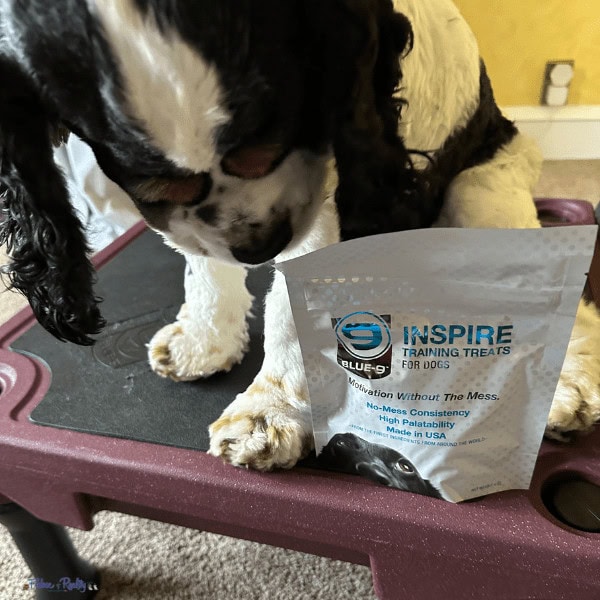
I have used Blue-9’s KLIMB training platform with my Cocker Spaniels for years, and it is one of the tools I recommend most consistently for building calm, independent confidence.
Here is why the KLIMB works where a dog bed or mat often does not: elevation and definition matter. A raised platform gives your dog a clear, specific place to be. There is no confusion. For a sensitive, people-focused Cocker Spaniel, this can be very calming.
The KLIMB Jr. is a great option for smaller, more timid, or less confident Cockers. The lower height can feel less intimidating while still giving your dog the benefit of a defined place.
How to Introduce the KLIMB to a Velcro or Anxious Cocker Spaniel
Step 1: Let the KLIMB Exist First
Set it out near your dog’s usual resting area. Do not force interaction. Let your dog sniff, explore, and decide it is not scary.
Step 2: Reward Curiosity
Any interest counts. A sniff, paw tap, glance, or step toward the KLIMB can be rewarded.
Step 3: Build Duration Before Distance
Ask your dog to stay on the KLIMB while you remain nearby. Start with a few seconds, then slowly increase the time. Make the KLIMB a super happy place to be.
Step 4: Add Movement Slowly
Once your dog is comfortable, take one step away and return. Then two steps. Then a few more. The goal is confidence, not rushing. This may take days or weeks. Each dog is different, just like people.
Step 5: Use It During Everyday Life
Use the KLIMB while you cook, work, fold laundry, watch TV, or answer the door. This is how it becomes a real-life skill instead of a training trick.
Common Mistakes Pet Parents Make
One of the biggest mistakes is moving too fast. A velcro or anxious Cocker needs confidence in small pieces.
Another mistake is using the KLIMB only when you are about to leave. If your dog learns that “go to place” always predicts your departure, it can create more anxiety. Use it during normal, happy, everyday moments too.
Do not use place training as punishment. The KLIMB should feel safe, positive, and rewarding.
And do not expect overnight independence. For sensitive Cockers, calm confidence is built through repetition.
What Helps With Cocker Spaniel Clingy Behavior and Separation Anxiety?
Place training is important, but it works best as part of a bigger routine.
Consistent Place Training
Daily practice with the KLIMB or KLIMB Jr. can help your dog learn how to settle without being glued to you.
Calm Departures and Arrivals
Big emotional goodbyes and dramatic greetings can make anxiety worse. Keep leaving and returning low-key.
Mental Stimulation Before Alone Time
A short training session, sniff walk, food puzzle, or enrichment activity can help your Cocker settle before you leave.
Predictable Routine
Anxious dogs do better when they know what to expect. Routine creates security.
Enough Rest
Overtired dogs are not always calmer. Sometimes they are more reactive, clingy, and unsettled.
Professional Help When Needed
If your dog is panicking, destroying things, or showing physical distress when alone, talk to your veterinarian or a qualified behavior professional.
Frequently Asked Questions About Cocker Spaniel Separation Anxiety
Do Cocker Spaniels have separation anxiety?
Cocker Spaniels are prone to strong attachment because they are people-focused dogs, but not every Cocker has clinical separation anxiety. Many are simply velcro dogs who prefer to stay near their people.
Why is my Cocker Spaniel so clingy?
Cocker Spaniels were bred to work closely with people, so closeness is part of the breed. Clinginess becomes a concern when your dog cannot settle, panics when alone, or shows signs of distress.
How do I know if my dog has separation anxiety?
Look at what happens when you are gone. Barking, pacing, drooling, destruction, house soiling, trembling, or panic behaviors during your absence are more concerning than simple following or clinginess.
Can training help Cocker Spaniel separation anxiety?
Training can help mild separation-related stress and velcro behavior, especially place training. Severe separation anxiety should be addressed with your veterinarian or a certified behavior professional.
Is crate training good for anxious Cockers?
It depends on the dog. Some dogs feel safer in a crate, while others panic more. If your Cocker shows distress in a crate, do not force it without professional guidance.
Should I ignore my clingy Cocker Spaniel?
No. Ignoring a sensitive dog completely can create more confusion. Instead, reward calm independence, create structure, and teach your dog where to settle.
Do Cocker Spaniels outgrow separation anxiety?
Some dogs improve with maturity, routine, and training, but true separation anxiety usually does not disappear on its own. It needs a thoughtful plan.
Can older Cocker Spaniels develop anxiety?
Yes. Older dogs can become clingier due to pain, sensory changes, cognitive changes, routine disruption, or increased insecurity. Sudden behavior changes should always be discussed with your vet.
The Bottom Line on Cocker Spaniel Separation Anxiety
Your Cocker Spaniel’s devotion is not a problem. It is one of the best things about the breed.
The goal was never to create a dog who does not care whether you come home. The goal is to raise a dog confident enough to handle the moments when you are not there.
If your dog lives in the gray zone, more than a little clingy but less than a clinical case, place training is one of the most practical places to start. Sir Alvin going to his KLIMB is not a trick. It is a life skill that he enjoys.
He still monitors my every move with the quiet intensity of a small, fluffy private investigator. But sometimes he does it from his KLIMB..
If your Cocker Spaniel needs help building calm confidence, the Blue-9 KLIMB or KLIMB Jr. can be a practical place to start. They give sensitive dogs a clear, secure spot to settle, which can make daily life calmer for both of you.
Does your Cocker lean more velcro or full-on separation anxiety? Tell me about them in the comments.
Where to Get the KLIMB and KLIMB Jr
http://blue-9.com/collections/klimbThe best place to get the KLIMB is directly from Blue-9, where I purchase products for my dogs.
Use code FIDOSE20 at checkout for an additional 20 percent off. It is also available from Chewy and Amazon, which can be found linked below.