

Boxers occupy an interesting space in the Indian pet market. They’re popular enough that you’ll find them in most major cities, but not so mainstream that pricing is as standardised as it is for, say, Labradors or German Shepherds. That gap between demand and standardisation is exactly why Boxer prices in India can range from ₹15,000 at the low end to over ₹60,000 for a well-bred puppy from established lines.
This guide covers the Boxer dog price in India for 2026 city by city, what actually separates a ₹15,000 Boxer from a ₹50,000 one, and the realistic monthly cost of keeping one of the most energetic breeds in the country.
Why Boxer Prices Vary So Much in India
Boxers aren’t bred in India at the volume that Labradors or Indian Spitz are. Most reputable Boxer breeding happens through a smaller number of dedicated breeders, often connected to the show circuit, which means supply is more limited and prices reflect that.
At the lower end of the market, Boxers sold through pet stores or casual backyard breeders are often the result of unplanned litters from pet Boxers, sometimes without health testing for conditions the breed is known to carry — particularly cardiac issues and hip dysplasia. These puppies are cheaper because the breeder hasn’t invested in health screening, but the long-term cost can be considerably higher if health issues emerge.
At the higher end, KCI-registered puppies from breeders who health-test their breeding stock for cardiomyopathy and hip dysplasia command a premium that reflects real reduced risk, not just paperwork.
Boxer Dog Price in India 2026: City-Wise Breakdown
| City | Price Range (Pet Quality) | Price Range (KCI Registered / Health-Tested) |
| Delhi / NCR | ₹18,000 – ₹35,000 | ₹35,000 – ₹65,000 |
| Mumbai | ₹20,000 – ₹38,000 | ₹38,000 – ₹70,000 |
| Bengaluru | ₹18,000 – ₹35,000 | ₹35,000 – ₹62,000 |
| Chennai | ₹15,000 – ₹30,000 | ₹30,000 – ₹55,000 |
| Pune | ₹17,000 – ₹32,000 | ₹32,000 – ₹58,000 |
| Hyderabad | ₹16,000 – ₹30,000 | ₹30,000 – ₹55,000 |
| Kolkata | ₹15,000 – ₹28,000 | ₹28,000 – ₹50,000 |
| Tier 2 Cities | ₹12,000 – ₹22,000 | ₹22,000 – ₹45,000 |
Mumbai and Delhi remain the highest because the breeders with the most established lines and health-testing programmes tend to operate out of these cities, even if they ship puppies nationally. Boxers from Tier 2 cities are often more affordable, but the seller pool is smaller, which sometimes means more travel to find a reputable breeder.
What You’re Actually Paying For at Different Price Points
Boxers have two breed-specific health concerns that disproportionately affect their pricing: Boxer cardiomyopathy (a form of arrhythmia specific to the breed) and hip dysplasia. According to the Orthopedic Foundation for Animals (https://ofa.org/), responsible breeders screen breeding stock for both conditions before producing litters, and this screening is a meaningful part of why health-tested puppies cost more.
A ₹50,000+ Boxer puppy from a breeder who can show you cardiac clearance certificates (often a Holter monitor test) and hip scores for both parents is, in a real sense, a different product from a ₹15,000 Boxer with no documentation. You’re not paying for the dog’s appearance — you’re paying for reduced probability of two specific, expensive, heartbreaking health conditions.
That said, health-tested doesn’t guarantee a healthy dog, and an untested dog isn’t guaranteed to have problems. It shifts probabilities, and for a breed with the cardiac history Boxers have, that shift is worth something concrete.
Colour and Its Effect on Price
Boxer colours — fawn, brindle, and white — carry different price implications in India, and not always for reasons that map to health or quality.
White Boxers are often priced lower by breeders who follow international show standards, because white is considered a fault in conformation showing (it’s linked to a higher incidence of deafness and skin cancer due to the underlying genetics). However, in the Indian pet market, white Boxers sometimes command a premium simply because they’re visually distinctive and less commonly seen. Buyers should know that white Boxers, regardless of price, carry a higher documented risk of congenital deafness, and a hearing test (BAER test) is worth requesting if you’re considering one.
Brindle and fawn are the standard colours and price similarly, with fawn sometimes slightly more in demand in Indian markets.
What Reputable Breeders Should Provide
At minimum, a Boxer puppy purchase should include:
- Vaccination record (first round completed)
- Deworming schedule documentation
- Information on the parents’ health screening, if any was done
- A health guarantee period, typically 7–15 days
- KCI registration papers, if the litter is registered
For Boxers specifically, ask directly about cardiac screening for the parents. A breeder who has done this will usually be eager to discuss it, since it’s a genuine differentiator. A breeder who seems unfamiliar with the question is a signal the breeding program isn’t health-focused.
Monthly Maintenance Cost of a Boxer
Boxers are a medium-large, high-energy breed, and the monthly costs reflect both their size and their activity needs.
| Expense | Approximate Monthly Cost |
| Quality large-breed dry food | ₹2,000 – ₹3,200 |
| Veterinary care and preventives (averaged) | ₹500 – ₹900 |
| Grooming (minimal — short coat, occasional bath) | ₹150 – ₹300 |
| Toys and enrichment | ₹300 – ₹600 |
| Total estimate | ₹2,950 – ₹5,000 |
The toys and enrichment line item is worth taking seriously with Boxers. They’re an intelligent, high-energy breed prone to destructive behaviour if under-stimulated, and the cost of replaced shoes or furniture tends to dwarf the cost of appropriate enrichment toys.
Boxers are also enthusiastic, sometimes uncoordinated walkers, particularly as puppies and young adults. A well-fitted harness makes daily walks manageable and reduces the strain on both the dog’s neck and your arms.
Recommended: HANK Dog Harness with 3M Reflective Strips (₹1,347, 4.2★)
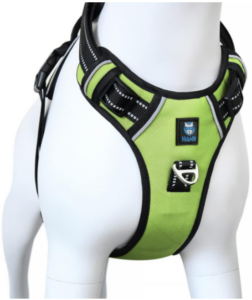
Boxers pull, especially in the first two years before training fully kicks in. A no-pull harness distributes the force across the chest rather than the neck, which matters for a breed with the cardiac sensitivities Boxers have. The reflective elements are genuinely useful too — Boxers’ short coats and often dark colouring make them harder to see on evening walks.
Short coats also mean Boxers are exposed to ticks more directly than double-coated breeds, particularly if they spend time in gardens or parks with tall grass.
Recommended: Ticks and Fleas Remover for Dogs, Pack of 2 (₹399, 4.4★)

A proper tick removal tool removes the entire tick, including the head, which matters for preventing infection. For a short-coated breed like the Boxer, where ticks are easy to spot but also easy to attempt removing incorrectly with fingers, having the right tool on hand is a small cost that prevents a much larger vet visit.
Pet Store vs Breeder vs Rescue for Boxers
Pet stores selling Boxers in India are less common than for breeds like Labradors or Spitz, simply because Boxers aren’t bred at the same volume. When they do appear in pet stores, the same concerns apply — limited health information, early separation from mothers, and inconsistent vaccination records.
Breeders connected to the show circuit are the most reliable source for health-tested Boxers, though they’re concentrated in major metros. Online breeder directories through KCI-affiliated clubs are a starting point, but a video call and request for health documentation before any payment is standard due diligence regardless of how the breeder is found.
Rescue Boxers are less commonly available than rescue Labradors or Indian breeds simply because there are fewer Boxers overall in India, but they do appear, often from owners who underestimated the breed’s energy and exercise requirements. A rescue Boxer, typically 1–3 years old, costs a fraction of a puppy and comes with the major behavioural unknowns of puppyhood already resolved.
Conclusion
The Boxer dog price in India for 2026 spans a wide range, but for this breed more than most, the gap between cheap and expensive often maps directly onto two specific, serious health conditions. If your budget allows, prioritise a breeder who can document cardiac and hip screening for the parents — it’s the single factor most likely to affect your dog’s quality of life over the next decade. Whatever price point you land on, budget realistically for the ongoing costs of a high-energy breed that needs both food and stimulation in equal measure.
FAQs
Why are white Boxers sometimes cheaper despite looking unique?
White is considered a fault in breed standards because it’s linked to a higher rate of congenital deafness and skin cancer susceptibility. Some show-focused breeders price white Boxers lower for this reason, though in the pet market, demand for the distinctive look sometimes offsets this. A hearing test is worth requesting for any white Boxer puppy.
Are Boxers good with families and children in India?
Generally yes — Boxers are known for being playful and patient with children, often described as having a strong protective instinct toward their families. Their high energy means they do best in households that can commit to daily exercise, which matters more for compatibility than the presence of children specifically.
How much exercise does a Boxer need daily?
At least 60–90 minutes of active exercise daily for adult Boxers, split across two sessions. This is significantly more than many medium breeds need, and it’s one of the most common reasons Boxers end up in rescue — owners underestimate this requirement before bringing the dog home.
What is Boxer cardiomyopathy and should I worry about it?
It’s a heart condition involving abnormal heart rhythms that’s more common in Boxers than in most breeds. Not every Boxer develops it, but it’s common enough that responsible breeders screen for it. If you’re buying a puppy, ask whether the parents have had cardiac screening. If you already own a Boxer, periodic cardiac check-ups from middle age onward are a reasonable precaution.
Is a Boxer a good first dog for someone in India?
It depends heavily on lifestyle rather than experience level. Boxers need significant daily exercise and mental stimulation, and without it, they can become destructive or anxious. For an active household with time for two real walks a day plus play, a Boxer can work well even for a first-time owner. For a household with limited time for exercise, the breed isn’t a good match regardless of experience.