

A Doberman that’s underfed looks gaunt in a way that’s hard to miss — ribs, hip bones, a visible absence of the muscle definition the breed is known for. A Doberman that’s overfed looks soft around the midsection in a way that undermines everything the breed represents physically. There isn’t much middle ground with this dog, and that’s exactly why getting the feeding chart right matters more here than with most breeds.
Dobermans are working dogs built for muscle, not bulk. The diet that gets them there is different from what you’d feed a Labrador or a Golden Retriever at the same body weight — higher protein, careful attention to growth rate during the puppy phase, and a feeding structure that supports lean mass rather than just calories.
This Doberman feeding chart breaks down portions by age, what muscle-building actually means nutritionally, and how to apply all of it using food that’s realistically available in India.
What Muscle-Building Actually Requires (It’s Not Just Protein)
The instinct with a muscular breed is to load up on protein and assume the rest takes care of itself. That’s only part of the picture.
Muscle development requires adequate protein, yes — but it also requires sufficient total calories to support the energy cost of building that tissue, and it requires controlled growth during puppyhood so the skeleton can keep pace with muscle mass. A Doberman puppy fed an extremely high-protein, high-calorie diet to build muscle faster often ends up with growth that outpaces skeletal development, leading to joint problems that show up later.
According to research compiled by the World Small Animal Veterinary Association (https://wsava.org/global-guidelines/global-nutrition-guidelines/), large and giant breed puppies have specific caloric and calcium-to-phosphorus ratio requirements during growth that differ meaningfully from adult maintenance needs. For Dobermans specifically, this matters because the breed has a known predisposition to dilated cardiomyopathy (DCM), and there’s ongoing research interest in the relationship between diet composition and cardiac health in the breed.
The practical takeaway: controlled growth in puppyhood, adequate but not excessive protein in adulthood, and consistent monitoring of body condition throughout.
Doberman Feeding Chart by Age
Quantities below are for dry commercial kibble formulated for large breeds. Home-cooked portions are covered separately.
Puppy Stage: 2 Months to 18 Months
| Age | Daily Meals | Approx. Daily Quantity (Dry Food) |
| 2–3 months | 4 meals | 200–260g |
| 3–6 months | 3 meals | 260–340g |
| 6–12 months | 3 meals | 340–420g |
| 12–18 months | 2–3 meals | 400–480g |
Dobermans grow fast and look deceptively mature well before they’re physically mature. A 10-month-old Doberman often looks like an adult but is still developing bone density and joint structure. This is the window where overfeeding does the most long-term damage — not because the dog gets fat, but because rapid weight gain on a frame that isn’t finished developing increases joint stress significantly.
Large-breed puppy formulas are specifically designed with controlled calcium levels for this reason. Standard puppy food, even good quality, often has calcium levels appropriate for smaller breeds but excessive for a Doberman’s growth rate.
Adult Stage: 18 Months to 7 Years
| Weight of Dog | Daily Dry Food (Moderate Activity) | Daily Dry Food (High Activity) |
| 28–32 kg | 380–440g | 460–520g |
| 32–36 kg | 420–480g | 500–560g |
| 36–40 kg | 460–520g | 540–600g |
| 40+ kg | 500–570g | 580–650g |
Most Indian Dobermans, particularly females, fall in the 28–36kg range, with males often reaching 36–40kg. The high-activity column applies to dogs in regular training, working roles, or dogs getting more than an hour of vigorous exercise daily. A Doberman on two structured walks and some play is moderate activity, not high.
Spayed and neutered Dobermans need roughly 10% less than these figures. The breed’s lean build means weight gain is often more visible than in heavier-set breeds, which actually works in your favour for monitoring.
Senior Stage: 7 Years and Above
| Age | Daily Dry Food | Notes |
| 7–9 years | 340–400g | Monitor for early signs of cardiac issues; reduce if activity drops |
| 9+ years | 300–360g | Senior formula with joint and heart-supporting nutrients |
Senior Dobermans need closer veterinary attention than the feeding chart alone can address. Given the breed’s cardiac predisposition, any unexplained reduction in appetite, exercise tolerance, or unusual weight loss in a senior Doberman warrants a vet visit rather than a dietary adjustment.
What to Feed a Doberman in India
Kibble
A quality large-breed kibble with at least 24–26% protein for adults and 28–30% for puppies is the baseline. The first ingredient should be a named animal protein. For a breed this size, the cost of premium food adds up quickly, which is where portion accuracy becomes financially relevant too — overfeeding a Doberman isn’t just a health issue, it’s an expensive one.
Home-Cooked Meals
Home-cooked diets for Dobermans need to be substantial, both in quantity and protein density, given the breed’s size and muscle mass. A working structure for an adult Doberman’s daily meal:
- Protein (45–50%): Boiled chicken (with some skin is fine for this breed given their higher caloric needs), eggs (2–3 per day), fish like rohu or surmai, occasional lean mutton
- Carbohydrates (30–35%): Rice, and for active dogs, some boiled potato or sweet potato for additional energy
- Vegetables (15–20%): Pumpkin, carrots, spinach, beans; no onion, garlic, or grapes
- Fat: Fish oil daily; a teaspoon of ghee or coconut oil for additional calorie density in active dogs
The volume required for a 35kg Doberman on home-cooked food is substantial — easily 700–900g of prepared food per day for an active adult. Owners switching from kibble to home-cooked are often surprised by how much food this actually represents.
Portion Tracking for a Breed This Size
With a dog this large, manual feeding becomes harder to track consistently, especially across multiple household members who might all be feeding the dog. An automatic feeder removes that ambiguity.
Recommended: HI Focus 4L Smart Automatic Pet Feeder with HD Camera
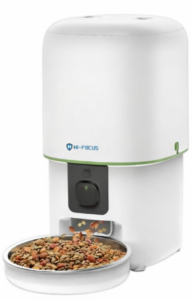
For a large breed like the Doberman, consistent portion control matters as much as the food quality itself. This feeder dispenses scheduled, measured portions and the camera lets you confirm the dog actually ate — useful in multi-person households where ‘did you feed him?’ conversations are common. The Wi-Fi app control means travel or late work days don’t disrupt the feeding schedule, which matters for a breed where consistency in meal timing supports digestive health.
Grooming and Coat Care for the Doberman’s Short Coat
Dobermans have a short, dense coat that doesn’t need much in terms of haircuts, but it does need regular care, particularly in India where skin issues from heat and humidity are common in short-coated breeds.
Recommended: Pil Neem Plus Herbal Pet Shampoo 1000ml

Neem-based shampoos work well for Dobermans because the breed is prone to skin sensitivities and minor irritations, especially during monsoon months. A neem formulation helps manage minor skin issues naturally without the harsh chemicals found in some commercial shampoos. Bathing every 4–6 weeks, more frequently during monsoon, keeps the short coat looking sharp without over-drying the skin.
India-Specific Feeding Notes
Summer heat and protein-heavy diets: High-protein diets generate more metabolic heat during digestion. In Indian summers, some Dobermans on very high-protein diets show reduced appetite during the hottest months. This is generally fine — don’t compensate by force-feeding. Adjust meal timing to early morning and evening when temperatures are lower.
Cardiac monitoring: Given the breed’s predisposition to DCM, an annual cardiac screening from around age 4–5 is worth discussing with your vet, particularly if you’re feeding a home-cooked or grain-free diet. There’s been research interest in potential links between certain grain-free diet formulations and DCM risk in predisposed breeds, though the relationship isn’t fully established. If you’re feeding grain-free, mention this to your vet.
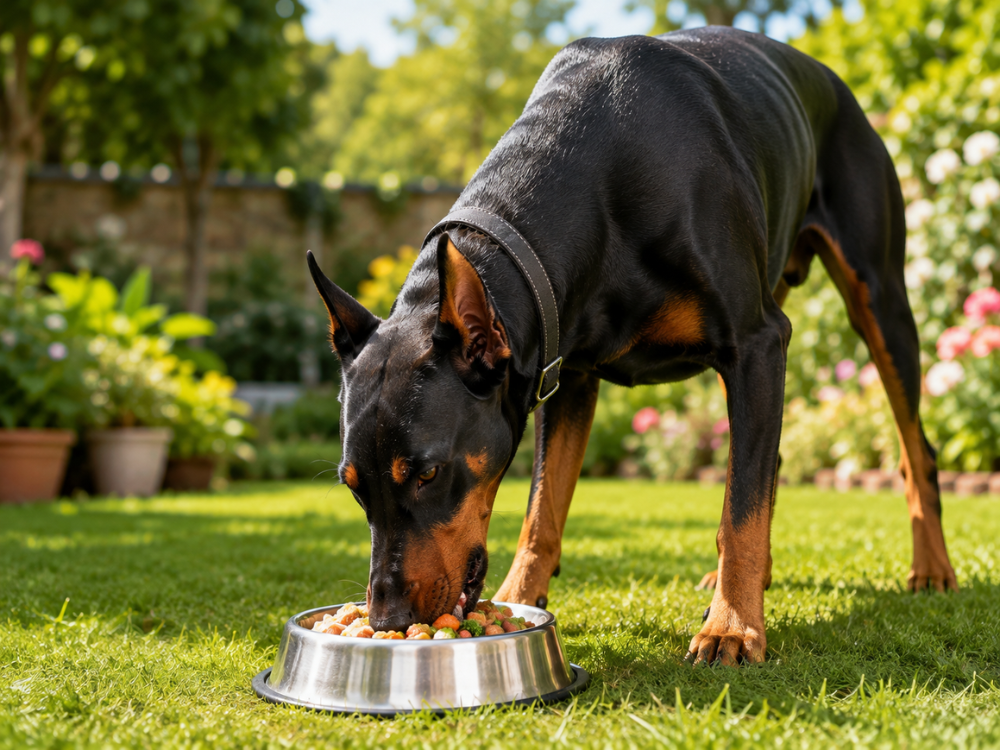
Exercise and feeding timing: Dobermans are deep-chested and at real risk for bloat. Two meals a day, no exercise for at least an hour after eating, and avoiding rapid eating (a slow feeder bowl helps) are non-negotiable for this breed.
Reading a Doberman’s Body Condition
The rib test applies here too, but for a muscular breed like the Doberman, you’re also looking for muscle definition, not just fat coverage. A healthy adult Doberman should show visible muscle tone along the shoulders, back, and hindquarters, with ribs palpable under a thin covering.
From the side, there should be a clear waist tuck behind the ribcage — more pronounced in Dobermans than in many breeds due to their athletic build. If that tuck disappears and the topline looks flat or the belly sags, the dog is carrying excess weight regardless of how muscular they otherwise appear.
Conclusion
A Doberman feeding chart built around controlled puppy growth, adequate adult protein, and consistent portion tracking sets this breed up for the muscular, athletic condition they’re known for — without the joint and cardiac risks that come from getting the balance wrong. Use the charts here as your baseline, watch body condition monthly, and don’t hesitate to involve your vet proactively given the breed’s specific health considerations, particularly around cardiac health as they age.
FAQs
How much protein does an adult Doberman need daily?
Look for kibble with at least 24–26% protein on a dry matter basis for adults, or aim for roughly 45–50% of a home-cooked meal to come from animal protein sources. Active and working Dobermans benefit from the higher end of this range.
Is grain-free food good for Dobermans?
This is genuinely contested. Some owners prefer grain-free for digestive reasons, but there’s been research interest in potential links between certain grain-free formulations and dilated cardiomyopathy in predisposed breeds like the Doberman. If you’re feeding grain-free, discuss it with your vet and consider periodic cardiac screening as a precaution.
My Doberman puppy is growing very fast. Should I increase food to support the growth?
No — this is the opposite of what’s needed. Rapid growth in large breed puppies is associated with higher rates of joint problems later in life. Stick to large-breed puppy formulas with controlled calcium levels and the portion guidelines for their age, not their apparent size.
At what age should I switch my Doberman to adult food?
18 months, not 12. Like other large breeds, Dobermans continue skeletal development past the point where they look physically mature. Switching too early removes the controlled growth support that large-breed puppy formulas provide.
How can I tell if my Doberman is at a healthy weight given how muscular they are?
The rib test still works — you should be able to feel ribs under a thin covering even on a muscular dog. Combine this with a visible waist tuck from the side and defined muscle tone along the back and hindquarters. If the waist tuck disappears, the dog is gaining weight regardless of muscle mass.