

Medically reviewed by Dr. Catherine Nicolaou, DVM.
Quick answer: Tick fever is a group of tick-borne illnesses, and in India the two most common are ehrlichiosis (caused by the bacterium Ehrlichia canis) and babesiosis (caused by the Babesia parasite). Both spread through the bite of the brown dog tick, which thrives in India’s warm, humid climate. Signs include fever, tiredness, loss of appetite, pale gums and sometimes nosebleeds. It is serious and can be fatal if ignored, but it is usually curable when caught early and treated with the full course of medicine, often doxycycline. See a vet quickly if you suspect it.
If your dog has had ticks and then goes quiet, off food and feverish, tick fever is the first thing to rule out. Here is what it is, how to spot it, how vets treat it, and how to keep it from coming back.
What is tick fever in dogs?
Tick fever is an umbrella term for diseases a tick passes into your dog’s blood when it bites. In India the main ones are:
- Ehrlichiosis (Ehrlichia canis): a bacterial infection, extremely common in India. It can attack in stages and, if left untreated, turn chronic.
- Babesiosis (Babesia species): a parasite that destroys red blood cells and causes anaemia.
- Less often, anaplasmosis and hepatozoonosis.
The carrier is almost always the brown dog tick (Rhipicephalus sanguineus), which breeds happily in India’s tropical heat and humidity. Cases climb in the warm months and through the monsoon, when ticks are most active. For how to find and remove them, see our guide to removing ticks on dogs.
Symptoms of tick fever in dogs
Tick fever can look like a general off day at first, which is why it is missed. Watch for:
- High fever and lethargy
- Loss of appetite
- Pale gums, a sign of anaemia
- Dark or reddish urine
- Swollen lymph nodes or a swollen belly from an enlarged spleen
- Joint pain, stiffness or limping
- Nosebleeds or pinpoint bruises on the skin, a classic sign of serious ehrlichiosis
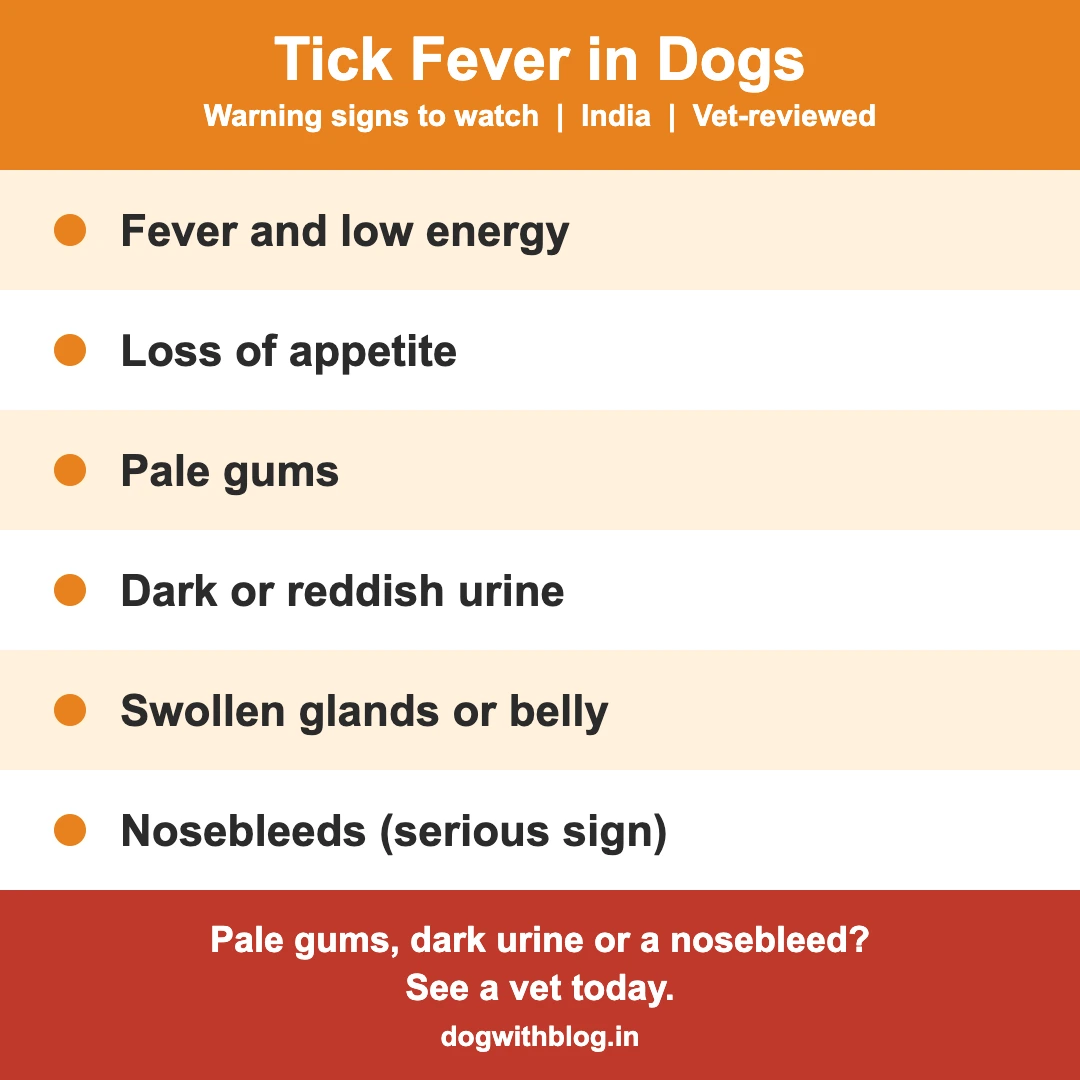
Pale gums, dark urine or a nosebleed mean you should go to the vet the same day. These point to anaemia or low platelets, which can turn dangerous fast.
How vets diagnose it
A vet confirms tick fever with blood tests, not by sight alone. Common ones are a blood smear to see the parasite or infected cells, a rapid SNAP or 4Dx antibody test, a complete blood count that often shows a low platelet count, and sometimes a PCR test. Tell your vet if your dog has had ticks recently, as it speeds up the diagnosis.
Treatment for tick fever in dogs
Treatment depends on which infection it is, which is exactly why the vet’s diagnosis matters:
- Ehrlichiosis and anaplasmosis are treated with the antibiotic doxycycline, usually for about four weeks. Finishing the entire course is the part owners get wrong, and stopping early is the main reason tick fever comes back.
- Babesiosis needs anti-parasite medication such as imidocarb, prescribed by the vet.
- Supportive care for a very sick dog can include intravenous fluids, nutrition support, and in severe anaemia a blood transfusion.
Do not treat tick fever at home with leftover or human medicine. The drug and dose are specific, and the wrong call costs time the dog may not have.
Can tick fever kill a dog?
Yes, if it is left untreated or caught too late, especially severe babesiosis through anaemia or chronic ehrlichiosis through bone-marrow damage. The reassuring part is that caught early and treated fully, most dogs recover well. Speed is everything, so the moment you connect ticks with a sick dog, see a vet.
How to prevent tick fever
The only real prevention is keeping ticks off your dog:
- Use a vet-recommended tick preventive: a spot-on, a collar, or an oral tablet such as those containing fluralaner or afoxolaner.
- Check your dog for ticks after walks, especially the ears, neck, armpits and between the toes. Our tick-removal guide shows how.
- Treat the environment too. Ticks live in bedding, cracks and the corners of the home and yard, not just on the dog.
- Be extra watchful in the warm and monsoon months. See our monsoon dog-care guide.
Vaccination does not prevent tick fever, but keeping your dog’s core vaccinations current keeps its overall health strong. Community and street dogs are hit hard by tick fever too. If you spot a sick street dog, your local animal helpline can help. Worms are the other parasite to stay ahead of, so keep your dog’s deworming schedule current too.
Frequently asked questions
Is tick fever in dogs curable?
Usually yes, when it is caught early and the full course of medicine is given. Ehrlichiosis treated with doxycycline has a good outcome. Delays and half-finished courses are what lead to chronic, harder-to-treat disease.
How long does tick fever last in dogs?
With prompt treatment dogs often start improving within a few days, but the antibiotic course for ehrlichiosis usually runs about four weeks. Finish it even after your dog looks well.
Can tick fever come back?
It can, mainly if treatment is stopped early or the dog picks up fresh tick bites. Complete the medication and keep up tick prevention to avoid a relapse.
Is tick fever contagious to other dogs or to humans?
It does not spread by direct contact. Both dogs and people catch tick-borne infections from tick bites, not from each other, so controlling ticks protects the whole household.
Can I treat tick fever at home?
No. Removing ticks and keeping your dog hydrated and rested helps, but the infection itself needs prescription medicine and often blood tests to monitor progress. See a vet.
For any specific concern, consult your vet. This guide is general information and does not replace an in-person diagnosis.