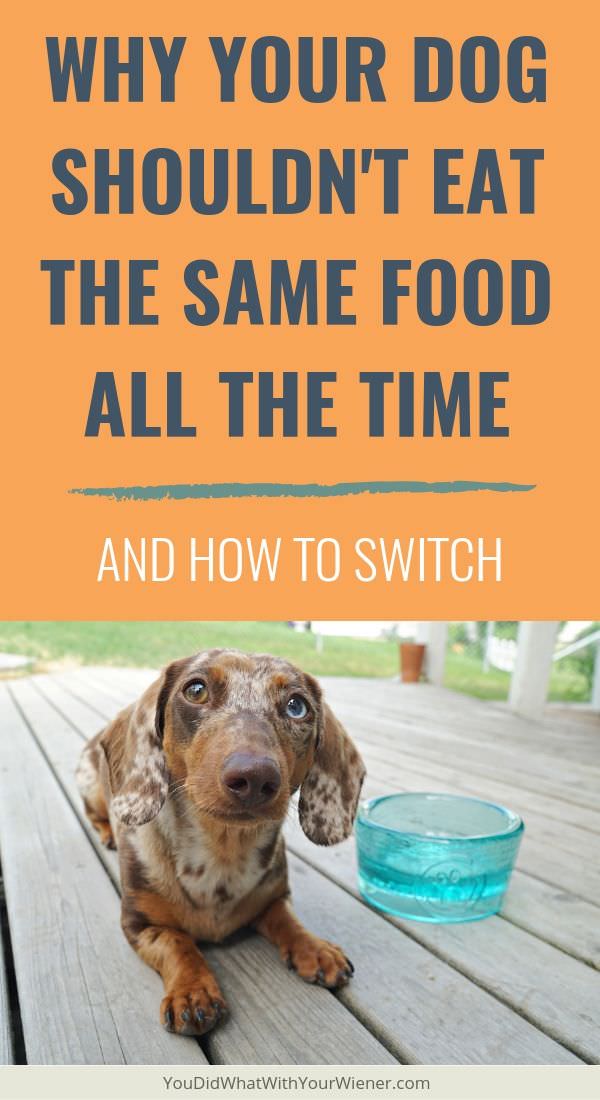
Besides bringing variety, and a “thrill” to your dog’s taste buds, there are many reasons why you may want to rotate your dog’s food.
Why Should I Switch My Dog’s Food?
Dog Food Advisor sums it up perfectly,
“Since there’s no such thing as a perfect dog food, it’s reasonable to assume every product is deficient or excessive in some way.
So, built-in flaws tend to be magnified when the same food is fed continuously… day-in and day-out… for a lifetime.”
Article originally published June 2019
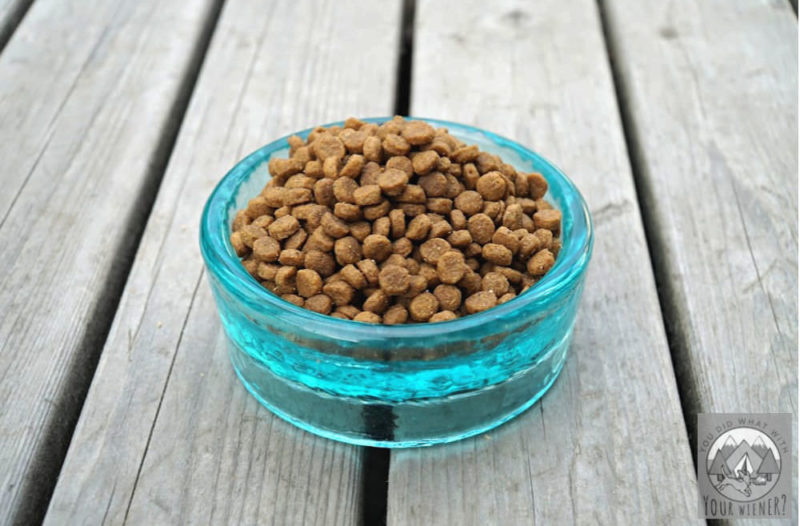
As my blogger friend who knows more about dog nutrition than I do so eloquently put it, “Every single dog food out there is wrong for your dog.”
Her point is that too much of a good thing is still a bad thing (click to read why).
If your dog eats a variety of foods, it gives them a chance to get different nutrients, in different ratios, and doesn’t allow any one “bad” ingredient to build up in their system.
I believe that switching foods is one of the best things you can do to help keep your dog healthy.
When It’s Necessary to Switch Your Dog’s Food
Besides generally wanting to improve your dog’s health, there are some specific signs that now might be the time to switch your dog’s food.
- Your dog’s favorite food is discontinued or unavailable
- Your puppy is over 12 months old and you want to transition them from puppy to adult food
- Your small breed dog has become a senior (generally 7-9 years old)
- Your dog is pregnant or nursing
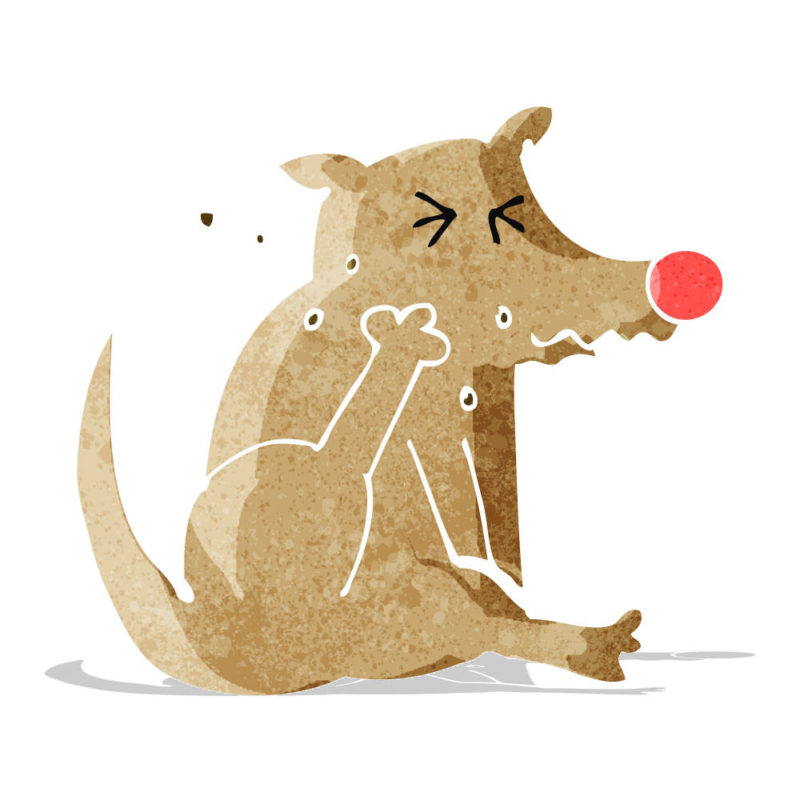
- Your dog is allergic to one or several of the ingredients in their current food – this could be something you just discovered or a reaction that recently developed
- Your dog’s health issues may benefit from changing to a prescription diet
- Your dog doesn’t like his food anymore
- For variety – if you want to try a different nutrient profile (ie. diet rotation)
Whatever the reasons, if you’ve decided to switch, or rotate, your dog’s food, here are the steps for doing it properly.
Note: I am not a veterinarian or a certified dog nutritionist. I’m just sharing what I’ve learned over the years during the process of switching (rotating) my dog’s food regularly.
How to Switch Dog Food The Right Way
The first couple of times I transitioned my Dachshund’s food, I used the one-month method below. As they got more used to me switching foods, I began making the change faster.
Now, because I’ve rotated my Dachshund’s food enough times and they have developed a healthy gut microbiome that will handle any change, I don’t need to make slow transitions anymore.
If it’s your first time changing your dog’s food, definitely start with a slow transition and see how it goes. If your dog develops an upset stomach or starts to not feel good, you may need to transition even slower or try a different food.
If you want to change your dog’s food but are afraid of doing it wrong, read on.
Step 1: Check with Your Veterinarian (Optional but highly recommended)
Before you switch your dog’s food, you may want to check with your veterinarian.
If your dog is healthy, you should be able to switch their food using the below method with no problems, but I must include this disclaimer.
However, if you think your dog may have any underlying medical issues, or has known issues, you should definitely run your food choice by your vet to make sure that it will fit your specific dog’s needs.
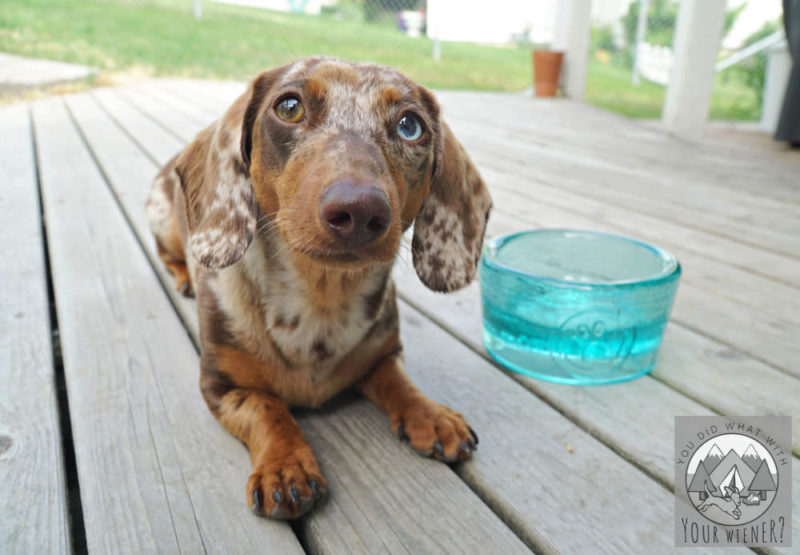
Step 2: Make Sure You Have Enough of Both Foods
Transitioning your dog’s food involves feeding both your dog’s old and new food together over a period of time.
You’ll start by feeding only a small amount of the new food mixed in with your dog’s regular food and then change the ratio as time goes on.
Depending on whether you plan to go with the 1-month or 7-day transition schedule, you’ll need to make sure you have enough of both foods on hand.
Exactly how much you need of each will depend on what kind of food, the calorie density of the foods, and the amount your dog generally eats each day.
For example though, if you are switching your dog’s food over a period of one month, a 15 day supply of each food, plus a little extra, should be sufficient.
Step 3: Make a Transition to the New Dog Food
If you are going to switch dog food, you will want to transition to the new food over a period of time.
Depending on how your dog handles the change, it could take less than 2 weeks to transition or it could take over a month.
The safest way to transition to a new food is to do it over the period of a month.
A 1-month transition schedule looks like this:
- Days 1-7: 1/4 new mixed with their old food
- Days 8-14: 1/3 new to old
- Days 15-21: 1/2 new to old
- Days 22-28: 3/4 new food
- Days 29+: 100% of the meal will be the new food (until you change next time)
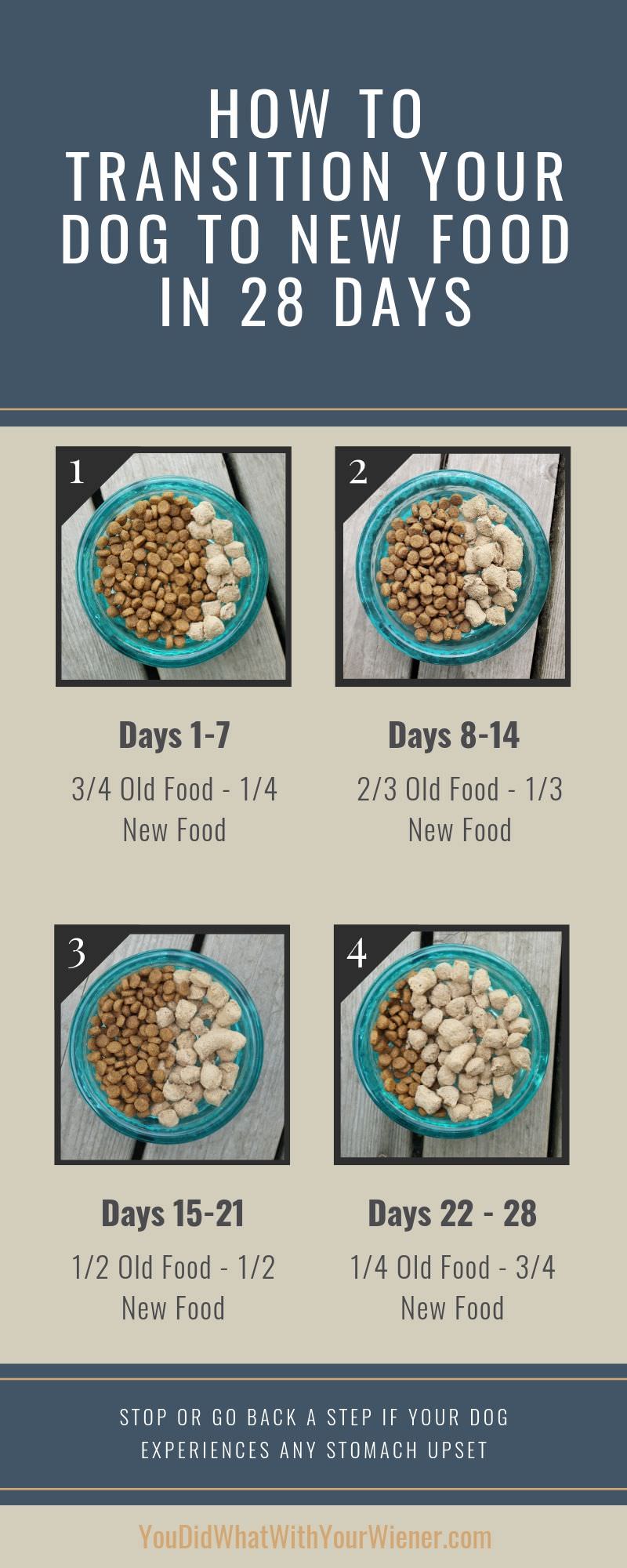
If you have had positive experiences with switching your dog’s food before, or you think they have an “iron stomach”, you might be able to get away with transitioning your dog to a new food over 7 days.
Basically, you’re taking the 30-day schedule above and moving to the next phase faster.
A 7-day transition schedule looks like this:
- Days 1-2: 1/4 new mixed with their old food
- Days 3-4: 1/3 new to old
- Days 5-6: 1/2 new to old
- Day 7: 3/4 new to old
How to Change Your Dog’s Food Quickly
If you really wanted to speed things up, you could make the transition in 5 days.
Keep in mind though that the quicker you change your dog’s diet, the greater the chance your dog could have a negative reaction to it.
I don’t recommend switching your dog’s food cold turkey. Only use this method if you’ve changed your dog’s food several times before with no issues.
A 5-day transition schedule looks like this:
- Day 1: 1/4 new mixed with their old food
- Day 2: 1/3 new to old
- Day 3: 1/2 new to old
- Day 4: 1/2 new to old
- Day 5: 3/4 new to old
Generally, there is no reason to switch your dog’s food over any less than a 5-day period.
An exception might be if your dog has a serious health condition and your vet recommends it.
In that case, you will be given direct instructions on how to do it and things to watch for.
Switching Your Dog from Canned or Kibble to Raw Food
Oh, boy! Raw dog food is a VERY controversial topic and there are many theories about transitioning a dog to eating a raw diet.
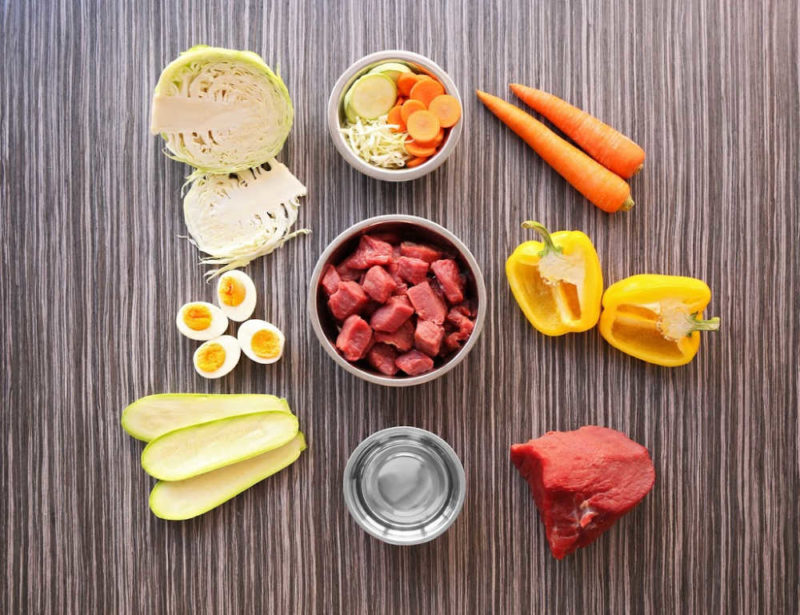
I’m definitely not an expert on this topic or, or as comfortable sharing my knowledge about switching to raw, as I am about switching dry or wet processed food.
Instead, I’ll just share a few tips from others who are more knowledgeable.
First though, I’ll tell you what I did when I switched my dogs to raw dog food.
It may not have been the “right” way but it worked for us. However, keep in mind, my dogs have stomachs of steel and can handle just about any food switch I make quickly.
At the time, I’d heard some advice that it’s not good to feed a dog raw and kibble foods in the same meal because they digest at different rates in the stomach and the raw food could “spoil before it’s digested”.
On the other hand, I heard plenty of advice that it didn’t matter if a dog ate kibble with some raw dog food mixed in.
Because I figured my dogs would handle the switch easily and quickly, I went with the 7-day plan above and DID mix kibble and raw in the same meal.
It’s probably a safer bet to go with their recommendations though.
If you want to hear a detailed, first-hand experience from someone who changed their dog’s diet to raw, and all the benefits her dog’s experienced, check out the book A Novice’s Guide to Raw Feeding for Dogs (this is an affiliate link so I may get a small commission if you purchase).
Step 4: Keep an Eye Out for Warning Signs
It can take 6 -8 weeks, after you’ve made the full switch, to see any positive changes. During that time, you could see some issues pop up.
Some signs that you might need to slow down, take a step back in the new/old feeding ratio, or reconsider your new food choice are:
- Your dog refuses to eat at all, or picks around the new food, leaving it in the bowl or dropping it on the floor (still, after a couple of tries)
- The your dog develops diarrhea or an extreme amount of gas
- If your dog becomes constipated and has to strain to go to the bathroom
- Your dog is constantly itching, licking their paws, or you notice newly-developed rashes or hotpots (which could indicate a food allergy)
- Your dog experiences rapid weight loss or weight gain (get to the vet because it’s likely something underlying causing this)
While most of these changes, besides maybe the rapid weight loss or gain, may not be anything to be concerned about, it’s always best to check with your vet if you have event the slightest concern.
My vet office has helped me over the phone several times (unrelated to switching food). When I was worried, I called them and explained what was happening.
While they couldn’t diagnose my dog over the phone, they were able to tell me if I should just keep an eye on my dog or bring them in to be examined.
Most of the things on the list above are easily addressed at home.
Your Dog Refuses to Eat the New Food
If your dog refuses to eat the new food, it could be as simple as your dog being unsure of the new food or not liking the taste.
Depending on the food, you can try hand feeding them. I find dogs to be more accepting that way.
However, dogs have a keen sense of smell and instinct. They may not want to eat it because they can smell something in there that is “bad” for them.
I don’t mean bad as in there is anything wrong with the food but bad in that they might be allergic or know a particular food/ingredient may make them sick.
After trying a few times, if your dog still refuses to eat the new dog food, you can choose a different one to switch to.
Your Dog Develops Constipation or Diarrhea
Sometimes, switching a dog’s food can cause temporary stomach or intestinal issues. These are most commonly gas, diarrhea, or constipation.

Sometimes adding a bit of canned pumpkin (unsweetened), or probiotics, to your dog’s food can help balance their gut.
The issue should resolve itself after a few days. If it doesn’t, you may want to take a step back in the transition to a mix that didn’t cause issues or switch back to your dog’s old food.
If the issue persists, you may want to consult with your veterinarian. There might be an underlying case causing the issue instead of the food transition (ie. it’s just coincidence).
Your Dog May Be Experiencing a Potential Allergic Reaction
It is possible that a dog can be allergic to a food ingredient that you weren’t aware of before because it wasn’t in the old food.
Common allergy signs are constantly itching or licking their paws, newly developed rashes or hotpots, watery eyes, scratching their face (with their paws or by rubbing it on the carpet), and shaking their head a lot.
The most common dog food allergens are beef, dairy, wheat, egg, chicken, lamb, soy, pork, rabbit, and fish.
If you think your dog may be experiencing allergies, the first things you should do is switch back to the old food and consult with your veterinarian.
Check the ingredient list of the new food against the old one. One of those differences is likely the culprit.
You can take both the old and new food in the original package, or your list of the “new” ingredients, to your vet to discuss potential allergies.
Once you have determined if your dog has an allergy to a specific food or ingredient, you can choose one that doesn’t contain those and try switching foods again.
How Often Should I Rotate My Dog’s Food?
While there is no hard rule on this, to get the benefits of rotating your dog’s diet, you should make a switch a couple times a year at a minimum.
I’m a firm believer that you can’t switch a dog’s food too often.
Humans eat several different foods a day and, in my opinion, the longer your dog eats one food exclusively, the higher risk for deficiency of beneficial nutrients and or build up of harmful ingredients.
As concerned pet owners, we hope that the foods we feed don’t overtly contain any harmful ingredients.
However, as we’ve seen from the recent Hills Pet Nutrition recalls, too much of a good thing can be bad.
Also, as many pet parents have recently discovered, trying to do the right thing by feeding boutique, exotic, or grain-free (BEG) diets may be unwittingly damaging our pet’s heart health (read more about that HERE).
How often you switch your dog’s food can depend on personal preference and your dog’s gut-tolerance to change.
Personally, my dogs have gone through several food transitions so I can switch pretty quickly now. While I generally stick to a 50-50 raw and kibble diet, I change the brand of those foods often and add different kibble toppers on a daily basis for flavor variety.
Final Thoughts
There are many reasons you may want to change your dog’s food ranging from health benefits to beat boredom.
If you are switching your dog’s food because you are hoping to see positive health benefits, don’t get discouraged if you don’t see a change right away.
It can take up to 2 months to see a change in your dog due to a new diet, positive or negative. Every dog is different.
However, if you haven’t seen the positive health benefits you were hoping for within 3 months then It’s probably safe to say you may want to move onto a different food.
The opposite is true for negative changes.
Watch your dog closely for up to 2 months after switching their food for signs that it might not be the right food for them like continued loose stools, itchy skin, or hot spots (and the things to watch out for I listed above).
For most dogs, switching their food every once in a while is easy and beneficial.