

As an Amazon Associate I earn from qualifying purchases. Learn More
Signs, Symptoms, Treatment, and How to Help Your Dog
Updated May 2026


If your Chihuahua suddenly starts making a strange honking cough, especially when excited, pulling on the leash, or after drinking water, it can be scary to hear. One possible cause is tracheal collapse, a common breathing condition in small dogs.
While hearing that diagnosis can sound frightening, many Chihuahuas with tracheal collapse still live happy, comfortable lives with proper care and management.
In this article, we’ll cover the signs of tracheal collapse in Chihuahuas, what causes it, how it’s treated, and what you can do at home to help your dog breathe easier.
What Is Tracheal Collapse in Chihuahuas?
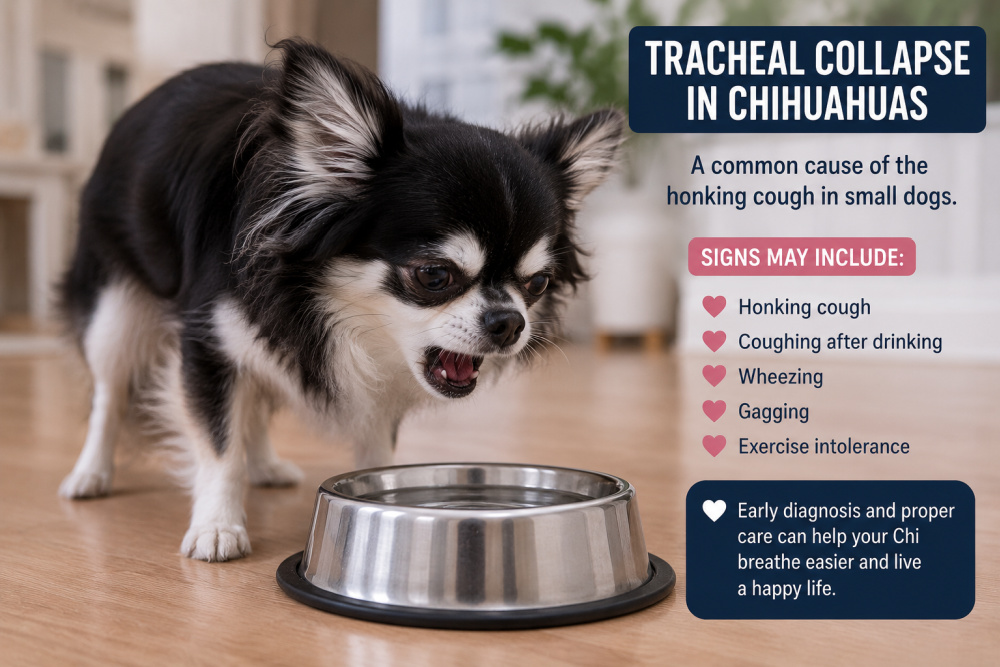
Tracheal collapse in Chihuahuas is a condition where the windpipe weakens and partially flattens, causing coughing, wheezing, and breathing difficulty. It is especially common in small dog breeds and often worsens over time without treatment.
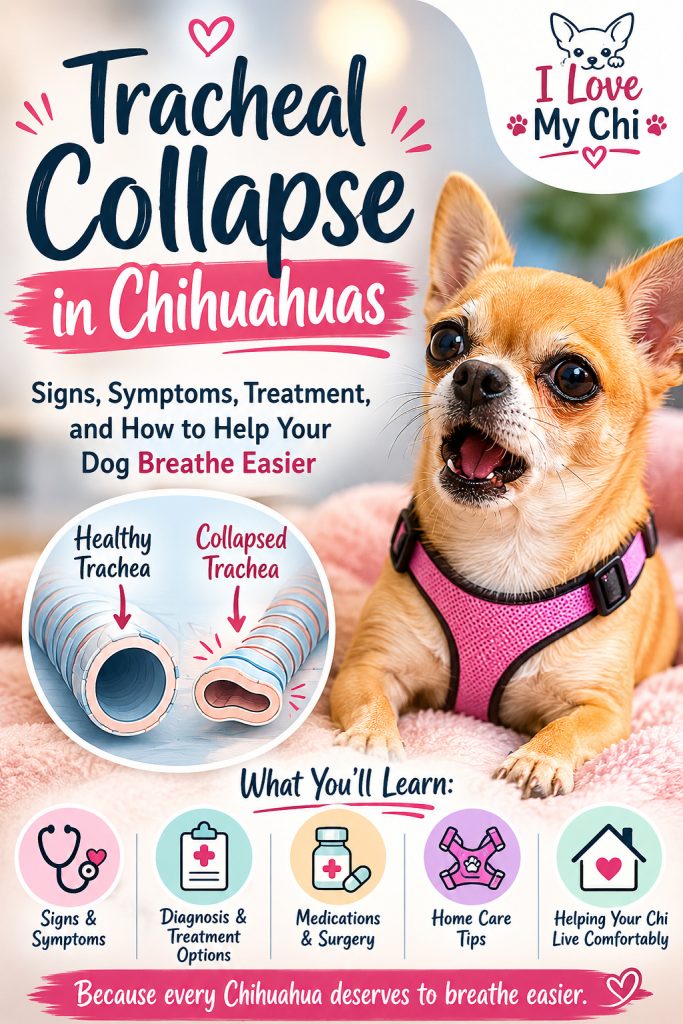
The trachea, or windpipe, is supported by small rings of cartilage that help keep the airway open. In dogs with tracheal collapse, these rings weaken over time, causing the airway to flatten when the dog breathes.
This narrowing of the airway creates irritation and makes it harder for air to move normally.
Chihuahuas are one of the breeds most commonly affected by this condition.
What Causes Tracheal Collapse?
In many cases, tracheal collapse is believed to be hereditary, meaning some dogs are born with weaker cartilage.
However, several things can make the condition worse over time, including:
- Obesity
- Pulling against a collar
- Chronic respiratory irritation
- Smoke exposure
- Allergies
- Excitement or stress
- Heart disease
- Aging
- Respiratory infections
Even dogs with mild collapse may suddenly have worse symptoms during hot weather, excitement, or illness.
Symptoms of Tracheal Collapse in Chihuahuas
The most recognizable symptom is the classic “goose honk” cough.
Signs can include:
- Dry, honking cough
- Coughing after excitement
- Coughing after drinking water
- Wheezing
- Rapid breathing
- Gagging
- Exercise intolerance
- Difficulty breathing
- Noisy breathing
- Restlessness at night
- Fainting in severe cases
- Blue-tinged gums during breathing distress
Some dogs only cough occasionally, while others develop more severe symptoms as the condition progresses.
Mild vs Severe Tracheal Collapse
Mild Cases
Dogs with mild collapse may:
- Cough occasionally
- Only have symptoms during excitement
- Recover quickly after episodes
- Continue acting normal, otherwise
Moderate to Severe Cases
Dogs with more advanced collapse may:
- Cough daily
- Have breathing difficulty even while resting
- Tire easily
- Struggle in hot weather
- Experience frequent flare-ups
- Have episodes of respiratory distress
Because the condition is progressive, symptoms often worsen gradually over time.
Tracheal Collapse vs Reverse Sneezing
Many Chihuahua owners confuse tracheal collapse with reverse sneezing in Chihuahuas because both sound similar and can sound alarming.
Here’s the difference:
| Reverse Sneezing | Tracheal Collapse |
|---|---|
| Snorting inward sound | Honking cough |
| Usually lasts seconds | Can become chronic |
| Often harmless | Progressive condition |
| Dog acts normal afterward | Dog may continue coughing |
| Triggered by irritation | Triggered by airway collapse |
If your Chihuahua has repeated coughing episodes, especially the honking type, it’s best to have your vet check them.
Here’s an example of a Chi with reverse sneezing:
And here is a Chi with tracheal collapse:
They sound very similar, don’t they? The best way to know for sure is to get your vet to check your dog.
Some symptoms should never be ignored.
Contact your vet right away if your Chihuahua:
- Has blue or pale gums
- Collapses or faints
- Cannot catch their breath
- Has a severe cough that won’t stop
- Seems panicked while breathing
- Refuses food or water
- Has labored breathing while resting
Breathing emergencies can become serious quickly in small dogs.
How Vets Diagnose Tracheal Collapse
Your veterinarian may use several methods to diagnose the condition, including:
- Physical exam
- Listening to the airway
- Chest X-rays
- Fluoroscopy (moving X-rays)
- Ultrasound
- Sedated airway exam in severe cases
Because symptoms can resemble other conditions, your vet may also rule out:
- Kennel cough
- Heart disease
- Allergies
- Bronchitis
- Pneumonia
- Reverse sneezing
Treatment for Tracheal Collapse in Chihuahuas
Treatment depends on how severe the condition is.
Common Treatments Include:
- Cough suppressants
- Bronchodilators
- Anti-inflammatory medications
- Sedatives for severe anxiety-related flare-ups
- Weight management
- Oxygen therapy during emergencies
Some dogs also benefit from anti-anxiety medications because stress and excitement often worsen coughing episodes.
Antibiotics are only used if there is a bacterial infection present.
Surgery for Tracheal Collapse
Surgery is usually reserved for severe cases that do not respond well to medication.
There are two main surgical options:
- Tracheal rings
- Airway stents
While surgery can help some dogs significantly, it also comes with risks and expense. Not every Chihuahua is a good candidate.
Fortunately, many dogs do very well with medical management alone.
How to Help a Chihuahua With Tracheal Collapse at Home
There are several things you can do to help reduce flare-ups and keep your dog more comfortable.
Use a Harness Instead of a Collar
This is one of the most important changes you can make.
Pressure on the neck can worsen airway irritation and coughing. A soft harness helps protect the trachea during walks.
You may also want to read: Common Chihuahua Health Problems
Keep Your Chihuahua at a Healthy Weight
Extra weight puts additional pressure on the respiratory system.
Even losing a small amount of weight can sometimes improve symptoms noticeably.
Avoid Smoke and Strong Fragrances
Smoke, candles, perfumes, vaping, and aerosol sprays can irritate the airway.
Keep Excitement Levels Manageable
Many Chihuahuas start coughing when overly excited.
Try to:
- Keep greetings calm
- Avoid rough play
- Reduce stressful situations
- Create a relaxing environment
Chihuahuas with anxiety may experience more coughing episodes because stress tightens the airway.
Avoid Overheating
Hot, humid weather can make breathing more difficult.
During warm weather:
- Walk early or late in the day
- Keep exercise light
- Always provide cool water
- Avoid excessive activity outdoors
Living With Tracheal Collapse
Many Chihuahua owners are surprised to learn their dogs can still enjoy a good quality of life with this condition.
Most dogs continue to:
- Play
- Go on walks
- Enjoy family time
- Live for many years
The key is learning what triggers your dog’s coughing and managing those situations carefully.
Over time, you’ll likely notice patterns such as:
- Excitement triggers
- Heat sensitivity
- Worse symptoms during allergy season
- Increased coughing after pulling on a leash
Keeping track of these triggers can help you prevent flare-ups before they happen.
Can Tracheal Collapse Be Prevented?
Not always, especially if genetics are involved. However, you may reduce the risk or slow progression by:
- Using a harness early in life
- Maintaining a healthy weight
- Avoiding airway irritants
- Treating respiratory infections promptly
- Avoiding neck pressure
Final Thoughts
Hearing your Chihuahua struggle to cough or breathe can be upsetting, but tracheal collapse is a condition many small dogs successfully live with for years.
The most important thing is getting an accurate diagnosis, following your vet’s treatment plan, and making simple lifestyle changes that reduce strain on your dog’s airway.
With proper care, many Chihuahuas with tracheal collapse continue living happy, active lives.
Frequently Asked Questions
Can a Chihuahua live a long life with tracheal collapse?
Yes. Many Chihuahuas with mild to moderate tracheal collapse live long, happy lives with proper management.
Is tracheal collapse painful for dogs?
The condition itself is usually more uncomfortable and distressing than painful, especially during coughing episodes or breathing difficulty.
Does tracheal collapse get worse with age?
It often does. Because the cartilage weakens over time, symptoms may gradually become more noticeable as a dog ages.
Can a harness help prevent tracheal collapse?
A harness can help reduce strain on the trachea and may help prevent irritation from leash pressure on the neck.
What triggers coughing episodes?
Common triggers include excitement, exercise, pulling on a leash, heat, smoke, stress, and drinking water too quickly.
Should dogs with tracheal collapse still exercise?
Usually yes, but exercise may need to be shorter and gentler depending on the severity of the condition.
Is tracheal collapse hereditary?
Many veterinarians believe genetics play a major role, especially in toy breeds like Chihuahuas.
Can reverse sneezing turn into tracheal collapse?
No. They are different conditions, although some dogs may experience both.




Pet Blogger
I have had dogs all my life. I have been a pet groomer, worked in a pet hotel, and a kennel, and have bred and showed dogs.
Post Views: 15,898