

As an Amazon Associate I earn from qualifying purchases. Learn More
Symptoms, Treatment, and What Owners Need to Know
Updated in May 2026
Hydrocephalus in Chihuahuas can sound terrifying when you first hear the diagnosis. Often called “water on the brain,” this condition happens when fluid builds up inside the brain and creates pressure on brain tissue. While some cases are severe, others are mild and manageable, and many Chihuahuas with hydrocephalus can still enjoy a happy life with proper care and treatment.
Because Chihuahuas are one of the dog breeds most commonly affected by hydrocephalus, it’s important for owners to recognize the signs early and know when to seek veterinary care.
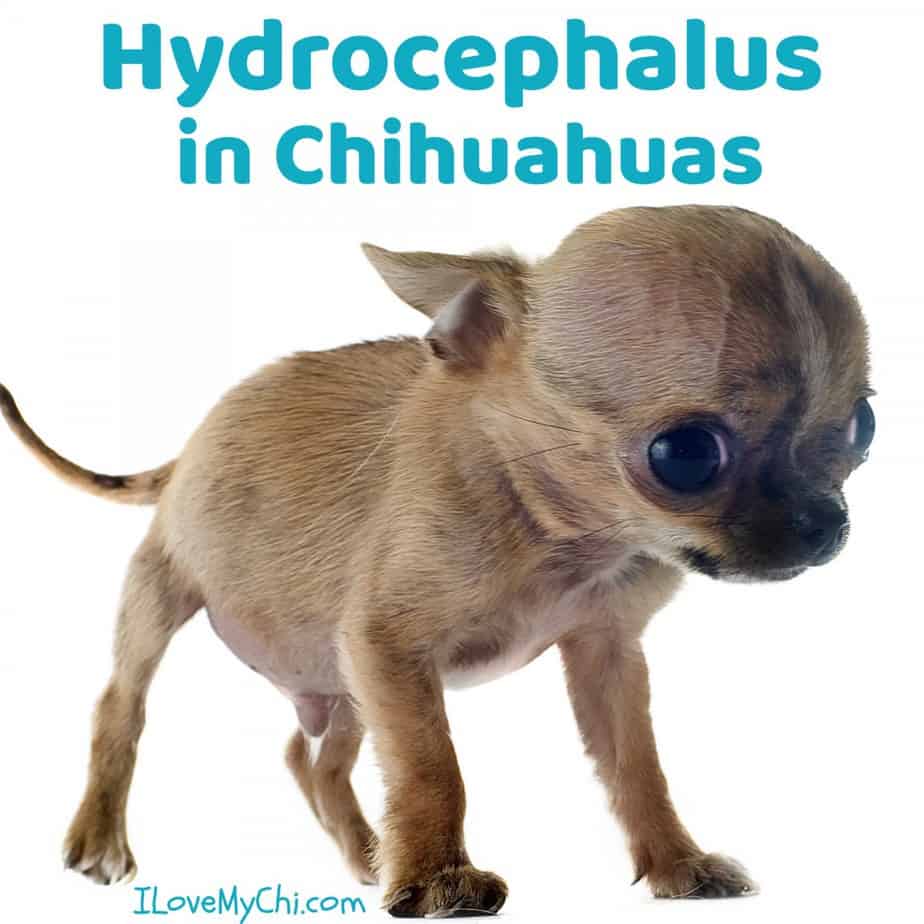
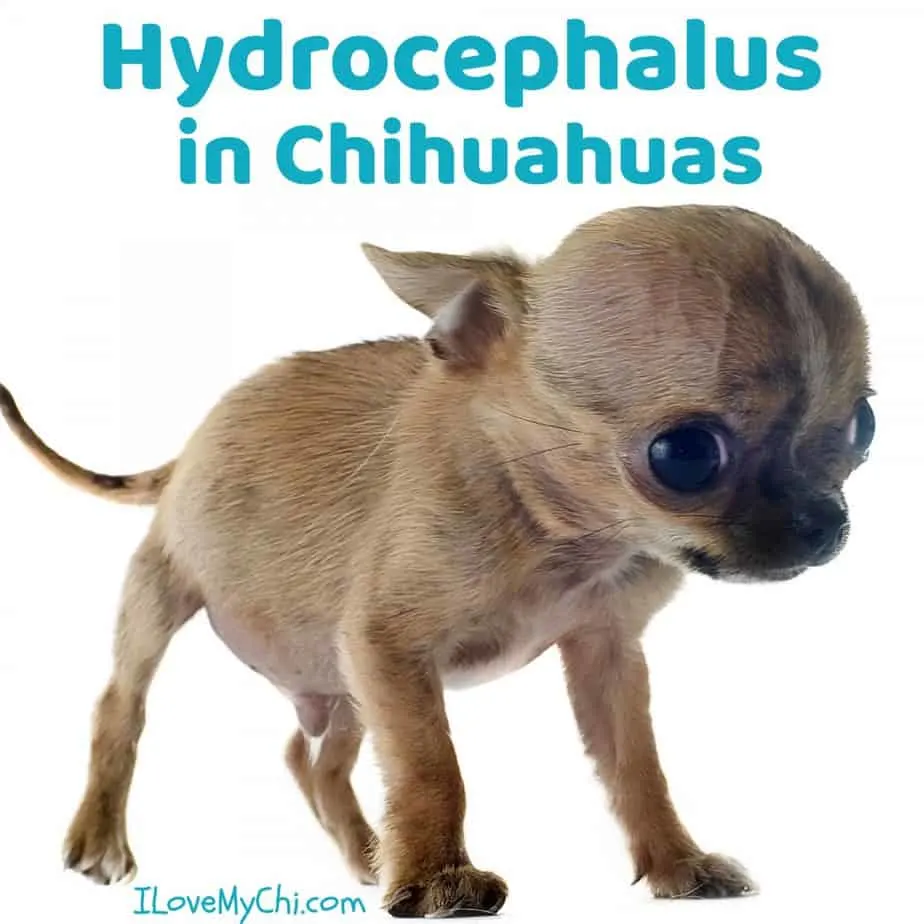
Hydrocephalus in Chihuahuas is a neurological condition caused by excess fluid building up in the brain. Symptoms can include seizures, circling, vision problems, poor coordination, and unusual behavior. Some dogs have mild cases that are manageable with medication, while more severe cases may require surgery.
Watch this video of little Zada if you want to see what a hydrocephalus puppy looks like.
Although a Chihuahua with hydrocephalus will not have a long life, they still can have a good quality of life while they are here, and can be sweet, loving little dogs.
What Is Hydrocephalus in Chihuahuas?
Hydrocephalus happens when cerebrospinal fluid (CSF), the fluid that normally cushions the brain and spinal cord, cannot drain properly. This causes pressure to build inside the skull.
Hydrocephalus may be:
- Congenital — present at birth (most common in Chihuahuas)
- Acquired — develops later due to injury, inflammation, infection, or tumors
Toy breeds, especially Chihuahuas, are more prone to congenital hydrocephalus because of their tiny skull shape and genetics.
Do All Apple Head Chihuahuas Have Hydrocephalus?
No. This is one of the biggest misconceptions about the breed.
Many healthy Chihuahuas have:
- apple-shaped heads
- a soft spot (molera) that may close once they are an adult, but sometimes won’t close
- a rounded skull
These features alone do NOT mean a Chihuahua has hydrocephalus.
A molera is common in Chihuahuas and often harmless. It usually closes up in Chihuahuas between 6 and 12 months, but sometimes it never closes up. My Lucy is 8 years old now, and her molera never closed. She’s happy and healthy with no medical issues.
What matters more are neurological symptoms like seizures, circling, confusion, or balance problems.
Symptoms of Hydrocephalus in Chihuahuas
Symptoms can vary from mild to severe depending on how much pressure is affecting the brain.
Some Chihuahuas show symptoms as puppies, while others may not show signs until later.
Common Symptoms
- Dome-shaped skull
- Enlarged soft spot on the head
- Seizures
- Walking in circles
- Poor coordination
- Trouble learning
- Difficulty housetraining
- Vision problems or blindness
- Staring into space
- Head pressing
- Extreme sleepiness
- Hyperactivity
- Walking into walls or furniture
- Weakness
- Crying for no obvious reason
- Unusual aggression or confusion
Some dogs may only have a few mild symptoms, while others may have more serious neurological problems.
Mild vs Severe Hydrocephalus
Not all cases are the same.
Mild Cases
Some Chihuahuas:
- live relatively normal lives
- respond well to medication
- have only occasional symptoms
- remain stable for years
Severe Cases
More severe hydrocephalus can lead to:
- frequent seizures
- severe coordination problems
- blindness
- inability to walk normally
- developmental delays
- worsening neurological damage
Early treatment often improves quality of life.
How Vets Diagnose Hydrocephalus
Your vet will usually begin with a physical and neurological exam.
Additional testing may include:
Ultrasound
In puppies with an open fontanel (soft spot), ultrasound can sometimes detect enlarged fluid spaces in the brain.
MRI or CT Scan
These imaging tests are the most accurate way to diagnose hydrocephalus and determine severity.
Bloodwork
Blood tests help rule out other medical conditions that can cause similar symptoms.
Treatment for Hydrocephalus in Chihuahuas
Treatment depends on how severe the condition is.
Medical Treatment
Many dogs are treated with medications that help reduce pressure and control symptoms.
These may include:
- steroids
- seizure medications
- diuretics
- medications that reduce spinal fluid production
Some dogs improve significantly with medication alone.
Surgery for Hydrocephalus
In severe cases, veterinary specialists may recommend a procedure called a ventriculoperitoneal shunt (VP shunt).
This surgery places a tiny tube inside the brain to drain excess fluid into the abdomen, where the body can absorb it.
While surgery can be expensive and carries risks, some dogs experience dramatic improvement afterward.
Caring for a Chihuahua With Hydrocephalus
Living with a Chihuahua that has hydrocephalus can feel overwhelming at first, but many owners learn how to successfully manage the condition.
Helpful Home Care Tips
Keep Your Dog Safe From Falls
Dogs with coordination problems can easily fall from beds, couches, or stairs.
Pet ramps and stairs can help reduce injuries.
You may also want to read our post on The Best Steps and Ramps for Small Dogs.
Keep Routines Calm and Predictable
Stress can sometimes worsen neurological symptoms.
Try to:
- avoid rough play
- keep a regular feeding schedule
- maintain a calm environment
Monitor Seizures Carefully
If your Chihuahua has seizures:
- keep a seizure log
- note duration and triggers
- contact your vet if seizures worsen
You may also find our article on seizures in Chihuahuas helpful.

Use Soft Bedding
Dogs with neurological conditions often sleep more and may become sore easily.
Soft orthopedic bedding can help keep them comfortable.
Watch for Changes
Call your vet if you notice:
- worsening coordination
- sudden blindness
- collapse
- increased seizures
- severe lethargy
- head pressing
When to Seek Emergency Veterinary Care
Contact a veterinarian immediately if your Chihuahua:
- has repeated seizures
- collapses
- cannot walk
- suddenly becomes blind
- presses their head against the walls
- seems severely disoriented
- stops eating or drinking
Should Dogs With Hydrocephalus Be Bred?
No.
Dogs diagnosed with congenital hydrocephalus should not be bred because the condition may have a genetic component.
When choosing a Chihuahua puppy:
- ask breeders about neurological problems in their lines
- avoid breeders focused on exaggerated skull shapes
- ask about health testing
A reputable breeder should be open and honest about health concerns.
Can Chihuahuas Live Long Lives With Hydrocephalus?
Sometimes, yes.
The prognosis depends on:
- severity
- how early treatment begins
- response to medication
- whether seizures can be controlled
Some Chihuahuas with mild hydrocephalus live for many years with a good quality of life.
Others with severe neurological damage may have a more guarded prognosis.
Emotional Support for Owners
Hearing that your Chihuahua has hydrocephalus can be heartbreaking and frightening. But a diagnosis does not automatically mean there is no hope.
Many dogs with mild or moderate hydrocephalus continue to enjoy life, play with their families, and remain loving companions for years.
The most important thing is working closely with your veterinarian and focusing on your dog’s comfort and quality of life.
Click to learn about other chihuahua health problems.
Can a Chihuahua survive hydrocephalus?
Yes. Some Chihuahuas with mild hydrocephalus live relatively normal lives, especially with early treatment and monitoring.
Is hydrocephalus painful in dogs?
The pressure buildup inside the skull can cause discomfort and neurological symptoms. Severe cases are more likely to affect quality of life.
Do all Chihuahuas with a molera have hydrocephalus?
No. Many healthy Chihuahuas have a molera or soft spot and never develop hydrocephalus.
Can hydrocephalus get worse over time?
Yes. Some cases remain stable while others progressively worsen.
Can hydrocephalus be cured?
Medication may help manage symptoms, but severe cases sometimes require surgery.
At what age do symptoms appear?
Many dogs show signs as puppies, though mild cases may not become obvious until later.




Pet Blogger
I have had dogs all my life. I have been a pet groomer, worked in a pet hotel, and a kennel, and have bred and showed dogs.
Dr. Sara Ochoa
DVM
This article has been fact-checked and approved by Dr. Sara Ochoa DVM. You can read more about her on our About page.

Post Views: 9,521