

When you purchase through links on our site, we may earn a commission at no extra cost to you. Learn more.
One day, your dog is happily greeting you at the door, inhaling breakfast, and begging for a walk. The next, they’re hiding under the bed, pacing around the house, refusing dinner, or acting like someone swapped them for a completely different dog overnight.
When a dog starts acting weird suddenly, it’s natural to wonder what’s going on. Are they sick? Stressed? Just having an off day? Or is this something that needs a trip to the veterinarian?
The tricky part is that dogs can’t tell us when something feels different. Whether they’re dealing with pain, anxiety, an upset stomach, or simply a major change in their routine, one of the first clues is often a change in how they behave.
The good news is that a dog acting “off” doesn’t automatically mean something is seriously wrong. But it does mean it’s worth paying attention.
In this guide, we’ll walk through the most common reasons dogs suddenly start acting differently, what changes to look for, and how to recognize when it’s time to call your veterinarian.
You Know Your Dog Better Than Anyone
Every dog has their own quirks. Some bark at the mail carrier every afternoon. Others insist on carrying a toy everywhere they go or stare dramatically out the window as if they’re guarding the neighborhood from squirrels.
That’s not the kind of “weird” we’re talking about.
When veterinarians and behaviorists become concerned about behavior, they’re usually looking for a noticeable change from what’s normal for that individual dog.
A couch potato who suddenly wants to play nonstop is just as unusual as an energetic dog who suddenly refuses to leave the couch.
That change can show up in many different ways, including:
- Suddenly becoming clingy or unusually distant
- Hiding or avoiding family members
- Sleeping much more — or struggling to settle down
- Losing interest in food or favorite treats
- Avoiding walks, playtime, or other activities they usually enjoy
- Pacing, wandering, or seeming restless
- Becoming more reactive, irritable, or vocal than usual
- Staring into space or seeming unusually confused
- Having accidents despite being house-trained
The important thing isn’t comparing your dog to someone else’s. It’s noticing when your dog starts acting unlike themselves. That’s often the first clue that something has changed, even if the reason isn’t immediately obvious.
Before You Jump To Conclusions, Ask Yourself One Question
When a dog suddenly starts acting differently, it’s tempting to focus on the behavior itself. Why are they hiding? Why won’t they eat? Or why are they pacing around the house?
Veterinarians often take a different approach. Before trying to explain the behavior, they start by asking one simple question: What changed?
Sometimes the answer is obvious, like a recent injury or a new puppy in the house. Other times, it’s something much easier to overlook, such as:
- A busier work schedule
- A weekend full of visitors
- A new medication
- A recent trip or boarding stay
- A change in your dog’s routine
The goal isn’t to find the perfect explanation right away. It’s to look for anything that changed shortly before your dog’s behavior did.
Even small changes can provide valuable clues, and the timing often matters just as much as the change itself.
As you read through the rest of this guide, keep asking yourself one question: What changed before my dog’s behavior changed? It won’t always lead you directly to the answer, but it can help you narrow down the most likely possibilities instead of feeling overwhelmed by every potential cause.
Now, Let’s Narrow Down The Possibilities
Once you’ve considered what may have changed, it’s time to do some detective work.
Most sudden behavior changes fall into a handful of common categories, and understanding each one can help you figure out what your dog may be trying to tell you.
1. Pain Or Illness Is Often The First Thing To Rule Out
One of the biggest mistakes owners make is assuming a sudden behavior change must be emotional.
While stress, boredom, and routine changes can certainly play a role, physical discomfort is often one of the first possibilities veterinarians want to rule out.
That’s because dogs are remarkably good at hiding pain. In the wild, appearing weak could make an animal more vulnerable, so dogs evolved to mask discomfort whenever possible. Even though our pets no longer have to worry about predators, that instinct hasn’t disappeared.
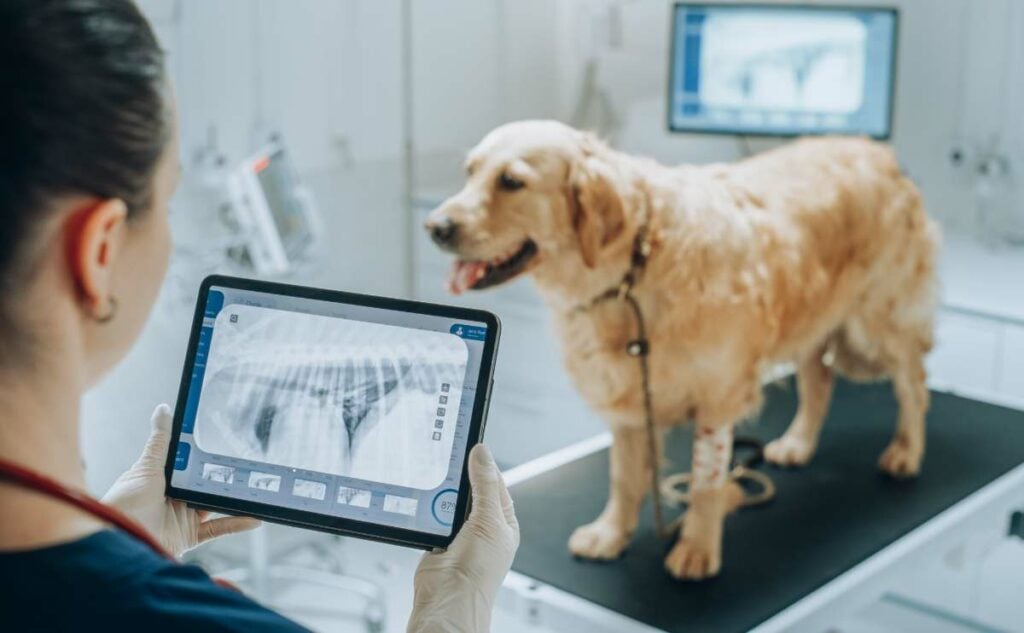
Instead of crying out or obviously limping, many dogs simply start acting differently.
For some, that change is subtle. A dog that normally races to the front door might suddenly take their time getting up. A playful pup may lose interest in a favorite game. An affectionate dog might avoid being touched in certain areas without giving any other clues that they’re uncomfortable.
Sometimes those behavior changes appear before owners notice obvious physical symptoms like swelling, vomiting, diarrhea, or a visible limp.
Pain or illness can come from many different sources, including:
- Dental disease that makes chewing uncomfortable
- Arthritis or joint pain that turns jumping or climbing stairs into a challenge
- Ear infections that leave a dog feeling miserable or sensitive around the head
- Digestive problems that cause nausea or abdominal discomfort
- Urinary tract infections that make it painful to urinate
- Minor injuries from rough play, slipping, or landing awkwardly
- Fever or other illnesses that simply make your dog feel worn down
It’s also worth thinking about anything new your dog has recently been exposed to, including medications.
Some prescriptions can temporarily affect a dog’s energy level, appetite, or behavior, while underlying medical conditions like thyroid disease or diabetes sometimes first appear as subtle personality changes rather than dramatic symptoms.
The important takeaway isn’t to assume your dog has one of these conditions. It’s to recognize that behavior is often the earliest clue that something doesn’t feel right.
Still, it’s important to remember that one behavior can have many different explanations. That’s why veterinarians look at the whole picture instead of trying to diagnose a dog based on a single change.
2. Stress And Anxiety Can Show Up In Unexpected Ways
Not every sudden behavior change is caused by illness or injury. Sometimes, the biggest clue isn’t that something hurts — it’s that something has overwhelmed your dog’s ability to cope.
The tricky part is that stress and anxiety don’t always look like fear.

Many owners expect an anxious dog to tremble or cower in the corner. While some do, others simply seem “off.”
They may:
- Have trouble relaxing
- Become unusually clingy
- Lose interest in things they normally enjoy
- Seem unable to settle even when nothing appears to be happening
Just like people, dogs have different stress thresholds. One dog barely notices a thunderstorm, while another spends the evening pacing the hallway.
Some happily welcome a house full of holiday guests, while others need several days to recover once the excitement is over.
Common sources of stress include:
- Loud noises, including thunderstorms and fireworks
- House guests or crowded gatherings
- Travel or boarding
- Veterinary visits
- Changes to their daily routine
- Being left alone longer than usual
- Conflict with another pet in the household
Stress also has a way of building over time. Your dog might handle one stressful event without much trouble, but several changes happening close together can push them past their comfort zone.
For example, imagine a busy holiday weekend. Visitors fill the house, the daily routine disappears, your dog sleeps less than usual, and there’s an evening fireworks display to top it all off.
Any one of those events might be manageable on its own. Together, they can leave some dogs acting differently for a day or two afterward.
3. Dogs Sometimes React To Changes You Haven’t Even Noticed
One reason sudden behavior changes can be so confusing is that the change didn’t necessarily happen to your dog. Sometimes, it happened around them — or even to you.
Dogs are incredibly observant. They notice routines, sounds, smells, and body language that most people stop thinking about long ago. That’s why they often react to changes that seem completely ordinary from our perspective.
Your dog may notice things like:
- You leaving for work earlier than usual
- A family member moving out
- Construction next door
- Furniture being rearranged
- A different daily schedule
- Another pet behaving differently
- Changes in your mood or stress level
To us, those may feel like small adjustments. To a dog that thrives on familiar patterns, they can make the world suddenly feel less predictable.
One interesting example is when an owner’s routine changes.
You may not think twice about working longer hours, exercising before work instead of after dinner, or taking a different route on your evening walk.
Your dog, however, has spent years learning those patterns. Even subtle changes can alter when they expect meals, playtime, walks, or simply your company.
The goal isn’t to avoid every change in your dog’s life. That’s impossible. It’s simply to recognize that dogs often notice shifts in their environment long before we realize how much has changed ourselves.
4. Daily Habit Changes Could Be The Real Culprit
Not every behavior change can be traced back to one dramatic event. Sometimes nothing happened overnight at all.
Instead, small changes slowly add up until one day you realize your dog isn’t acting like themselves anymore.
Maybe work has been busier lately, so walks have gotten a little shorter. Training sessions disappeared. Weekend adventures became occasional instead of routine.
Without really noticing it, your dog has been getting a little less exercise, a little less mental stimulation, and a little less one-on-one time than they used to.
None of those changes are a problem by themselves. Together, though, they can leave some dogs feeling under-stimulated or frustrated.
Dogs thrive on more than physical exercise. They also benefit from opportunities to:
- Sniff and explore during walks
- Solve problems through training or puzzle toys
- Play and interact with their people
- Follow a reasonably predictable daily routine
When those needs aren’t being met consistently, behavior may gradually begin to change.
You might notice your dog:
- Seeking attention more often than usual
- Getting into things they normally ignore
- Barking or whining more
- Becoming restless in the evening
- Having bursts of energy at unexpected times
One interesting thing about boredom is that it rarely announces itself all at once. It tends to build quietly in the background until owners suddenly recognize that something feels different.
If you’ve ruled out illness and there haven’t been any major life changes recently, it’s worth asking another question: Has my dog’s daily life changed more than I realized?
4. Aging Signs Can Sneak Up On You
If your dog is entering their senior years, it’s worth remembering that not every age-related change happens slowly — or, at least, you don’t notice early signs.
Many owners describe it the same way: “It was like someone flipped a switch.”
In reality, the changes often develop gradually. It’s just that dogs are remarkably good at adapting, and families who see their dogs every day often adapt to these tiny changes without realizing it.
One morning, your dog suddenly seems confused. They hesitate before walking through familiar doorways, wander the house at night, or stare into space longer than they used to. It feels abrupt, even though those changes may have been building for weeks or months.
One possible explanation is canine cognitive dysfunction (CCD), a condition sometimes compared to dementia in people. Dogs with CCD can experience changes in memory, awareness, sleep patterns, and daily routines.
You might notice your older dog:
- Wandering around the house, especially at night
- Seeming confused in familiar places
- Staring at walls or into corners
- Sleeping more during the day but becoming restless after dark
- Becoming more anxious or clingy than they used to
- Forgetting familiar routines, such as asking to go outside
It’s also important to remember that not every behavior change in an older dog is cognitive. Vision loss, hearing loss, arthritis, and other age-related health problems can all make a senior dog behave differently.
A dog that no longer hears you calling their name may seem distant. One that struggles to see in dim lighting may hesitate in hallways or become startled more easily.
Growing older doesn’t mean unusual behavior should simply be written off as “old age.”
Sudden or significant changes are still worth discussing with your veterinarian, since many age-related conditions can be managed more successfully when they’re recognized early.
Can Dogs Just Have An “Off” Day Like We Do?
Yes, dogs can occasionally have days when they seem quieter, less energetic, or simply not quite themselves. A busy weekend, disrupted sleep, travel, unusually hot weather, or an overstimulating experience can leave some dogs out of sorts for a short time.
The more useful question is whether your dog returns to normal.
A temporary change is generally less concerning when your dog is still eating, drinking, moving comfortably, and gradually returning to their usual routine.
Pay closer attention when the behavior:
- Lasts longer than a day or two
- Keeps returning
- Becomes more noticeable
- Appears alongside appetite, mobility, bathroom, or other physical changes
When Is It Time To Call Your Vet?
Not every unusual behavior requires an emergency trip to the veterinarian. But if the change persists or is accompanied by other symptoms, it’s time to seek professional advice.
One of the biggest mistakes owners make is waiting for obvious physical symptoms before calling the veterinarian.
Contact Your Veterinarian Promptly If…
It’s a good idea to schedule an appointment if your dog:
- Continues acting differently for more than a day or two without improving
- Shows multiple behavior changes at the same time, such as becoming withdrawn and losing interest in food
- Continues to have a poor appetite or stops drinking normally
- Seems uncomfortable, stiff, or in pain when moving
- Has behavior changes that keep returning
- Develops any new physical symptoms, even mild ones
- Simply isn’t acting like themselves and you can’t identify an obvious reason
You know your dog better than anyone else. If something feels genuinely out of character, it’s always reasonable to ask your veterinarian for guidance.
Seek Emergency Veterinary Care Immediately If…
Some behavior changes can signal a medical emergency and shouldn’t wait.
Seek emergency care if your dog suddenly develops:
- Difficulty breathing
- Collapse or loss of consciousness
- Seizures
- Repeated vomiting, especially if accompanied by lethargy
- A swollen or bloated abdomen
- An inability to stand or walk normally
- Suspected poisoning or toxin exposure
- Sudden confusion, loss of balance, head tilt, or other severe neurological signs
These symptoms can indicate life-threatening conditions where prompt treatment may make a significant difference.
Keeping A Behavior Journal Can Help Your Vet Find Answers Faster
If you end up scheduling a veterinary appointment, one of the most helpful things you can bring isn’t a photo or a video — it’s a timeline.
When you’re worried about your dog, it’s surprisingly easy to forget exactly when something started or whether one symptom appeared before another.
Writing down what you notice over a day or two can help you spot patterns you might otherwise miss, and it gives your veterinarian a clearer picture of what’s been happening at home.
You don’t need anything fancy. A few notes on your phone or a sheet of paper are often enough.
Consider tracking things like:
| Write This Down | Example |
|---|---|
| When did the behavior start? | Monday evening after dinner |
| What changed? | Suddenly stopped greeting visitors |
| Eating and drinking | Ate half of breakfast, drinking normally |
| Sleep | Restless overnight, slept most of the afternoon |
| Bathroom habits | Normal urination, softer stool than usual |
| Possible triggers | Weekend guests, new medication, thunderstorm |
You don’t have to record every little detail. Focus on what changed, when it changed, and whether it’s getting better, worse, or staying the same.
Those observations can help your veterinarian narrow down the possibilities much faster than trying to remember everything during the appointment.
Frequently Asked Questions
Every dog has an occasional off day, which can make it difficult to know when a behavior change is meaningful. Below are answers to some of the questions owners ask most often after noticing their dog suddenly acting differently. If you don’t see your question here, hit us up in our comments!
Can A Dog Act Weird For Just One Day?
Yes. Dogs can temporarily behave differently after an exciting event, a stressful experience, a poor night’s sleep, or even a change in their routine. If your dog quickly returns to normal and isn’t showing any other concerning symptoms, a brief behavior change isn’t always cause for alarm.
However, if the behavior continues, worsens, or is accompanied by other changes like vomiting, diarrhea, loss of appetite, or difficulty moving, it’s time to contact your veterinarian.
Can Weather Cause A Dog To Act Differently?
Absolutely. Extreme heat, humidity, thunderstorms, and sudden changes in barometric pressure can all affect a dog’s behavior.
Some dogs become less active during hot weather to avoid overheating, while others become restless or anxious before storms arrive. Older dogs with arthritis may also seem stiffer or less enthusiastic on cold, damp days.
My Dog Is Acting Weird But Still Eating Normally. Should I Be Concerned?
A normal appetite doesn’t necessarily rule out a medical or behavioral problem. Some dogs continue eating even when they’re dealing with pain, stress, or the early stages of an illness.
If your dog is acting noticeably different for more than a day or two—even if they’re still eating and drinking—it’s worth monitoring them closely and contacting your veterinarian if the behavior persists or additional symptoms develop.
Should I Wait And See If My Dog Gets Better?
It depends on what’s changed.
If your dog is otherwise acting normally, eating and drinking well, and simply seems a little “off” after an exciting or stressful day, it’s reasonable to monitor them closely for the next 24 hours.
However, if the behavior continues, worsens, or is accompanied by additional symptoms like vomiting, diarrhea, difficulty walking, trouble breathing, or loss of appetite, don’t wait to contact your veterinarian.
Can Dogs Sense When Something Is Wrong With Their Owners?
Research suggests dogs are remarkably good at noticing changes in human behavior, body language, scent, and daily routines. They may become clingier or act differently if you’re stressed, sick, pregnant, or following a new schedule.
That doesn’t necessarily mean they’re detecting a specific illness, but they often recognize that something about you has changed, even before you consciously realize it yourself.
Can New Medication Make My Dog Act Strange?
Yes. Some medications can temporarily affect a dog’s behavior, energy level, appetite, sleep, or activity. If your dog’s behavior changed shortly after starting a new medication, let your veterinarian know.
Never stop or adjust a prescribed medication without veterinary guidance, but don’t hesitate to report any unexpected behavior changes.
Can Dogs Act Weird After Vaccinations?
Yes. Some dogs seem quieter, sleep more than usual, or have a reduced appetite for a day or two after routine vaccinations. Mild soreness at the injection site can also make them less interested in play or exercise.
These short-term changes are usually temporary. However, if your dog develops facial swelling, difficulty breathing, repeated vomiting, collapses, or their behavior worsens instead of improving, contact your veterinarian immediately.
Is It Normal For An Older Dog To Suddenly Start Wandering At Night?
It can be. Older dogs sometimes develop canine cognitive dysfunction (CCD), which may cause nighttime wandering, confusion, altered sleep patterns, or increased anxiety.
However, nighttime restlessness can also be caused by pain, hearing or vision loss, needing to go outside more often, or other medical conditions. Because several different issues can look similar, it’s best to have new nighttime behavior changes evaluated by your veterinarian.
Your Dog’s Next Clue May Be More Specific
“Acting weird” is often where the investigation begins, not where it ends. Once you notice the pattern, such as skipped meals, nighttime wandering, sudden restlessness, lost interest in play, you can start asking a much narrower and more useful question.
Depending on what stood out most, one of these guides may help you narrow down the next step:
Has your dog ever started acting completely unlike themselves — and did you eventually figure out why? Share what changed in the comments.