



As an Amazon Associate I earn from qualifying purchases. Learn More
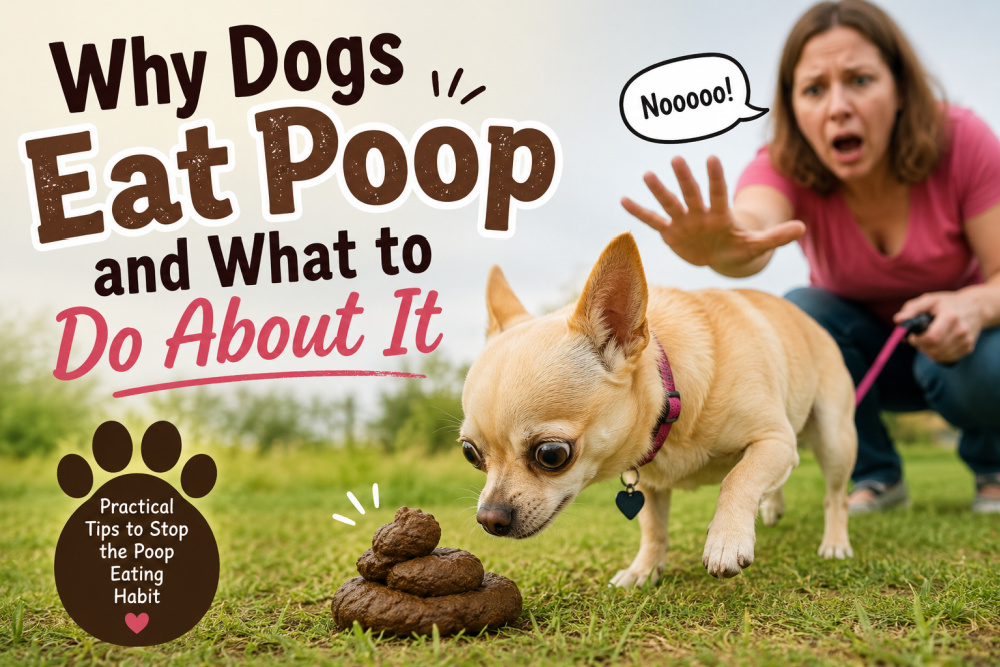
Of all the strange—and sometimes downright gross—things dogs do, eating poop has to rank pretty high on the list.
One of my dogs used to eat poop, and I have to admit, it would actually make me gag. I love my dogs dearly, but there are some things even a devoted dog mom has trouble overlooking!
If your Chihuahua or other dog has this unpleasant habit, you aren’t alone. Poop eating is common enough that it even has an official name: coprophagia.
So why on earth would a perfectly well-fed dog look at a pile of poop and think, Yum, snack time?
There are actually several possible reasons. Sometimes it’s simply normal dog behavior (even though it’s definitely not normal to us!), while other times it can be related to stress, boredom, diet, or even an underlying medical condition.
Let’s look at why dogs eat poop, whether it can hurt them, and—most importantly—what you can do to stop it.
What Is Coprophagia?
Coprophagia (pronounced kop-ruh-FAY-jee-uh) is the medical term for eating feces.
Dogs may eat:
- Their own poop
- Another dog’s poop
- Cat poop
- Rabbit or deer droppings
- Feces from other animals
Although humans find this disgusting, dogs don’t necessarily share our opinion.
Dogs are natural scavengers. Their ancestors survived partly by eating whatever was available, and modern dogs still have some pretty questionable ideas about what qualifies as food.
Poop, apparently, makes the list.
Is It Normal for Dogs to Eat Poop?
Believe it or not, poop eating can be normal canine behavior in certain circumstances.
Mother dogs routinely lick their newborn puppies to stimulate them to urinate and defecate. They also consume their puppies’ waste to keep the nesting area clean.
Puppies may eat poop simply because they explore practically everything with their mouths.
You know how human babies seem determined to put every object they find into their mouths?
Puppies aren’t much different.
Fortunately, many puppies lose interest in poop as they mature.
If an adult dog suddenly begins eating poop when they have never done it before, however, that’s something I would mention to your veterinarian.
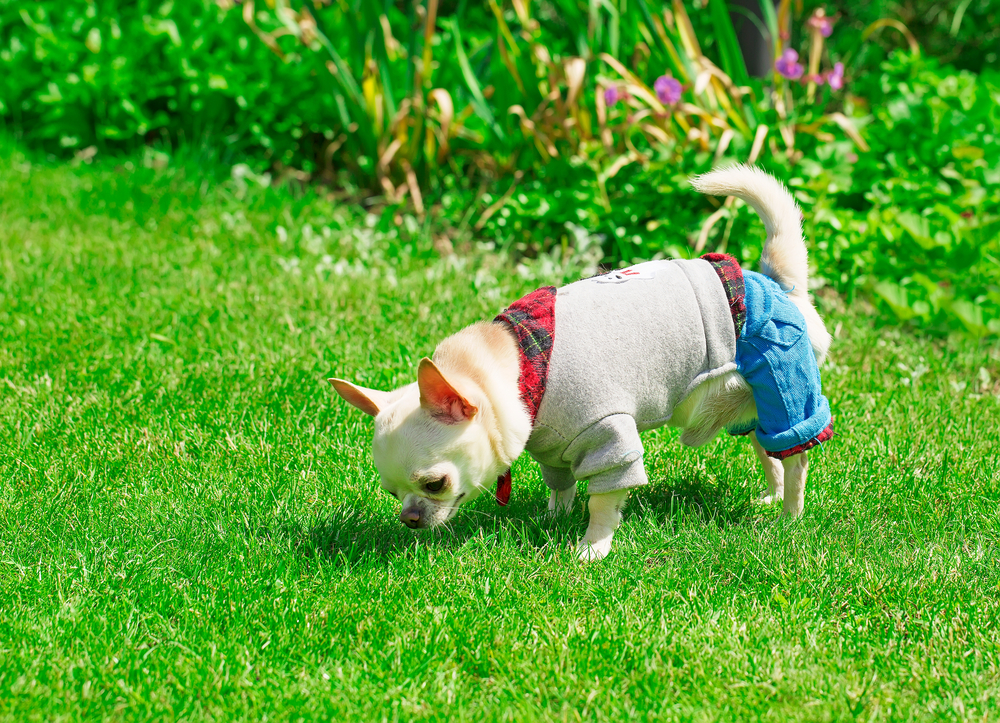
Why Do Dogs Eat Poop?
There isn’t one single explanation for coprophagia. Different dogs may do it for completely different reasons.
They’re Natural Scavengers
This may be the simplest explanation.
Dogs don’t have the same disgust response toward feces that humans do. Something that smells revolting to us may smell fascinating—or even appetizing—to them.
And if eating it once was rewarding, your dog may decide it’s worth trying again.
They’re Curious Puppies
Puppies investigate their surroundings by sniffing, licking, chewing, and tasting things.
Unfortunately, poop can be one of those things.
For many puppies, coprophagia is a temporary phase rather than a lifelong habit.
Boredom or Lack of Stimulation
A dog who doesn’t have enough physical exercise or mental stimulation may invent their own entertainment.
And occasionally, their chosen hobby is one we’d really rather they hadn’t discovered.
Puzzle toys, sniffing games, training sessions, chew toys and walks can all give your dog more appropriate things to do.
Stress or Anxiety
Stress can contribute to unusual repetitive behaviors, including coprophagia.
Dogs who spend long periods confined or isolated may be more likely to develop the behavior.
They’ve Learned It Gets Your Attention
Imagine your Chihuahua grabs a piece of poop.
You scream.
You chase them across the yard.
They run away with their forbidden treasure while you desperately try to catch them.
Congratulations—you may have just created the world’s most disgusting game of chase.
Even negative attention can be rewarding to some dogs.
Try not to turn poop stealing into an exciting event.
Punishment During House Training
Punishing a dog for having an accident can sometimes make matters worse.
A dog may become anxious about eliminating in front of you or may try to make the evidence disappear.
Instead of punishing accidents, concentrate on positive reinforcement for going potty in the appropriate place.
Could Eating Poop Be Caused by a Medical Problem?
Sometimes.
Most cases of coprophagia are behavioral, but certain medical problems can contribute to it—especially conditions that interfere with digestion or nutrient absorption or cause a dog to become unusually hungry.
Possible medical contributors can include:
- Intestinal parasites
- Digestive or absorption problems
- An inadequate or poorly digestible diet
- Diabetes
- Cushing’s disease
- Certain gastrointestinal disorders
- Other conditions that cause excessive hunger
Some medications, including corticosteroids, can also dramatically increase a dog’s appetite.
That’s one reason a dog who suddenly develops coprophagia as an adult deserves a veterinary checkup rather than automatically being labeled as having a gross new habit.
Your veterinarian may want to evaluate your dog’s diet, stool quality and overall health and perform a fecal test for parasites.
Why Does My Chihuahua Eat Poop?
Chihuahuas aren’t the only dogs who eat poop, and coprophagia isn’t considered uniquely a Chihuahua problem.
But our tiny dogs can certainly be quick about it!
A Chihuahua can poop, spin around, and grab it before you have even reached for the poop bag.
Chihuahuas who use indoor potty pads may also have more opportunity to investigate their stool if it isn’t picked up immediately.
And if you have several dogs, there may be even more temptation available.
The basic causes and treatments for coprophagia are the same for Chihuahuas as they are for larger dogs. Because Chihuahuas are so small, though, preventing access can be especially important.
Can Eating Poop Make My Dog Sick?
It can.
A dog who occasionally eats their own stool may not become ill, but that doesn’t mean it’s a habit you should encourage.
Feces can contain parasites, bacteria, and other potentially harmful organisms.
The risk becomes more concerning when your dog eats feces from another animal because you don’t necessarily know that animal’s health or parasite status.
There’s also the possibility that another animal has consumed something your dog shouldn’t ingest.
And then there’s another consequence that isn’t particularly dangerous but is certainly unpleasant:
Poop breath.
Nothing quite compares to having your sweet little Chihuahua enthusiastically lick your face immediately after you discover what they were doing five minutes earlier.
No thank you.
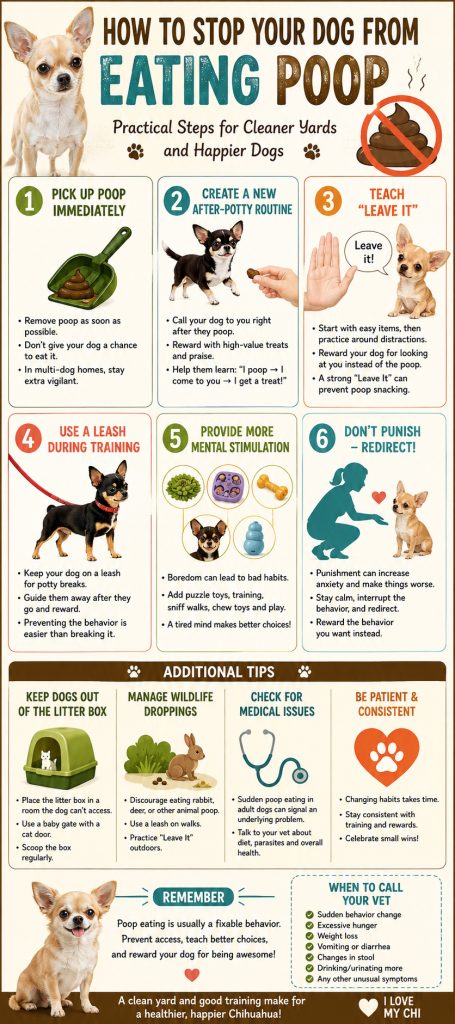
How to Stop Your Dog From Eating Poop
Unfortunately, there isn’t one magic solution that works for every dog.
The most successful approach usually involves preventing access to poop while teaching your dog something better to do instead.
1. Pick Up Poop Immediately
This sounds ridiculously simple, but it’s probably the most effective thing you can do.
If there’s no poop available, your dog can’t eat it.
If you have a dedicated poop eater, go outside with your dog instead of letting them into the yard alone.
As soon as they finish, call them away and clean it up.
In a multi-dog household, you may need to be particularly diligent about keeping the yard clean.
2. Create a New After-Potty Routine
This is one of my favorite strategies because you’re replacing the unwanted behavior instead of constantly fighting it.
Bring some really good treats outside.
When your dog finishes pooping, immediately call them to you.
When they come, give them a high-value treat and lots of praise while you pick up the poop.
Eventually your dog can learn:
I poop → I run to Mom → I get something delicious.
That’s a much better routine than:
I poop → I turn around → snack time!
3. Teach “Leave It”
A strong Leave It cue is incredibly useful for a poop-eating dog.
Practice with ordinary objects and treats first rather than starting with the ultimate temptation.
Reward your dog generously for turning away from the item and looking at you.
Once your dog understands the cue, you can gradually practice around more tempting objects.
4. Use a Leash While You’re Working on the Problem
If your dog is lightning-fast, take them outside on a leash for potty breaks.
Once they poop, guide them away from it and reward them.
Then pick it up.
This prevents them from practicing the behavior while you’re training.
And that’s important because every successful poop snack reinforces the habit.
5. Provide More Mental Stimulation
If boredom seems to contribute to your dog’s behavior, try adding more enrichment to their day.
That could include:
- Sniff walks
- Food puzzles
- Short training sessions
- Hide-and-seek with treats
- Safe chew toys
- Interactive toys
- More playtime with you
For a Chihuahua, mental exercise can be every bit as important as physical exercise.
6. Don’t Punish Your Dog
As disgusting as poop eating is, yelling, chasing or punishing your dog isn’t likely to solve the underlying problem.
It can sometimes increase anxiety or inadvertently make the behavior more exciting.
Stay calm, interrupt the behavior, redirect your dog, and reward the behavior you want.
Do Pineapple, Pumpkin or Meat Tenderizer Stop Dogs From Eating Poop?
You’ve probably seen plenty of home remedies online.
Some of the most common suggestions include adding pineapple, pumpkin, or meat tenderizer to the dog’s food. The idea is that these ingredients supposedly make the resulting stool taste unpleasant.
Of course, this raises the obvious question:
Exactly how much worse does poop need to taste?
Unfortunately, these remedies aren’t reliably proven to stop coprophagia.
Some dog parents swear by them, while other dogs happily continue eating poop as though absolutely nothing has changed.
Pumpkin can certainly have a place in a dog’s diet when recommended appropriately, but I wouldn’t rely on it—or pineapple—as the solution to poop eating.
Do Poop-Eating Deterrent Supplements Work?
There are commercial supplements designed to make a dog’s stool less appealing.
They may help some dogs, but results vary.
There’s another practical problem in multi-pet households: if your dog is eating another pet’s poop, treating only the poop-eating dog won’t change the taste of the stool they’re actually eating.
That’s why I’d consider deterrent products an extra tool rather than the primary solution.
Preventing access, picking up poop promptly and training a reliable Leave It or Come cue are much more important.
Before adding any supplement to your dog’s diet, it’s also a good idea to ask your veterinarian whether it’s appropriate for your particular dog.
Why Do Dogs Eat Cat Poop?
Ah yes.
The litter box buffet.
Unfortunately, many dogs seem to find cat poop particularly irresistible.
One possible reason is that cat food tends to be rich in protein and fat, and the resulting stool may smell surprisingly appealing to a dog’s scavenger instincts.
But eating cat feces can expose your dog to bacteria and parasites, so it’s best to prevent access.
If you have both cats and dogs, you might:
- Put the litter box behind a pet gate your cat can pass through
- Place it in a room the dog cannot enter
- Use a top-entry or dog-resistant litter box if your cat is comfortable with it
- Keep the litter box scooped frequently
- Use furniture designed to conceal and protect the litter box
Whatever setup you choose, make sure your cat can comfortably and safely access the litter box.
What About Rabbit, Deer and Other Animal Poop?
Some dogs think the backyard provides an all-you-can-eat buffet.
Rabbit pellets, deer droppings, goose poop and other animal feces can be incredibly tempting.
Because wildlife feces can potentially expose dogs to parasites, bacteria and other hazards, discourage your dog from eating it whenever possible.
A leash and a strong Leave It cue can be particularly useful when you’re walking somewhere with lots of wildlife droppings.
When Should You Call Your Veterinarian?
Poop eating doesn’t automatically mean your dog is sick.
However, make an appointment with your veterinarian if:
- An adult or senior dog suddenly starts eating poop
- Your dog seems constantly hungry
- Your dog is losing weight
- They have frequent diarrhea or unusually soft stools
- They’re vomiting
- They’re drinking or urinating much more than usual
- Their stool has changed significantly
- The behavior has become obsessive
- You notice any other new or unusual symptoms
Your veterinarian can help determine whether you’re dealing with a behavioral problem or whether something medical needs attention.
Frequently Asked Questions
Why does my dog eat his own poop?
Dogs may eat their own feces because of natural scavenging behavior, puppy curiosity, boredom, stress, learned behavior, or, less commonly, a medical condition. For some dogs, there’s no obvious reason other than the fact that they find it appealing.
Why does my dog eat other dogs’ poop?
Dogs are scavengers and may simply find another dog’s feces interesting or tasty. Eating another dog’s stool can expose your dog to parasites and other infectious organisms, so discourage the behavior and pick up waste promptly.
Will my puppy grow out of eating poop?
Many puppies do. Puppies naturally explore their environment with their mouths, and poop eating often decreases as they mature. In the meantime, prevent access so it doesn’t become an established habit.
Can eating poop make my dog sick?
Yes. Although a dog won’t necessarily become ill every time they eat feces, poop can contain parasites, bacteria and other potentially harmful organisms. Feces from other animals can present additional risks.
Will pineapple stop my dog from eating poop?
There’s no guarantee. Pineapple is a popular home remedy for coprophagia, but there’s not good evidence that it reliably stops the behavior.
Do poop-eating deterrents work?
They may work for some dogs, but they’re far from foolproof. Environmental management and training are generally more dependable strategies.
What’s the fastest way to stop my dog from eating poop?
Prevent access. Accompany your dog outside, keep them on a leash if necessary, call and reward them immediately after they poop, and pick up the stool before they can reach it.
Should I punish my dog for eating poop?
No. Punishment can increase anxiety and may make the problem worse. Instead, prevent access, teach cues such as Leave It and Come, and reward your dog for choosing you instead of the poop.
Final Thoughts
Yes, poop eating is disgusting.
There’s really no way to make that sentence prettier.
But if your Chihuahua eats poop, it doesn’t mean they’re abnormal, badly trained or destined to have this habit forever.
First, make sure there isn’t a medical reason behind the behavior—particularly if it suddenly started in adulthood.
Then concentrate on the things you can control: keep the yard clean, supervise potty breaks, prevent access to feces, and teach your dog that coming to you after doing their business results in something far better than whatever they left on the ground.
And if you’re feeling embarrassed because your adorable little Chihuahua has such a revolting habit, don’t be.
Plenty of otherwise perfectly lovely dogs apparently have terrible taste in snacks.


Pet Blogger
I have had dogs all my life. I have been a pet groomer, worked in a pet hotel, and a kennel, and have bred and showed dogs.
Post Views: 4,024