

For years, Delhi’s stray dog crisis has sparked heated debates between residents concerned about safety and animal lovers advocating for humane treatment. Unfortunately, these conversations often become polarized, leaving little room for practical solutions.
The Delhi High Court’s latest directive appears to shift the focus toward something far more constructive. By asking the Municipal Corporation of Delhi (MCD) and the New Delhi Municipal Council (NDMC) to launch pilot sterilization and anti-rabies vaccination camps, the Court has emphasized that effective stray dog management does not have to come at the expense of compassion.
We believe this approach deserves attention because it prioritizes long-term population control while respecting the welfare of community dogs.
A Pilot Programme Built on Humane Management
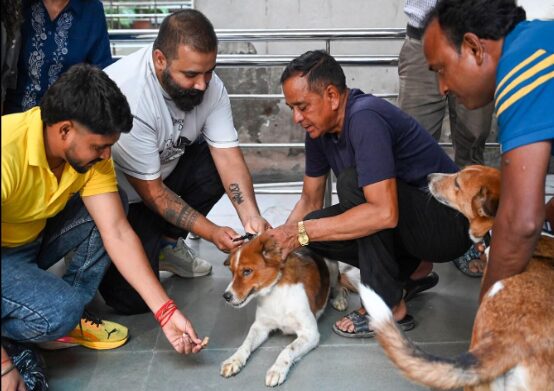
The High Court has directed both MCD and NDMC to establish one pilot sterilization camp in a ward under their jurisdiction. These camps will focus on sterilizing and vaccinating stray dogs against rabies before safely returning them according to applicable legal guidelines.
What makes this order particularly significant is the Court’s repeated clarification that this is not a campaign to round up stray dogs or permanently remove them from neighborhoods.
Instead, the objective is scientific population management through the Animal Birth Control (ABC) programme.
This distinction is extremely important. Many residents panic whenever municipal teams arrive, while animal feeders often fear that dogs may disappear from their localities. Clear communication helps prevent unnecessary conflict and encourages cooperation between authorities and the public.
Public Awareness Is Just as Important as Sterilization
One of the strongest aspects of the Court’s order is its emphasis on transparency.
Before conducting sterilization drives, authorities have been instructed to inform residents through public notices and placards explaining that the dogs are only being taken for sterilization and anti-rabies vaccination – not confinement or relocation to dog pounds.
This may appear to be a small administrative step, but it addresses one of the biggest challenges faced during ABC operations.
We’ve often reported instances where misinformation has disrupted sterilization drives. Better communication can reduce panic, improve cooperation from local communities, and ultimately allow veterinarians to carry out their work more efficiently.
Why the Court Stepped In
The Delhi High Court is monitoring compliance with earlier directions issued by the Supreme Court regarding stray dog management.
In November 2025, the Supreme Court ordered authorities to remove stray dogs from sensitive public places such as schools, hospitals, railway stations, bus stands, and similar institutions. It also clarified that sterilized dogs should not automatically be released back into these specific locations.
Later, in May 2026, the apex court declined to modify its order and observed that the Animal Birth Control Rules, 2023 do not provide an unconditional right for stray dogs to return to every public space.
Following those directions, High Courts across India were asked to monitor implementation within their respective jurisdictions, leading to the present proceedings before the Delhi High Court.
While the legal framework continues to evolve, one message remains consistent that stray dog management must balance public safety with animal welfare instead of treating them as opposing goals.
Pilot Projects That Could Shape Future Policy
During the hearing, the Court suggested that the first pilot projects could begin in high-footfall locations such as Connaught Place or India Gate.
Launching the programme in busy areas would allow authorities to closely monitor the effectiveness of sterilization, vaccination, and public awareness initiatives. If successful, these pilot camps could eventually become models for implementation across other parts of Delhi.
We see this as an opportunity rather than simply another government programme. Successful pilot projects can provide valuable lessons that benefit cities across India struggling with similar challenges.
Delhi Still Lacks Reliable Population Data
An important concern raised during the hearing was the absence of an official census of Delhi’s stray dog population. Although estimates frequently mention around eight lakh stray dogs, civic authorities acknowledged that no scientifically verified census currently exists.
The Court questioned how authorities could accurately measure the impact of sterilization programmes without dependable data, and this is a valid concern.
Effective animal birth control programmes rely on accurate population estimates, vaccination coverage, and continuous monitoring. Without reliable data, measuring success becomes significantly more difficult.
The concerned authorities should consider investing in better surveys; digital tracking, and responsible data collection that can strengthen future animal welfare policies.
Humane Population Control Remains the Long-Term Answer
The hearing also highlighted growing concerns over dog bite incidents.
Justice Dinesh Mehta acknowledged that dog bites remain a genuine public safety issue while making it equally clear that cruelty cannot become the solution. Rabies prevention, responsible waste management, regular sterilization drives, community awareness, and timely medical care must all work together.
For years, animal welfare experts have argued that sustained ABC programmes are far more effective than periodic removal drives, which often fail to address the root causes of increasing stray populations.
What Happens Next
For now, the Court has limited the initiative to one pilot ward under MCD and one under NDMC. The civic bodies have been directed to submit detailed implementation reports before the next hearing scheduled for September 1.
These reports are expected to outline how sterilization camps will operate, public awareness measures, vaccination plans, and possible improvements such as microchipping and better monitoring systems. The findings from these pilot projects will influence how Delhi approaches stray dog management in the years ahead.
DogExpress Editorial View
The Delhi High Court’s order is encouraging because it promotes solutions rather than confrontation. Stray dog management has never been about choosing between human safety and animal welfare – it requires protecting both. Humane sterilization, widespread anti-rabies vaccination, cleaner urban waste management, and responsible community participation remain the most sustainable path forward.
The success of these pilot camps will depend not only on civic authorities but also on veterinarians, animal welfare organizations, resident welfare associations, feeders, and citizens working together.
If implemented consistently and transparently, this initiative could become a blueprint for cities across India looking for humane, science-based ways to manage community dogs while ensuring safer neighborhoods for everyone.