











Eco-friendly dog poop bags is a phrase that covers everything from polyethylene in a green wrapper to plant-based film certified to break down in a verified compost pile. Those two things are not the same. The certification mark on the packaging is the only reliable way to tell them apart.
“Earth-friendly” on a poop bag can mean almost anything. GIVE A SH!T® compostable dog poop bags are certified by TÜV Austria for both home and industrial compostability, made from 18-micron plant-based film. Most bags on pet store shelves carry no equivalent certification.
“Eco-friendly” dog poop bags: what the label actually guarantees
Nothing, if it’s the only thing on the label.
A PickFu survey of dog owners in April 2026 found the clearest dividing line in purchase intent was this: “I would need some way to verify the claims made about these bags, like the word of a trusted source.” That wasn’t one edge case. It was one of the most consistent responses across the entire survey cohort.
The frustration tracks. “Earth-friendly,” “plant-based,” “green,” “biodegradable,” and “eco-friendly” can all appear on a bag made of polyethylene with a small percentage of corn starch added. The starch fraction doesn’t change the base polymer’s breakdown timeline. It changes the label copy. A PickFu respondent in April 2026 put it directly: “Not sure the bio plastic is that much better for the environment” (source: Judge.me VOC ingest 2026-04-26). That’s a skeptic doing exactly the right thing: asking for proof.
So: “eco-friendly” is descriptive language a brand can apply to itself. “TÜV Austria OK Compost HOME” is a legal standard tested by an independent laboratory. One of those is verifiable.
Certification hierarchy: what the marks on the packaging actually mean
Two international standards govern certified compostable plastics. ASTM D6400 is the US standard, revised in 2021. EN 13432 is the European standard, issued in 2000. Both require materials to disintegrate to at least 90% by mass within 180 days under controlled industrial composting conditions and to leave no eco-toxic residue in the resulting compost.
Third-party bodies run the testing. The main ones in the market for dog waste bags:
- TÜV Austria issues OK Compost HOME and OK Compost INDUSTRIAL marks. The only accredited body testing bags against both home and industrial standards under EN 13432.
- BPI (Biodegradable Products Institute) certifies against ASTM D6400. US-focused; widely recognized by North American composting facilities.
- DIN CERTCO certifies against EN 13432 and related European standards; widely accepted across EU member states.
Each body licenses the use of its certification mark only after an independent laboratory confirms the product passes the standard. The mark on the packaging is verifiable proof. A marketing claim is not.
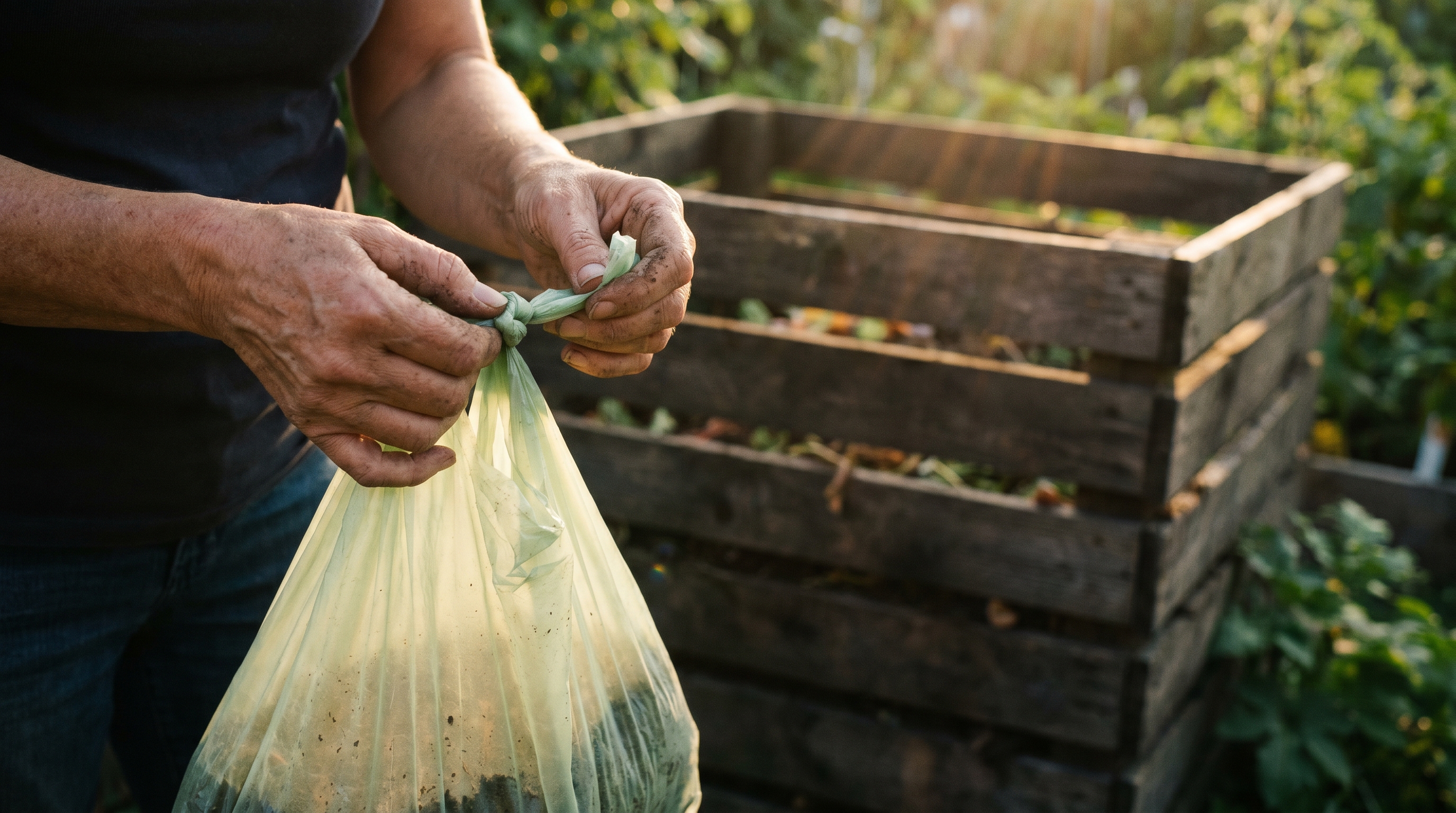
Above the industrial baseline sits home composting certification. TÜV Austria’s OK Compost HOME standard applies lower temperatures (20-30°C, matching a real backyard pile), longer timelines, and more conservative passing thresholds. A bag certified only for industrial composting requires processing temperatures that a home pile never reaches. If your disposal plan involves a green bin or a backyard pile, OK Compost HOME is the mark to look for, not just INDUSTRIAL.
Oxo-degradable bags: what they do instead of biodegrading
Oxo-degradable bags contain chemical additives (typically cobalt or manganese salts) that accelerate the physical breakdown of standard plastic film when exposed to heat and UV light. They come in earth-friendly packaging. They are frequently labeled biodegradable.
They don’t biodegrade.
Oxo-degradable bags fragment into microplastics that persist in soil and waterways for decades. The European Commission published a restrictions opinion on oxo-degradable plastics in 2017. The EU Single Use Plastics Directive restricted their sale across member states in 2021. The US Environmental Protection Agency has raised parallel concerns about their environmental impact profile.
No oxo-degradable bag carries a compostability certification from TÜV Austria, BPI, or DIN CERTCO. The reason is straightforward: they cannot pass the standards those bodies test against. An oxo-degradable bag does not disintegrate to 90% by mass within 180 days under controlled composting conditions. It breaks into smaller pieces of plastic.
If the packaging describes a bag as biodegradable but lists no certification body, checking the material is worth a moment. Corn starch, PLA, or PBAT film can support certified compostability. Polyethylene with additive packages cannot.
TÜV Austria HOME vs. INDUSTRIAL: the practical difference
Both marks come from TÜV Austria after independent lab testing against EN 13432.
HOME is the harder standard to pass.
| Standard | Temperature | Timeline | Best for |
|---|---|---|---|
| OK Compost HOME | 20-30°C | ~6 months disintegration; ~12 months full biodegradation | Backyard compost pile, home green bin |
| OK Compost INDUSTRIAL | 50-60°C | ~90 days under facility conditions | Municipal green waste programs, industrial composting services |
The practical takeaway: if you use a home compost pile or a kerbside green bin that goes to a smaller facility, the HOME certification is the relevant one. INDUSTRIAL-only bags require processing temperatures a backyard pile never hits. At 20-30°C, INDUSTRIAL-only bags may not break down at all.
GIVE A SH!T® bags hold both marks from TÜV Austria: certified for home composting at 20-30°C and for industrial composting at 50-60°C.
Plant-based film: what’s actually inside a certified compostable bag
The material is what makes compostability certification possible or not. GIVE A SH!T® bags use 18-micron plant-based film: a blend of corn starch, PBAT (polybutylene adipate terephthalate), and PLA (polylactic acid).
Corn starch provides the biodegradable base. PBAT delivers the flexibility and toughness the bag needs to stay intact on a walk. PLA is a plant-derived polymer that completes the breakdown profile. That combination is why TÜV Austria can certify the bag: the entire material composition breaks down into carbon dioxide, water, and organic biomass rather than persisting as plastic fragments.
18 microns is where certified compostability and real-world durability meet. Thin enough to break down on the HOME standard timeline. Thick enough to be leakproof for a large dog. (Yes, we know this is the paragraph where we explain our own product. We did say we’d be transparent about it.)
The contrast to conventional plastic is direct. Standard polyethylene bags can include a small percentage of plant starch to change the marketing language without changing the polymer backbone. The polyethylene itself isn’t compostable. The starch percentage doesn’t make it compostable. The absence of a TÜV Austria, BPI, or DIN CERTCO mark confirms it.
A Judge.me reviewer in April 2026 summed up why the material composition matters: “These are the only dog poop bags I will use, they are biodegradable/compostable which makes me feel okay about using them. I have no complaints.” (Source: VOC ingest 2026-04-26, judgeme-own-772754585.) The peace of mind is the certification doing its job.
Eco-friendly dog poop bags: common questions
Are biodegradable and compostable the same thing?
No. “Biodegradable” has no standardized timeline or testing requirement in US or EU product labeling. A bag can carry the word if it breaks down at some point under some conditions. “Compostable” under ASTM D6400 or EN 13432 requires independent testing to confirm disintegration to 90% by mass within 180 days under controlled conditions, with no eco-toxic residue. Compostable is the narrower, harder-to-earn claim.
Can I put certified compostable poop bags in my home compost?
Only if the bag carries an OK Compost HOME certification. Industrial-only certified bags require processing temperatures (50-60°C) that backyard piles rarely reach. INDUSTRIAL-only bags in a home compost pile may not break down fully. The HOME standard tests at 20-30°C precisely to reflect real backyard conditions.
How long do compostable poop bags take to break down?
Two milestones, not one. Under home composting conditions, a TÜV Austria OK Compost HOME certified bag disintegrates (visible breakup into small fragments) within approximately 6 months. Full biodegradation, where the material converts to carbon dioxide, water, and organic matter, takes approximately 12 months. Industrial composting runs faster: approximately 90 days under facility heat.
What’s the most earth-friendly way to dispose of dog waste bags?
For certified compostable bags: a municipal compost service that accepts pet waste, or a home compost pile if the bag carries an OK Compost HOME mark. For conventional plastic: landfill is the only responsible option. Certified compostable bags that can’t reach a composting facility can also go to landfill; the plant-based material still breaks down faster than polyethylene even without optimal composting conditions.
Do earth-friendly poop bags hold up as well as regular plastic ones?
At 18 microns, GIVE A SH!T® bags are thicker than many standard plastic poop bags and are rated leakproof and odor-locking. Certified compostable film has to pass durability criteria as part of the certification process, not just a breakdown test. The concern about plant-based bags being flimsy came up in a PickFu panel (April 2026): “With the bags being compostable, are they still durable so you can walk with waste in them without a concern of tears or leaks?” (Source: pickfu-survey-kfuqlusame-e15db5dc.md). The TÜV Austria testing process confirms the bag can hold up, not just break down.
Which certification should I look for when buying eco-friendly dog poop bags?
For most dog owners: OK Compost HOME from TÜV Austria. It’s the most demanding standard for real-world use, tested at the temperature range of an actual home compost pile. BPI certification (against ASTM D6400) is the US industrial equivalent, also valid and reputable. Any certification from a named accredited body beats a self-described claim with no mark attached to it.
Flip the bag over. Read the back. If it doesn’t show a mark from TÜV Austria, BPI, or DIN CERTCO, it isn’t certified compostable, whatever the front of the packaging says.