




When you purchase through links on our site, we may earn a commission at no extra cost to you. Learn more.
Your dog might be afraid of a trash bag. Or a shiny floor. Or something that’s here today, but wasn’t there yesterday.
It sounds ridiculous, but fear is one of the most common reasons dogs “act weird,” and it doesn’t always look the way you’d expect.
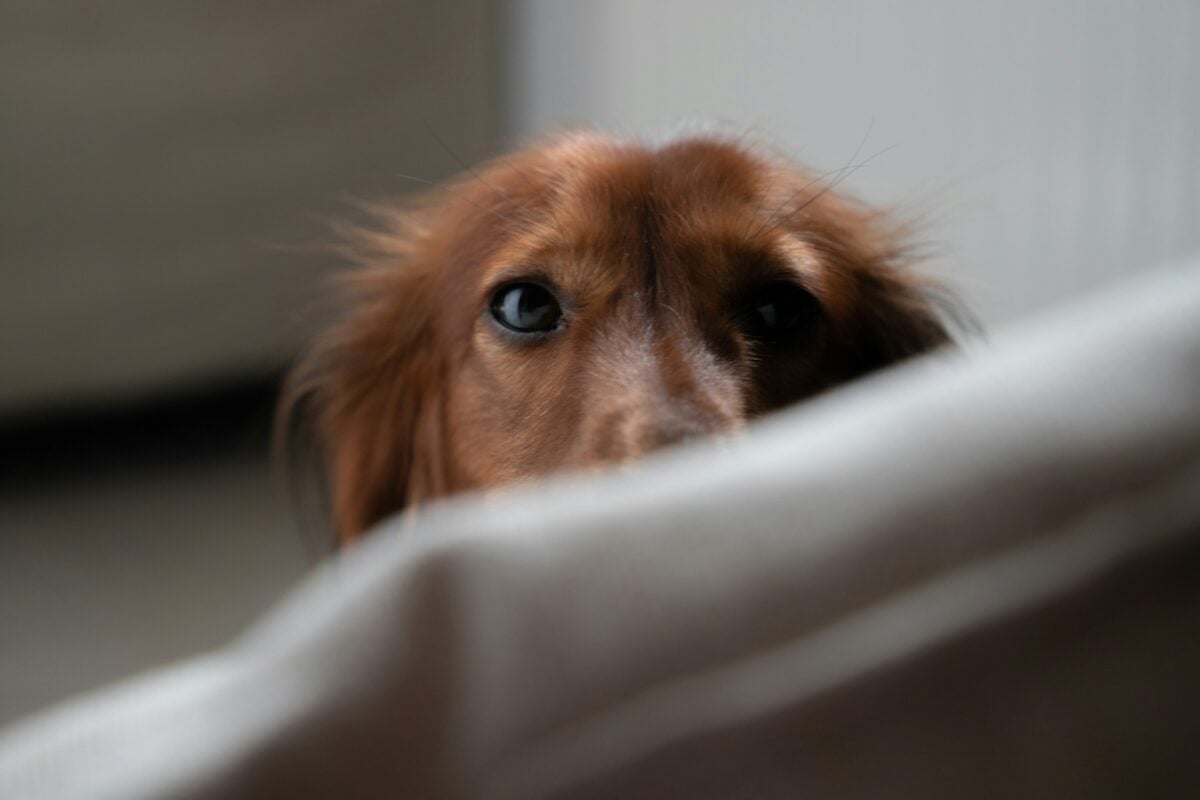
Start Here: Your Dog Might Be More Afraid Than You Think
Have you ever noticed your dog:
- Refuse to walk on a certain surface
- Bark at something that seems harmless
- Freeze, back away, or suddenly change direction
- Hide during storms or fireworks
If so, fear is likely part of the picture.
Sometimes it looks like stubbornness. Sometimes it looks like aggression. But in many cases, it’s actually fear.
What Are Dogs Afraid Of? 14 Common Triggers
Some fears are easy to understand. Others feel completely random until you see them from your dog’s perspective.
Most of these triggers fall into a few categories: loud, unpredictable events, unfamiliar people or environments, and situations where your dog feels unstable or out of control.
Here are the most common things dogs are afraid of, and what’s actually going on behind those reactions.
1. Loud Noises: Thunder, Fireworks & Other Sky “Explosions”
To your dog, thunder and fireworks aren’t just loud. They’re unpredictable, directionless, and impossible to interpret.
There’s no visible cause, no consistent pattern, and no way to anticipate what happens next. That uncertainty is what makes these sounds especially stressful.
Because dogs rely heavily on environmental cues, sudden high-intensity noise can trigger an immediate fear response before any rational processing happens.
Signs Your Dog Is Afraid Of Loud Noises
You might notice:
- Pacing, panting, or trembling
- Hiding in closets, bathrooms, or under furniture
- Barking or trying to escape
- Clingy behavior or refusal to leave your side
Some dogs react occasionally or mildly. Others experience full panic, especially during storms or fireworks-heavy holidays like the Fourth of July.
How To Help A Dog With Noise Sensitivity
If your dog struggles with loud noises, this is one of the most manageable fears with the right setup and support.
Helpful strategies include:
- Creating a safe, quiet space (like a covered crate or interior room)
- Using white noise, fans, or calming music to mask sudden sounds
- Staying calm and avoiding reinforcement of panic behaviors
- Gradual desensitization to recorded sounds at low volume
You can also consider supportive tools like:
2. The Vacuum (And Other Household Enemies)
To your dog, the vacuum isn’t just loud. It moves unpredictably, makes aggressive noise, and seems to chase things across the floor for no clear reason.
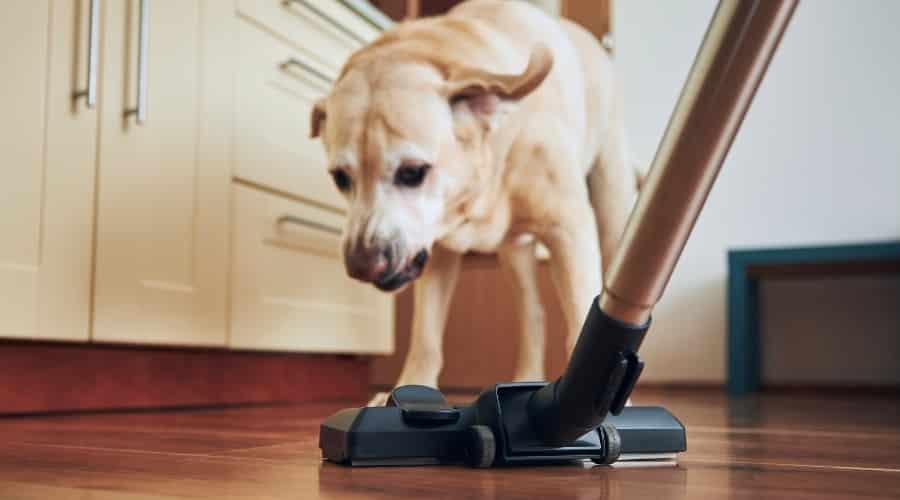
There’s no obvious purpose, no consistent pattern, and no way to tell if it’s safe to approach. From your dog’s perspective, it behaves more like a threat than a household tool.
That same reaction can apply to other everyday items, like hair dryers, blenders, or even certain kitchen appliances. Anything that combines sudden noise, vibration, and movement can trigger a similar response.
Signs Your Dog Is Afraid Of Household Noises
You might notice:
- Barking, lunging, or trying to “attack” the object
- Running away or leaving the room entirely
- Freezing or watching it closely from a distance
- Heightened alertness even before the object is turned on
Some dogs will even react the moment you reach for the vacuum, long before it makes any sound.
How To Help Your Dog Feel Safer Around Household Noise
This type of fear is often tied to unpredictability, so the goal is to make the experience more controlled and less intense.
Helpful strategies include:
- Turning the object on in another room first to reduce the initial shock
- Letting your dog observe from a distance without forcing interaction
- Pairing the sound with something positive, like treats or play
- Keeping movement slow and predictable when possible
For dogs with stronger reactions, you can also consider:
- Creating distance by using barriers or giving your dog a separate space
- Running appliances when your dog is outside or occupied
- Using calming aids or supplements during known triggers
Over time, reducing the intensity and increasing predictability can help your dog feel less threatened by these everyday “enemies.”
3. Being Left Alone: Separation Anxiety Isn’t Just Missing You
Being left alone doesn’t just mean quiet time for some dogs. It can feel like something is wrong, uncertain, or even unsafe.
Dogs are social by nature, and when separation anxiety is involved, the absence of their person isn’t just noticeable. It’s distressing.
That distress isn’t about disobedience or attention-seeking. It’s a stress response driven by uncertainty, especially in dogs who struggle with independence or haven’t learned that being alone is temporary and safe.
Signs Your Dog May Have Separation Anxiety
You might notice:
- Barking, whining, or howling after you leave
- Destructive behavior, especially near doors or windows
- Pacing, restlessness, or inability to settle
- Accidents in the home despite being house-trained
- Intense excitement or clinginess when you return
Some dogs begin showing these signs before you even leave, like when you pick up your keys or put on your shoes.
How To Help A Dog Who Struggles With Being Alone
Separation anxiety is one of the more complex fears to work through, but it’s also one of the most common.
Helpful strategies include:
- Building tolerance gradually with short, low-stress departures
- Avoiding dramatic exits and arrivals
- Creating a consistent routine so your dog knows what to expect
- Providing enrichment like interactive toys, a snuffle mat, or long-lasting chews
For dogs with more intense reactions, you may also need:
- A structured training plan focused on desensitization
- Support from a trainer or behaviorist
- Additional resources like calming supplements or vet-prescribed support
If this sounds familiar, you can learn more about causes, signs, and solutions in our guide to separation anxiety in dogs.
4. The Vet: When Everything Predicts Something Bad
For many dogs, the fear of the vet starts long before the exam room. It begins in the parking lot, the lobby, or even the moment you grab the leash.
That’s because dogs are extremely good at pattern recognition. If a place consistently leads to restraint, discomfort, or unfamiliar handling, they start to anticipate it.
And your dog is not alone in that reaction. Research suggests that up to 78.5% of dogs show signs of fear or stress during veterinary visits, making it one of the most common fear triggers in dogs.
What’s especially interesting is that factors like breed, background, and size only explain a small portion of that fear. The environment itself and how dogs are handled play a much bigger role than most people realize.
Signs Your Dog Is Afraid Of The Vet
You might notice:
- Hesitation or refusal to enter the building
- Trembling, panting, or pacing in the waiting room
- Trying to hide, escape, or resist handling
- Growling or snapping when touched in certain areas
Some dogs appear calm until they’re on the exam table, where fear responses can escalate quickly.
How To Help Your Dog Feel Safer At The Vet
The goal is to break the pattern and reduce negative associations.
Helpful strategies include:
- Visiting the clinic for low-stress “happy visits” without an exam
- Bringing high-value treats your dog only gets in this setting
- Practicing gentle handling at home to build tolerance
- Using fear-free or low-stress veterinary practices when available
For dogs with more significant fear, options like mobile vets or pre-visit medications may help create a calmer experience.
5. Car Rides: Not Every Dog Loves The Window Seat
Some dogs love car rides. Others start showing signs of stress the moment the engine turns on.
For fearful dogs, the car can feel unpredictable, noisy, and physically uncomfortable. There’s movement they can’t control, unfamiliar sounds, and often a destination that leads to something they don’t enjoy.
Motion sickness can also play a role, especially in younger dogs, which can quickly turn car rides into something they associate with feeling unwell.
Signs Your Dog Is Afraid Of Car Rides
You might notice:
- Reluctance to get into the car
- Drooling, panting, or whining during the ride
- Restlessness or inability to settle
- Vomiting or signs of nausea
Some dogs will plant themselves firmly in place to avoid getting in at all.
How To Help Your Dog Feel More Comfortable In The Car
Improvement comes from changing the association and reducing discomfort.
Helpful strategies include:
- Starting with short, low-stress trips that don’t end at the vet
- Keeping movement smooth and minimizing sudden stops or sharp turns
- Letting your dog settle in a consistent, designated space
- Gradually building up duration over time
Creating a more secure setup can also make a big difference. Many dogs feel safer when they’re not sliding around or trying to balance. Here are a few options that can help:
You can also explore more targeted strategies in our guides to travel anxiety and traveling with dogs.
6. Slippery Floors: When Confidence Literally Slips
To you, hardwood or tile floors are just part of the house. To your dog, they can feel unstable, unpredictable, and difficult to navigate.
Dogs rely heavily on traction and body control. When their feet slide out from under them, even once, it can create a lasting hesitation. For some dogs, especially older dogs or those with joint issues, that loss of control is enough to make them avoid certain areas entirely.
Signs Your Dog Is Afraid Of Slippery Surfaces
You might notice:
- Hesitation at the edge of a room
- Stretching forward while keeping back paws planted
- Walking slowly or stiffly across the surface
- Avoiding the area altogether
Some dogs will even take longer routes just to avoid crossing certain floors.
How To Help Your Dog Feel More Stable & Confident
The goal is to improve traction and rebuild confidence.
Helpful strategies include:
- Adding rugs, runners, or mats in high-traffic areas
- Keeping nails trimmed to improve grip
- Using paw grips or traction socks if needed
- Encouraging slow, positive exposure without forcing movement
Creating stable footing can make an immediate difference in how safe your dog feels moving through your home. View all of our tips for preventing falls on slippery floors.
7. Strangers (Especially Men, Children, Or Fast Movers)
Not all people feel the same to your dog. To a dog, unfamiliar people can be unpredictable, especially if they move quickly, make direct eye contact, or approach without hesitation.
In behavioral studies, dogs have shown strong fear responses to unfamiliar people, especially when someone appears suddenly or approaches before the dog has time to assess the situation.
Certain groups tend to trigger stronger reactions. Men often have deeper voices and larger frames. Children move erratically and can be loud or unpredictable. Fast movers in general can feel overwhelming if your dog isn’t prepared for that kind of energy.
Signs Your Dog Is Uncomfortable Around Strangers
You might notice:
- Backing away or hiding behind you
- Barking, lunging, or staying on high alert
- Avoiding eye contact or turning their head away
- Stiff body posture or slow, cautious movement
Some dogs warm up quickly once they realize there’s no threat. Others need more time and distance to feel safe.
How To Help Your Dog Feel More Comfortable Around New People
The goal is to reduce pressure and give your dog control over the interaction.
Helpful strategies include:
- Letting your dog approach on their own terms instead of forcing greetings
- Asking people to avoid direct eye contact or reaching over your dog
- Rewarding calm behavior around new people
- Creating distance when your dog shows signs of discomfort
For some dogs, structured exposure over time can build confidence, especially when interactions stay predictable and low-pressure.
8. Other Dogs (Yes, Even At The Dog Park)
Not every dog is comfortable around other dogs, even if they’re friendly at home. Dog parks and group settings can be overwhelming. There are multiple dogs, shifting energy, and constant movement, which can make it hard for a fearful dog to feel in control.
Some dogs also feel unsure around other animals, including cats. Even a calm cat can feel unpredictable to a dog that isn’t used to them, especially if the cat moves suddenly, holds eye contact, or reacts defensively.
Dogs and cats also communicate differently, which can lead to mixed signals. What looks like normal behavior to a cat can feel confusing or threatening to a dog.
Fear around other dogs doesn’t always look like avoidance. Sometimes it shows up as barking, lunging, or reactivity, which can easily be mistaken for aggression.
Signs Your Dog Is Afraid Of Other Dogs
You might notice:
- Avoiding interaction or trying to leave the area
- Barking, growling, or lunging when another dog approaches
- Freezing or becoming very still
- Staying close to you and refusing to engage
Some dogs do better with one-on-one introductions than large group environments.
How To Help Your Dog Feel More Comfortable Around Other Dogs
Confidence builds best in controlled, low-pressure situations.
Helpful strategies include:
- Avoiding crowded dog parks if your dog seems overwhelmed
- Introducing your dog to calm, well-socialized dogs one at a time
- Allowing parallel walks instead of direct face-to-face greetings
- Rewarding calm, neutral behavior around other dogs
For dogs that struggle more significantly, working with a trainer can help create a structured plan for social exposure.
If your dog struggles with cats specifically, slow, controlled introductions and clear boundaries can help both animals feel more comfortable over time. You can find a step-by-step approach in our guide to introducing a dog to a cat.
9. Stairs & Unstable Surfaces
Stairs, ramps, and uneven surfaces can feel intimidating, especially for dogs who are unsure of their footing. Unlike flat ground, these surfaces require balance, coordination, and confidence. If a dog slips, misses a step, or feels unstable even once, it can create hesitation that sticks.
This is especially common in puppies, senior dogs, and dogs with joint discomfort, but it can happen at any age.
Signs Your Dog Is Afraid Of Stairs Or Unstable Surfaces
You might notice:
- Hesitating at the top or bottom of stairs
- Refusing to go up or down without encouragement
- Moving slowly and cautiously
- Trying to avoid the area altogether
Some dogs will attempt to jump multiple steps at once to avoid the surface entirely.
How To Help Your Dog Feel More Stable And Confident
The goal is to improve both physical stability and confidence.
Helpful strategies include:
- Using non-slip runners or stair treads for better traction
- Encouraging slow, controlled movement instead of rushing
- Supporting your dog with a lift harness if needed
- Practicing in low-pressure situations without forcing progress
Making surfaces feel predictable and secure can help your dog move with more confidence over time. Learn more in our guide to dog stair safety.
10. Specific Objects: Trash Bags, Balloons & The Unexpected
Some fears don’t follow any obvious pattern. A trash bag. A balloon. A box that wasn’t there yesterday.
To your dog, these objects can feel unpredictable. They move strangely, make unfamiliar sounds, or simply don’t belong in their mental map of the environment.
In behavioral studies, dogs have shown clear signs of fear when unfamiliar objects, like a crumpled garbage bag, appear suddenly, especially when they’re encouraged to approach something they don’t yet understand.
Signs Your Dog Is Afraid Of Certain Objects
You might notice:
- Barking at or circling the object
- Keeping distance while watching it closely
- Approaching, then quickly retreating
- Refusing to enter a room where the object is present
Some dogs will fixate on the object as if they’re trying to figure out whether it’s a threat.
How To Help Your Dog Feel More Comfortable Around Unfamiliar Objects
The goal is to reduce uncertainty and allow your dog to investigate safely.
Helpful strategies include:
- Letting your dog approach at their own pace
- Avoiding forced interaction
- Pairing the object with something positive, like treats
- Keeping the object stationary and predictable when possible
Over time, repeated low-pressure exposure can help your dog reclassify the object as safe.
11. New Environments: When Everything Feels “Off”
Even confident dogs can feel uneasy in a new environment. Different smells, sounds, layouts, and surfaces all combine into something unfamiliar. Without context, your dog has no way to predict what’s safe and what isn’t.
This is why moving to a new home, traveling, or even rearranging furniture can trigger temporary fear or hesitation.
Signs Your Dog Is Uncomfortable In A New Environment
You might notice:
- Staying close to you and avoiding exploration
- Moving cautiously or hesitating in certain areas
- Increased alertness or sensitivity to noise
- Difficulty settling or relaxing
Some dogs adjust quickly. Others need more time to build familiarity.
How To Help Your Dog Adjust To New Spaces
Confidence builds through predictability and repetition.
Helpful strategies include:
- Giving your dog time to explore at their own pace
- Bringing familiar items like beds, toys, or blankets
- Keeping routines consistent when possible
- Avoiding overwhelming environments early on
With repeated exposure, most dogs begin to relax once the environment feels more predictable.
12. Being Handled: Picked Up, Groomed & Restrained
Not all dogs are comfortable being touched, lifted, or physically controlled. Handling can feel invasive, especially if your dog doesn’t expect it or has had negative experiences in the past. Grooming, nail trims, and being held still can all trigger this type of fear.
Even well-socialized dogs can become sensitive to certain types of touch, particularly around the paws, ears, or face.
Signs Your Dog Is Uncomfortable With Handling
You might notice:
- Pulling away or avoiding touch
- Stiffening when picked up or restrained
- Growling or snapping during grooming
- Lip licking, yawning, or turning their head away
These are often early warning signs that your dog is feeling overwhelmed.
How To Help Your Dog Feel More Comfortable With Handling
The goal is to build trust and reduce surprise.
Helpful strategies include:
- Practicing gentle handling in short, positive sessions
- Pairing touch with rewards to create positive associations
- Respecting your dog’s boundaries and avoiding forced restraint
- Gradually introducing grooming tools and procedures
For more sensitive dogs, slow desensitization can make a significant difference over time.
13. The Leash: When It Means Something Unpleasant
For many dogs, the leash is neutral or even exciting. For others, it signals something they’d rather avoid.
If the leash consistently leads to stressful experiences, like vet visits, crowded environments, or forced walks, it can become a trigger instead of a cue for something positive.
Over time, dogs start to associate the leash with what comes next, not the walk itself.
Signs Your Dog Is Afraid Of The Leash
You might notice:
- Avoiding you when the leash comes out
- Backing away, hiding, or refusing to be clipped in
- Freezing or resisting movement once leashed
- Showing stress signals before you even leave the house
Some dogs react the moment they see or hear the leash, before anything else happens.
How To Help Your Dog Feel More Comfortable With The Leash
The goal is to change what the leash predicts.
Helpful strategies include:
- Pairing the leash with positive experiences that don’t involve stress
- Practicing short, low-pressure leash sessions indoors
- Letting your dog move freely without forcing direction or pace
- Avoiding immediate transitions from leash to stressful environments
Over time, building neutral or positive associations can help shift how your dog responds.
14. The Dark: When Visibility Drops, Uncertainty Rises
Dogs don’t rely on vision the same way humans do, but low visibility still changes how they experience their environment. In the dark, familiar spaces can feel different. Sounds seem sharper, shadows shift, and it becomes harder to confidently identify what’s around them.
For some dogs, that uncertainty is enough to trigger caution or fear, especially if they’re already sensitive to their surroundings.
Signs Your Dog Is Uncomfortable In The Dark
You might notice:
- Hesitation when entering darker rooms or going outside at night
- Staying closer to you than usual
- Increased alertness or reactivity to small sounds
- Reluctance to move freely in low-light conditions
Some dogs may also become more vocal or easily startled.
How To Help Your Dog Feel More Confident In Low-Light Environments
The goal is to reduce uncertainty and increase familiarity.
Helpful strategies include:
- Using soft lighting or night lights in darker areas
- Keeping layouts consistent so your dog can navigate confidently
- Accompanying your dog during nighttime outings
- Gradually building comfort with low-light exposure
As your dog becomes more familiar with how their environment looks and sounds in the dark, their confidence often improves.
Wait… Why Is My Dog Scared Of That?
Some fears make sense. Thunder. Fireworks. The vet.
And then there are the ones that feel completely unhinged.
A trash bag that moved. A balloon that exists. A box that has always been there but is suddenly unacceptable.
Here are a few surprisingly common “what is happening” fears:
- Trash bags or plastic bags
- Balloons or anything that floats
- Ceiling fans or moving shadows
- Reflections in mirrors or glass
- Boxes, packages, or objects in new places
- Certain sounds like beeps, alarms, or phone notifications
If your dog has ever barked at something you can’t even see, you’re not alone.
In most cases, it comes down to unpredictability. If something moves oddly, appears out of nowhere, or doesn’t match your dog’s expectations of the environment, their brain treats it as a potential threat first and asks questions later.
Watch: This dog is absolutely convinced the moon is a threat.
Why Your Dog’s Fear Is Actually Protective (Not A Flaw)
It’s easy to feel frustrated when your dog reacts to something that seems harmless. But fear isn’t a flaw. It’s a built-in safety system.
Dogs are wired to notice changes in their environment and respond quickly to anything that feels uncertain or out of place. That response exists for a reason. It helps them avoid potential danger before they have time to fully understand it.
In other words, your dog isn’t overreacting. They’re reacting early.
Fear Is Your Dog’s Early Warning System
When something feels unpredictable, like a loud noise, a new object, or a sudden movement, your dog’s brain doesn’t stop to analyze it the way we do. It flags it as “possibly unsafe” and triggers a response designed to protect them.
That response might look like:
- Avoidance or retreat
- Freezing or hesitation
- Barking or vocalizing
- Increased alertness or scanning
All of these behaviors are part of the same goal: create distance from something that might be a threat.
Why Some Reactions Seem “Over the Top”
From a human perspective, a vacuum or a trash bag isn’t dangerous. But your dog doesn’t have that context. They’re reacting based on movement, sound, unpredictability, and past experiences, not logic.
And once a fear response is learned, especially after a negative experience, it can become stronger over time if not addressed.
The Goal Isn’t To Eliminate Fear Completely
A completely fearless dog wouldn’t be safer. It would be more likely to take risks.
The goal is not to remove fear. It’s to help your dog feel safe enough to stay calm in situations that aren’t actually dangerous. That’s where training, environment, and your response come into play.
Fear In Dogs Doesn’t Always Look Like Fear
Not all dogs show fear in ways that are obvious to us as humans. Some display small, easy-to-overlook signals that often get dismissed or misunderstood.
Fear Can Be Subtle Or Easy To Miss
You might notice:
- Lip licking when no food is present
- Yawning outside of sleepy situations
- Turning their head away or avoiding eye contact
- Lifting a paw or shifting weight backward
- Moving more slowly or hesitating
These behaviors are your dog’s way of saying, “I’m not comfortable,” before things escalate.
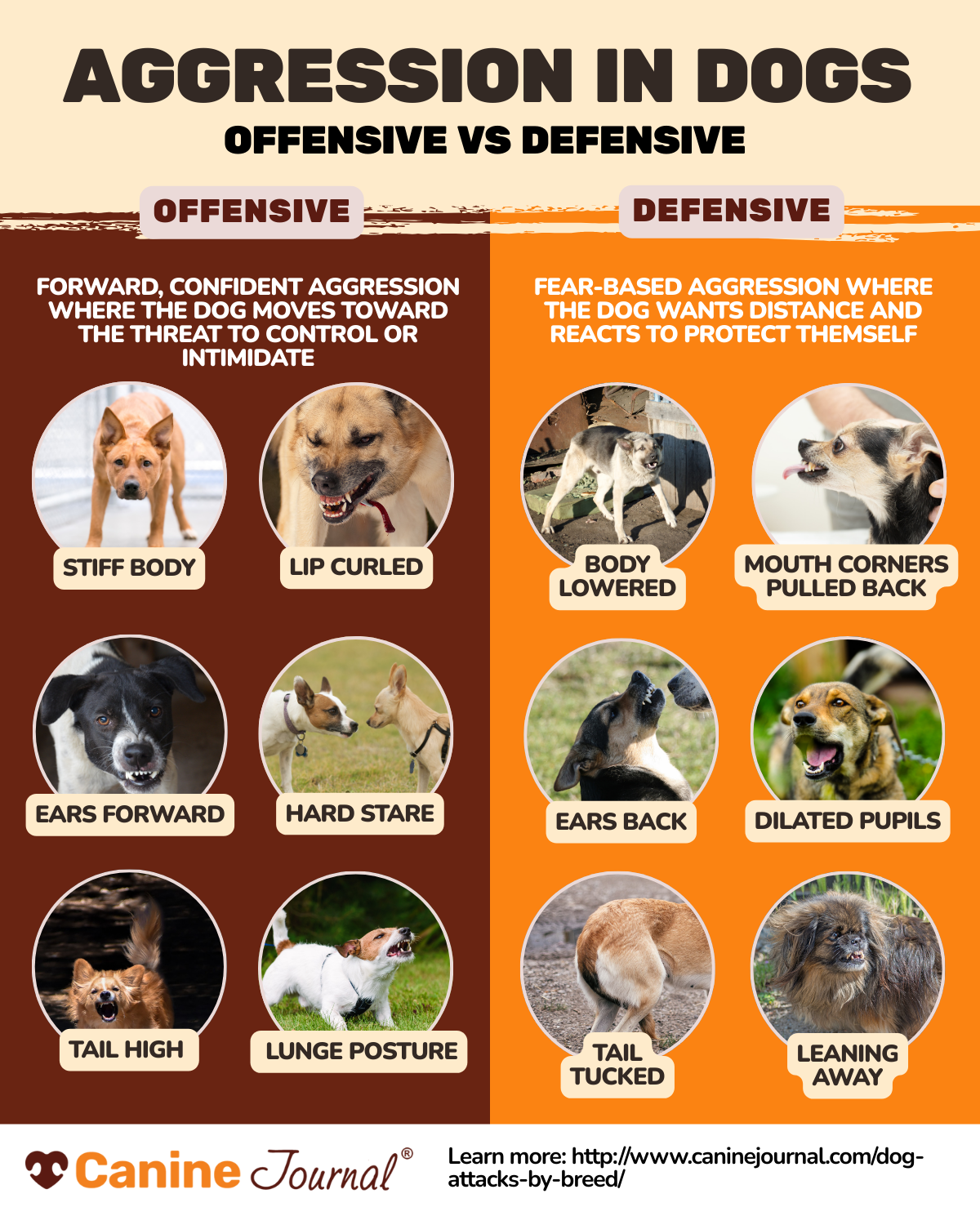
Fear Can Also Look Like Aggression
This is where things get misinterpreted most often. Growling, lunging, or snapping are often labeled as aggression, but they’re frequently rooted in fear. These behaviors are a last attempt to create space when earlier signals didn’t work.
Not all aggressive-looking behavior comes from confidence. In many cases, it’s a dog trying to create distance from something that feels unsafe. From your dog’s perspective, they’ve already tried the subtle approach.
Why This Matters
When fear is misunderstood, it’s easy to respond in a way that increases stress instead of reducing it. Recognizing the early signs gives you the chance to step in sooner, adjust the environment, and help your dog feel safer before things escalate.
Common Signs Your Dog Is Scared (From Subtle To Severe)
Fear doesn’t always show up the same way, and it often builds in stages. Your dog may start with small, easy-to-miss signals before moving into more obvious behaviors if the situation doesn’t change.
Understanding the spectrum of fear, anxiety, and stress can help you step in earlier and prevent fear from escalating.
Subtle Signs (Easy To Miss)
These are often the first indicators that your dog is uncomfortable, and they’re the most commonly overlooked.
- “Whale eye” (showing the whites of the eyes while looking away)
- Turning the head slightly away without moving away
- Slight panting with relaxed lips
- Slight muscle tension or a “stiffer” posture
- Lifting a paw or shifting weight backward
These signals are your dog’s way of saying, “I’m not sure about this.”
Moderate Signs (Building Stress)
If the situation continues, you may start to see more noticeable changes.
- Ears pulled back or held to the side
- Tail lowered or tucked slightly
- Furrowed brow
- Increased panting with tighter mouth
- Restlessness or inability to settle
- Attention seeking to owner
At this stage, your dog is actively trying to cope.
Severe Signs (Fight, Flight, Or Freeze/Fret)
When a dog feels they can’t escape or resolve the situation, their response typically falls into one of three categories: fight, flight, or freeze/fret.
Freeze Or Fret (Shutting Down Or Holding Still)
This is the one people miss most. Your dog may:
- Suddenly stop moving or “lock up”
- Refuse to walk or respond
- Tremble with a hunched posture
- Put ears back and tuck tail
- Have an increased respiratory rate
A frozen dog isn’t calm. They’re overwhelmed and unsure what to do next.
Flight (Trying To Escape)
Some dogs don’t confront fear. They try to get away from it as quickly as possible. You might see:
- Actively running away or hiding
- Crouched body posture while slowly moving away
- Mouth closed or excessive panting
- Tail tightly tucked, ears back
- Showing whites of eyes, pupils dilated
If escape is possible, most dogs will choose this option first.
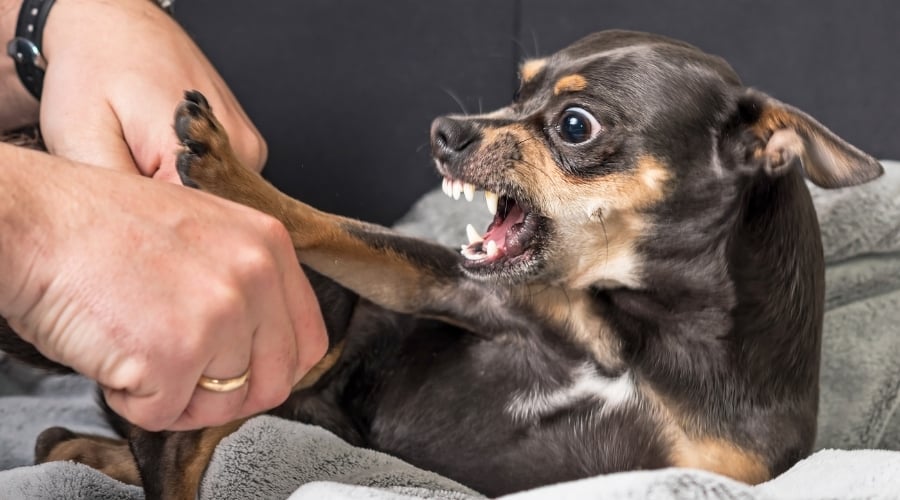
Fight (Creating Distance Through Aggression)
This is the most misunderstood response. Your dog may:
- Growl, snarl, or show teeth
- Raise hackles (fur along the back)
- Lunge forward or snap
- Hold a stiff body with hard, direct eye contact
- Have dilated pupils
This isn’t about dominance. It’s a last attempt to say, “Please back away.”
Why Some Dogs Are More Fearful Than Others
Not all dogs react to the world the same way. Some are naturally confident and curious. Others are more cautious, sensitive, or easily overwhelmed.
That difference comes from a combination of genetics, early experiences, and environment.
1. Early Experiences Shape Fear Later
What a dog experiences in the first few months of life can have a lasting impact.
Research shows that dogs exposed to adverse experiences in the first six months of life, such as abuse, instability, or being rehomed, are significantly more likely to develop fear and aggression later in life. These effects are especially strong when adversity happens during early development, suggesting that timing matters just as much as the experience itself.
2. Genetics & Breed Differences
Here’s where it gets interesting. The same research suggests that early life adversity does not affect all breeds equally.
Some breeds showed a strong increase in fear and aggressive behaviors after adversity, including:
- American Eskimo Dog
- American Leopard Hound
- Siberian Husky
Others showed minimal change, even after similar early-life stress, in particular the Labrador Retriever and Golden Retriever.
What does this mean? Two dogs can go through the same rough start, and one becomes highly reactive, while the other stays relatively stable.
Some dogs are naturally more sensitive to stress, while others appear to be more resilient. That difference comes from a combination of genetics and experience, meaning the same situation can shape dogs in completely different ways.
3. Environment & Socialization
Even with genetics and early experiences, a dog’s day-to-day environment plays a huge role in how fear develops.
Research on fear-related behaviors in companion dogs shows that unfamiliar stimuli, like a stranger or even a simple object, can trigger fear responses in a significant number of dogs. In one study, 74% of dogs showed fear when a stranger appeared, and many also reacted to an unfamiliar object like a crumpled garbage bag.
What’s important here isn’t just what triggered the reaction. It’s why.
Dogs that haven’t had enough positive exposure to different people, environments, and situations are more likely to see those experiences as uncertain or unsafe. In other words, fear is not random. It’s shaped by everyday experiences.
This is why early socialization and positive exposure matter so much. Dogs that are gradually introduced to new sights, sounds, and situations are more likely to interpret them as neutral or safe, rather than threatening.
How To Help A Fearful Dog Feel Safer
Helping a fearful dog isn’t about forcing them to “get over it.” It’s about changing how they experience the situation in the first place.
Small adjustments in environment, timing, and exposure can make a significant difference in how your dog responds over time.
1. Create Safe Spaces That Actually Feel Safe
Every dog needs a place where they can fully relax without being approached, handled, or startled. This might look like:
- A crate with the door open
- A quiet room away from noise and activity
- A designated bed or corner that’s always theirs
The key is consistency. If your dog chooses that space, it should remain a low-pressure zone.
2. Let Your Dog Control The Interaction
One of the fastest ways to increase fear is to remove your dog’s sense of control.
Instead of:
- Pulling them toward something
- Forcing greetings
- Holding them in place
Let them:
- Approach at their own pace
- Pause, retreat, and reassess
- Observe before engaging
When dogs feel like they have a choice, they’re more likely to build confidence.
3. Identify Triggers (And Stop Forcing Exposure)
If your dog consistently reacts to something, that’s information, not disobedience. Common triggers include:
- Loud noises (fireworks, thunder)
- Unfamiliar people or environments
- Handling, grooming, or restraint
Once you identify the trigger, the goal isn’t to “push through it.” You want to adjust the situation so your dog can stay below their stress threshold.
If your dog struggles with specific anxiety triggers, you may find it helpful to explore more targeted guidance on dog anxiety.
4. Use Gradual Desensitization (Not Flooding)
Exposure can help, but only when it’s done gradually. Flooding, which means forcing a dog to face a fear at full intensity, often makes things worse.
Instead:
- Start at a distance or low intensity
- Pair the experience with something positive (treats, calm praise)
- Slowly increase exposure over time
This allows your dog to build new associations without becoming overwhelmed.
5. Consider Calming Tools When Needed
Some dogs need additional support, especially in high-stress situations. Options include:
- Pressure wraps, like a thunder jacket for dogs
- Calming supplements or CBD
- Environmental adjustments (white noise, reduced stimulation)
For more severe cases, working with a veterinarian or behaviorist may be the most effective path forward.
When It’s Time To Talk To Your Vet
Some level of fear is normal. But when fear starts to interfere with your dog’s daily life, it’s time to bring in additional support.
You may want to talk to your vet if your dog:
- Reacts intensely to everyday situations
- Struggles to recover after a stressful event
- Shows signs of fear-based aggression
- Avoids normal activities like walks, eating, or interaction
- Experiences ongoing anxiety, even in familiar environments
Fear that persists or escalates can impact both behavior and overall well-being.
Your veterinarian can help:
- Rule out underlying medical issues
- Recommend behavior-focused strategies
- Discuss medication options when appropriate
In some cases, prescription medication can help reduce anxiety enough for training and behavior work to be effective. For dogs that struggle specifically with clinical environments, alternatives like a best mobile vet can also reduce stress during appointments.
Frequently Asked Questions
Fear in dogs can be confusing, especially when it shows up in unexpected ways. Here are some of the most common questions from dog owners.
Don’t see yours? Respond in the comments, and we’ll get back to you!
What Are Dogs Most Afraid Of?
Many dogs are afraid of:
- Loud noises (thunder, fireworks)
- Being left alone
- Unfamiliar people or animals
- New environments
- Certain objects or sounds
That said, fear is highly individual. What scares one dog may not affect another at all.
Why Is My Dog Scared Of Something They Were Fine With Before?
Fear can develop over time. A single negative experience, changes in environment, or increased sensitivity with age can all shift how your dog responds to something they previously tolerated.
Sometimes the trigger hasn’t changed, but your dog’s perception of it has.
Can Dogs Grow Out Of Fear?
Some mild fears may improve with time and positive exposure. However, most fears don’t simply disappear on their own. Without support, they can become more ingrained.
The goal is not to “wait it out,” but to help your dog build more positive associations over time.
Is It Okay To Comfort A Scared Dog?
Yes. Comforting your dog does not reinforce fear. Fear is an emotional response, not a behavior your dog is choosing.
Calm reassurance, presence, and support can help your dog feel safer in the moment.
What’s The Difference Between Fear And Aggression?
Aggression is often a response to fear. When a dog growls, lunges, or snaps, they may be trying to create distance from something that feels threatening. Understanding this distinction is key to responding appropriately and preventing escalation.
Does Fear Mean My Dog Isn’t Happy?
Not necessarily. A fearful dog can still be happy, bonded, and content in many areas of life. Fear usually shows up in specific contexts or around certain triggers.
The goal isn’t to eliminate all fear. It’s to reduce unnecessary stress and help your dog feel more secure overall.
Build A More Confident, Less Fearful Dog
If your dog struggles with fear, you don’t have to figure it out on your own. These guides can help you better understand what’s going on and what to do next:
Small changes in how you respond to fear can make a lasting difference. And for your dog, that difference often starts with feeling just a little bit safer.