



Inside The Canine Mind: Why Sensory Enrichment Matters
February 04, 2026
• Health & Wellness


(photo credit: Microsoft Stock Images)
Dogs experience life through a rich mix of smells, sounds, textures, and movement. While daily walks and meals meet basic needs, the canine brain thrives on varied input that challenges attention and sparks curiosity. Sensory enrichment supports mental health, strengthens learning pathways, and helps reduce stress-related behaviors. When enrichment becomes part of a dog’s routine, it supports both emotional balance and long-term brain function.
How the Canine Brain Processes Sensory Input
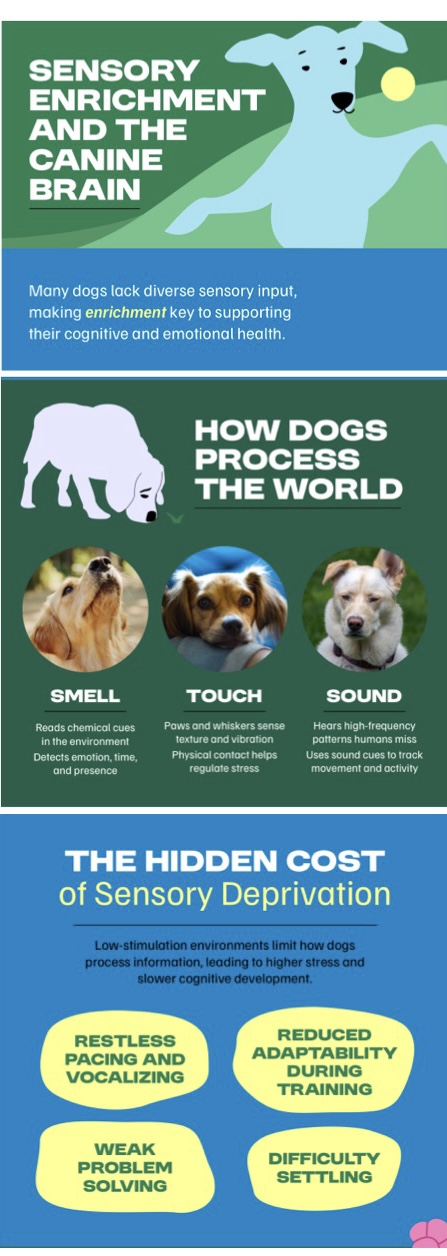
A dog’s brain is built to gather and interpret information from the environment at a rapid pace. The olfactory system alone processes scents with a level of detail far beyond human capacity. Sounds, visual cues, and physical sensations also play key roles in how dogs assess safety and opportunity.
When sensory input is limited or repetitive, the brain receives fewer chances to form new connections. Over time, this can lead to boredom or restlessness. Enrichment introduces novelty in controlled ways, encouraging problem-solving and flexible thinking that support cognitive health.
The Role of Scent-Based Activities
Smell is the strongest driver of mental engagement for dogs. Simple scent games can activate large areas of the brain and promote calm focus. Hiding treats around the home or yard encourages exploration and decision-making without physical strain.
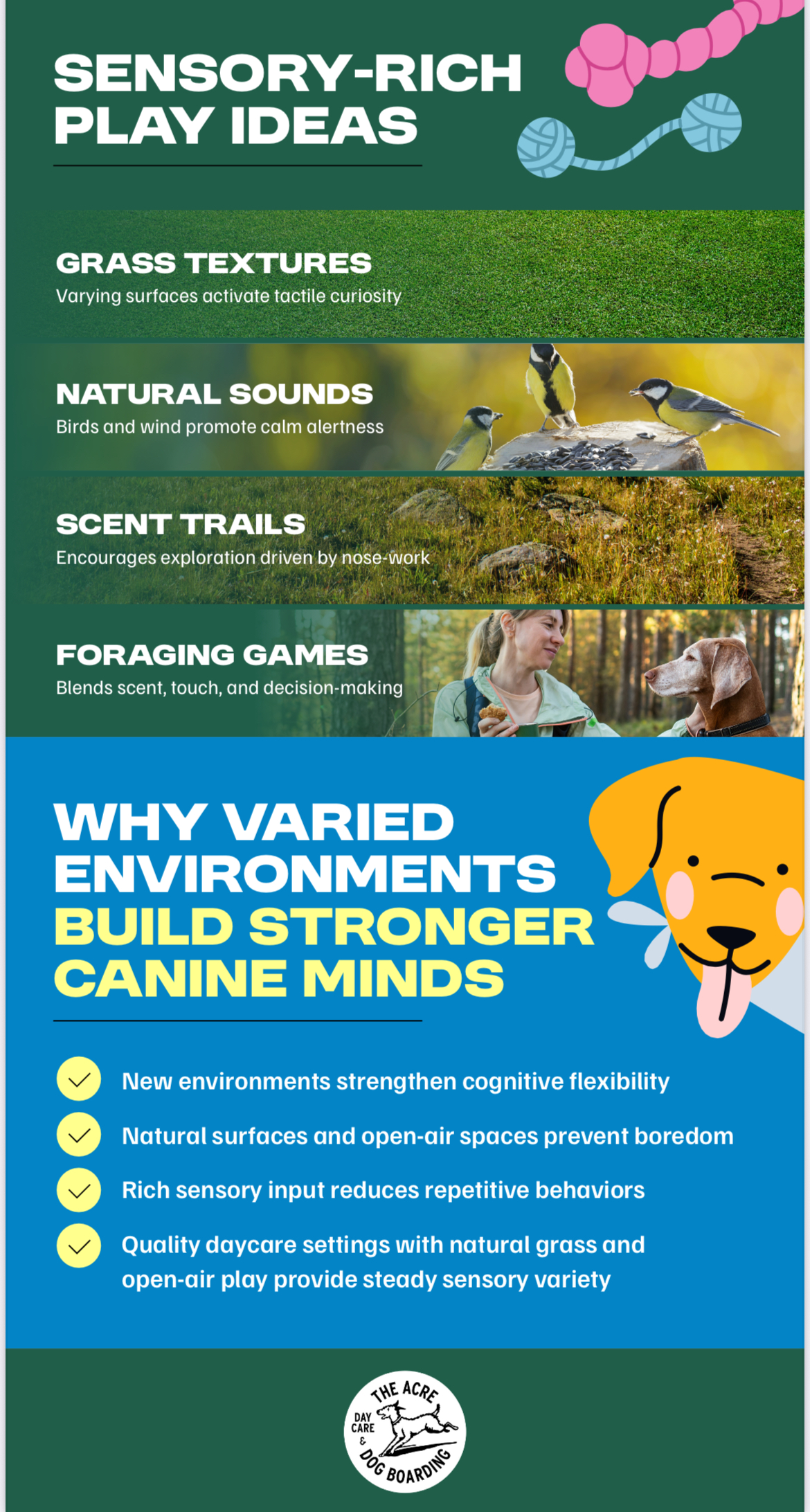
Snuffle mats, scent trails, and rotating toys with different smells also provide meaningful engagement. These activities allow dogs to work through challenges at their own pace, which can reduce anxiety and support confidence.
Physical Sensations and Brain Growth
Touch and movement play an important role in brain stimulation. Walking on grass, sand, or gravel introduces new textures that activate sensory receptors in the paws. Gentle massage, brushing, and varied sleeping surfaces also contribute to body awareness.
Agility-style activities do not require competition. Stepping over low obstacles or balancing on soft surfaces encourages coordination and spatial awareness. These movements help the brain refine motor control while keeping the body active.
Sound and Visual Variety
Dogs respond strongly to sound, even when humans tune it out. Introducing controlled audio, such as nature sounds or calm music, can create positive stimulation, especially during rest periods. Sudden or loud noise should be avoided, but gentle variation helps dogs adapt to changing environments.
Visual enrichment includes watching activity outside a window, observing other dogs at a distance, or engaging with puzzle toys that involve movement. These experiences sharpen attention and reduce frustration that can build when environments feel static.
Enrichment Across Life Stages
Puppies benefit from gentle exposure to a wide range of sights and sounds during early development. This supports adaptability and reduces fear responses later in life. Adult dogs thrive on problem-solving that matches their energy level and breed tendencies.
Senior dogs also need enrichment, though it should be adjusted for comfort. Scent games and slow exploration provide mental engagement without physical strain. Consistent stimulation helps support memory and emotional stability as dogs age.
Enrichment in Structured Care Settings
Structured environments can still support brain health when enrichment is prioritized. Quality dog boarding (https://atxdogcamp.com/dog-boarding/) programs often include supervised play, varied sensory activities, and calm rest periods. These elements help maintain routine while offering mental engagement that prevents stress during time away from home.
Consistency matters in any setting. Familiar cues combined with new activities allow dogs to feel secure while still experiencing variety.
Signs of Effective Enrichment
Positive enrichment often leads to relaxed behavior, improved focus, and better sleep patterns. Dogs may show increased curiosity without signs of agitation. Reduced destructive behavior and excessive vocalization are also common outcomes.
Overstimulation can cause restlessness, so balance remains important. Observing how a dog responds helps guide future activity choices.
Supporting the canine brain does not require complex tools or constant activity. Thoughtful sensory enrichment builds mental resilience, supports emotional health, and strengthens the bond between dogs and their caregivers. By offering varied experiences that respect individual needs, enrichment becomes a powerful part of everyday care that supports a dog’s well-being across every stage of life. Check out the infographic below for more information.