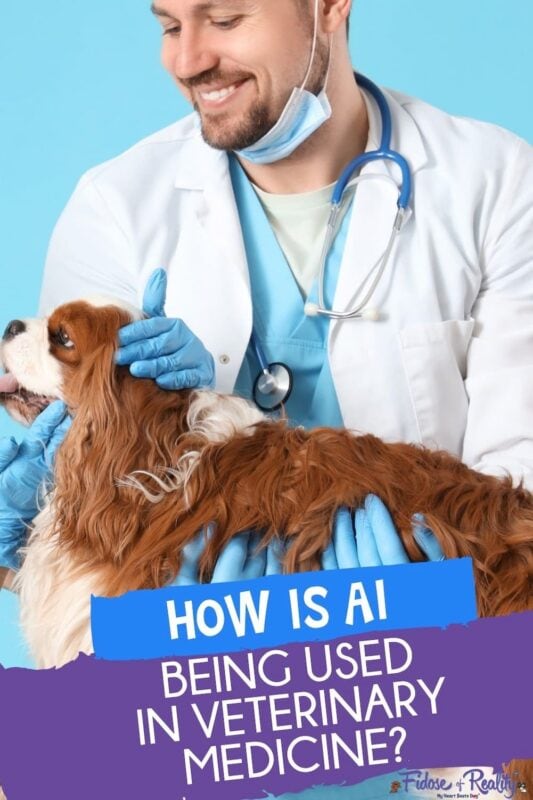




Amid the buzz about AI and whether it is good (or not) for humanity, artificial intelligence is here and being used by veterinarians worldwide. AI in veterinary medicine is being used in veterinary medicine to help veterinarians diagnose disease earlier, interpret diagnostic tests more accurately, and make faster treatment decisions.
AI-powered tools can analyze X-rays, ultrasounds, lab results, and even medical records to identify patterns that may not be obvious to the human eye. These technologies are also improving communication between veterinarians and pet parents by generating clearer reports and supporting more personalized care plans.
As AI continues to evolve, it is becoming an important decision-support tool that helps veterinary teams detect health problems sooner and improve outcomes for pets. And that’s something all pet parents want: for our pets to live longer, happier, healthier lives.
How Is AI In Veterinary Medicine Being Used?
“Over the past decade, we have seen some incredible advances in veterinary diagnostics thanks to the rapidly evolving technology that is reshaping how general practitioners can detect, monitor, and help manage disease in-clinic,” says Dr. Michelle Larson, Head of Medical Platforms, Clinical Studies, and Medical Education, Global Diagnostic Platforms at Zoetis, Inc.
“AI-enabled point-of-care tools such as Vetscan OptiCell™, an automated CBC (hematology) analyzer, and Vetscan Imagyst®, which offers seven testing capabilities in a single digital platform, are helping improve efficiency and access to care. These diagnostic tools help veterinarians and staff spend less time on machines and more time with patients and pet owners.”
One example of how diagnostics are evolving is Vetscan Imagyst, which uses AI technology to help veterinarians analyze images from tests such as fecal samples or skin slides. Instead of simply being told that something was found, pet parents may be able to see the actual image the veterinarian is reviewing. Being able to visualize parasites or other findings can make conversations more meaningful and help pet parents better understand why a diagnosis or treatment is recommended
Another innovation, Vetscan OptiCell, reflects how technology is also improving workflow inside the clinic. Because the system uses ready-to-use cartridges rather than complicated equipment with multiple components, it can help reduce errors and save time. This allows veterinary teams to focus more on patient care and less on equipment maintenance, a win-win for everyone.
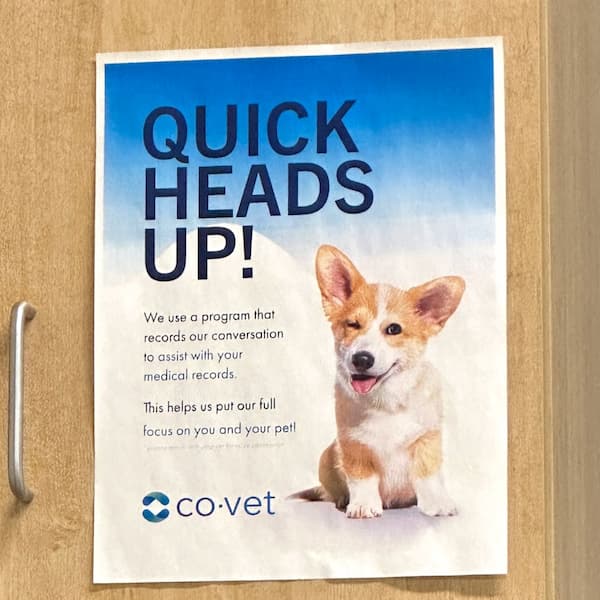
Fun Fact: My dog’s veterinarian now uses AI medical transcription. This app listens to the conversation (with pet parent permission) and converts it into written notes that can be added to the pet’s medical record, see?
How AI Is Improving Veterinary Diagnostics
For a little context, the AI-powered veterinary diagnostics market rose from $1.61 billion in 2024 to $1.94 billion in 2025, at a compound annual growth rate of 20.5%, driven by rising pet ownership, increased animal healthcare spending, and demand for rapid diagnostic results. So the investment is there, and the goal is for pets to reap the rewards.
Key ways AI in veterinary medicine is improving diagnostics:
- Faster imaging results: AI can analyze X-rays, ultrasounds, and other images more quickly, enabling veterinarians to detect concerns sooner.
- Earlier disease detection: AI can identify patterns in test results that may signal health issues before symptoms become obvious.
- More personalized care: Data-driven insights may help veterinarians choose treatments better suited to an individual pet’s needs.
- Improved accuracy: AI tools can support veterinarians by highlighting abnormalities that might otherwise be difficult to detect.
- Better access to advanced diagnostics: Technology is making sophisticated testing more available to general veterinary practices, not just specialty clinics.
- More efficient veterinary visits: Streamlined diagnostic tools can help veterinary teams spend more time focused on patient care.
As AI technology continues to develop, it is expected to play an increasing role in helping veterinarians make informed decisions and helping pet parents better understand their pet’s health.
Artificial intelligence (AI) is helping veterinarians diagnose illness earlier, interpret tests more accurately, and make more personalized treatment decisions for pets.
Smarter Diagnostic Imaging
AI is being integrated into X-rays, ultrasounds, and MRIs, where machine learning models can detect tumors, infections, and fractures with accuracy that rivals (and sometimes exceeds) human radiologists. (Morris Animal Foundation)
Cardiac Assessment From Radiographs
Deep learning models analyzing chest X-rays have achieved high concordance with specialists in assessing heart enlargement in dogs and cats, in some cases outperforming clinical standards. (Frontiers in Veterinary Science)
10-Minute Dental Radiology Reports
Antech Diagnostics launched RapidRead Dental in May 2025, an AI tool that delivers detailed dental radiograph analysis within 10 minutes, improving both treatment decisions and clinic workflow. (Yahoo Finance)
Streamlined Lab & Blood Analysis
AI is being woven into urinalysis and hematology platforms, reducing the burden on veterinary staff while boosting the ability to diagnose a wider range of conditions more efficiently. (DVM360)
Earlier Detection of Kidney Disease in Cats
By analyzing over 100,000 patient records, researchers showed that chronic kidney disease in cats could be predicted up to two years earlier than through traditional clinical diagnostics. (Ross Vet / AVMA)
Personalized Cancer Treatment for Dogs
Machine learning algorithms and live cancer cell analysis are being used to predict how individual dogs with lymphoma will respond to specific anticancer drugs, moving toward truly personalized veterinary oncology. (AVMA)
Non-Invasive Cancer Diagnostics
AI-enhanced imaging, liquid biopsies, and molecular diagnostics are offering less invasive alternatives to traditional tissue biopsies, enabling earlier detection and better treatment planning for companion animal cancers. (ScienceDirect)
Leveling the Playing Field for All Practices
As AI adoption grows, advanced diagnostics are becoming more accessible to veterinary practices of all sizes, not just large specialty hospitals, thus raising the standard of care across the board. (DVM360)

How AI Is Changing Communication Between Vets and Pet Parents
If you’ve ever left a vet appointment feeling confused or overwhelmed, you’re not alone. Understanding what’s actually going on with your pet and feeling confident in the decisions being made matters just as much as the diagnosis itself.
That’s something Dr. Larson feels strongly about. Today’s pet parents are doing their research. If you are anything like me, you are Googling symptoms at midnight, joining breed-specific Facebook groups, and going to vet appointments with real questions.
That’s why the way diagnostic results are presented is such a big deal. When findings are clear, visual, and easy to follow, your vet can walk you through what they’re seeing in plain language, without any guesswork. You and your pet leave the appointment actually understanding what’s happening and feeling good about the path forward.
“Zoetis builds its diagnostic tools with exactly that in mind, cutting out the noise and presenting only the information that matters, in a format that makes sense to everyone in the room,” she shares. “Combined with resources that help veterinary teams communicate more effectively, the goal is simple: to make sure pet parents feel informed, involved, and confident rather than confused when it comes to their pet’s health.”
Bottom line: When pet parents understand what’s going on, everyone wins.
Is AI Replacing Veterinarians?
No, AI is not replacing veterinarians.
AI can help analyze X-rays, lab results, and medical data more quickly, but veterinarians still provide the medical expertise, judgment, and hands-on care pets need. Technology can assist with identifying patterns or highlighting concerns, but treatment decisions always rely on professional training and clinical experience.
Experts emphasize that the goal of AI is to improve efficiency and support better care, not remove the human element from veterinary medicine.
In fact, many leaders in veterinary medicine believe AI can help veterinarians spend more time focusing on pets and communication with pet parents by reducing repetitive tasks such as documentation or image review.
Bottom line: AI is a tool that helps veterinarians make informed decisions, but it does not replace the skill, compassion, and expertise that veterinary professionals bring to patient care.
Pros and Cons of AI In Veterinary Medicine
Pros
- Earlier disease detection: AI can help identify health concerns sooner by recognizing patterns in diagnostic data.
- Improved diagnostic accuracy: AI can assist veterinarians in interpreting imaging and lab results more consistently.
- More personalized care: AI can support treatment plans tailored to an individual pet’s medical history and risk factors.
- Faster results: AI can help analyze diagnostic information more quickly, supporting timely treatment decisions.
- Better communication: Visual and data-supported reports can help pet parents better understand their pet’s diagnosis.
- Improved efficiency: Automating certain tasks allows veterinary teams to spend more time focused on patient care.
Cons
- Requires veterinary oversight: AI results still need interpretation by trained veterinary professionals.
- Not all clinics may have access: Some practices may not yet offer AI-supported diagnostic tools.
- Implementation costs: New technology can require investment in equipment, software, and training.
- Learning curve: Veterinary teams may need time to become comfortable using new tools.
- Data limitations: AI accuracy depends on the quality and diversity of the data used to train the system.
- Cannot replace clinical expertise: Veterinarians are still essential for diagnosis, treatment decisions, and patient care.
What the Future of AI in Veterinary Medicine May Look Like
The future of AI in veterinary medicine is all about catching problems earlier and making care more personal. As Dr. Larson puts it, “The more we’re using advanced and connected diagnostics the more we’ll be able to identify trends and develop comparisons and insights that support earlier intervention and more personalized long-term management.” With AI analyzing patient data at a scale no individual clinic could manage alone, the days of waiting for symptoms to worsen before acting are numbered.
Pet parents are also becoming more involved than ever, and the tools are catching up to that demand. Dr. Larson sees it clearly: “Pet owners are engaging more deeply with their pets’ health, so the demand for timely, clear, visual, easy-to-share results will only grow, and AI and other advanced tools will enable these connections.” The result is a future where vets spend less time on the administrative grind and more time doing what they do best: being hands-on with our pets.
FAQs
AI can flag patterns in imaging and lab data that point to disease, giving vets a powerful second opinion.
When used by trained professionals, the right AI tools are designed to enhance diagnostic accuracy and support better outcomes for pets.
Most pet parents won’t notice a difference in the exam room. AI works quietly in the background, helping your vet interpret test results and make more confident decisions.
Earlier detection and more precise diagnoses can reduce the need for costly treatments down the road, helping make quality care more accessible over time.
By enabling faster, more accurate diagnoses, AI helps vets catch conditions sooner and tailor treatment plans to your pet’s individual needs.
Final Thoughts On The Role of AI in Veterinary Medicine
Dr. Larson stresses that validation is one of the most important parts of any diagnostic system, especially when referring to AI.
“These tools are only as strong as the data and expertise behind them, so rigorous validation ensures they perform consistently and accurately across a wide range of real-world samples,” she stresses.
That means using large, diverse datasets, expert-reviewed information, and ongoing performance checks to ensure the system is interpreting results as it should. For you as a pet parent, that kind of rigorous testing translates into peace of mind.
When the AI your vet uses has been thoroughly checked and benchmarked, your care team can trust what it’s telling them, whether they’re monitoring your pet’s chronic condition, evaluating a critical case, or catching subtle changes in blood tests.
It also helps ensure the technology works reliably across different breeds, ages, and health conditions, because a senior Great Dane and a Cocker Spaniel puppy aren’t exactly the same patient.
Ultimately, validation is what takes AI from a cool concept to a tool your vet can actually count on. Fortunately, Zoetis uses real-world feedback from veterinary teams to make improvements, and every single update goes through independent validation held to the highest standards, which should give all pet parents a great sense of comfort.
What are your thoughts on the role of AI being used in vet medicine? Bark back in the comments below.