



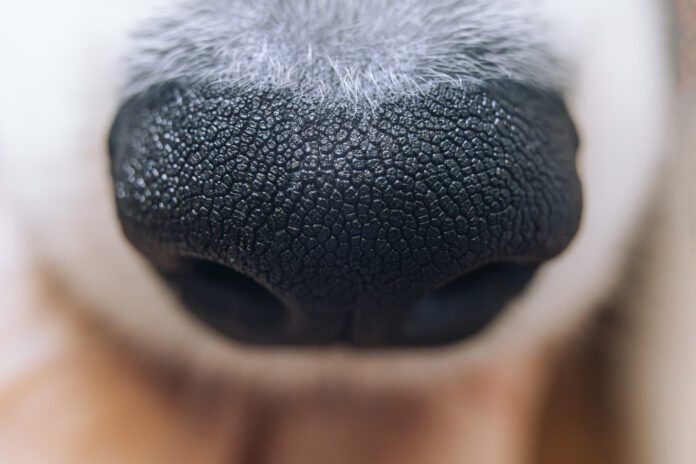
Lupus in dogs is an autoimmune skin disease. Technically known as discoid lupus erythematosus (DLE), lupus in dogs starts at the nose with a loss of pigment, followed by crusts, erosions, and ulcers of the skin. A black nose may turn pink or have pink splotches. The nose may lose its normal “bumpy” appearance and become smooth.
With lupus, the dog’s skin around the ears, on the ear flaps, around the eyes, and on the lips may also be affected. Sometimes, footpad skin may be involved.
Any injury to areas affected by this cutaneous lupus may bleed due to the extensive vasculature to the area. These areas may also be quite painful.
While discoid lupus is most common in German Shorthaired Pointers, German Shepherd Dogs, Collies, and Shetland Sheepdogs, any breed can have this autoimmune problem. In my experience, Collies are most often affected. You may even hear the condition referred to as “Collie nose.”
Diagnosing Dog Lupus
While your veterinarian may be sure your dog has DLE just from a physical exam, for a definitive diagnosis, a skin biopsy should be taken. This is usually done under sedation with local anesthesia. While waiting for biopsy results, your veterinarian may prescribe some antibiotics to rule out the possibility of bacterial infection.
Note: Your veterinarian will distinguish DLE from systemic lupus erythematosus (SLE). SLE is also an autoimmune disease of dogs, but in this rare form the dog’s immune system attacks its tissues and organs. SLE is potentially fatal and is a much more serious condition than DLE. DLE does not progress into SLE (thankfully!)
Treating Lupus in Dogs
Treatment for DLE in dogs is aimed at reducing inflammation and moderating the immune system. Topical treatment is ideal, but it does present challenges as your dog can easily lick it off. For this reason, topical corticosteroids often aren’t successful.
Tacrolimus ointment is an immunomodulator that is often prescribed off label for use on dogs. It is quite effective and requires small amounts, making it is less lickable. It is also expensive, so apply it carefully and wear gloves.
Oral corticosteroids such as prednisolone are quite effective with lupus, especially to get the disease under control. Side effects can be tough to deal with (increased drinking and appetite), so every effort is made to taper the dose down as much as possible.
The combination of tetracycline (an antibiotic with some immunomodulating properties) along with niacinamide (a B vitamin supplement) works for about 70% of DLE cases. Oral cyclosporine, like Atopica, is another immunomodulator that may be effective, but it can cause gastrointestinal side effects.
What You Can Do
Along with controlling the symptoms, limit your dog’s exposure to ultraviolet (UV) light like bright sunshine, just as you would to protect from skin cancer. Keeping your dog inside during prime sunshine hours (10 a.m. to 2 p.m.) is ideal. You can also use sunscreen made for dogs. Do not use human sunscreens! The reality is that your dog will lick some off and human sunscreens are not suitable.
Epi Pet K9 Care Sunscreen and Lucky Pup Sunscreen Dog Balm are both strong choices. These products should only be applied as a preventive or after active skin lesions are under control. For dogs with naturally pink noses, no matter what breed, use as a preventive.
Luckily, DLE is treatable and controllable, so the prognosis is good, especially with an early diagnosis.
