
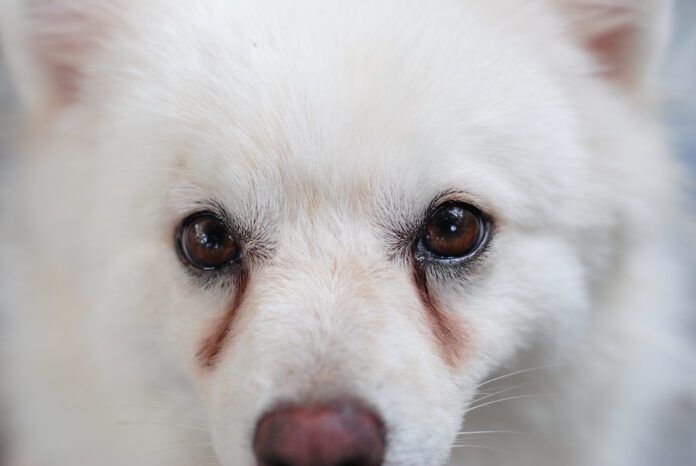
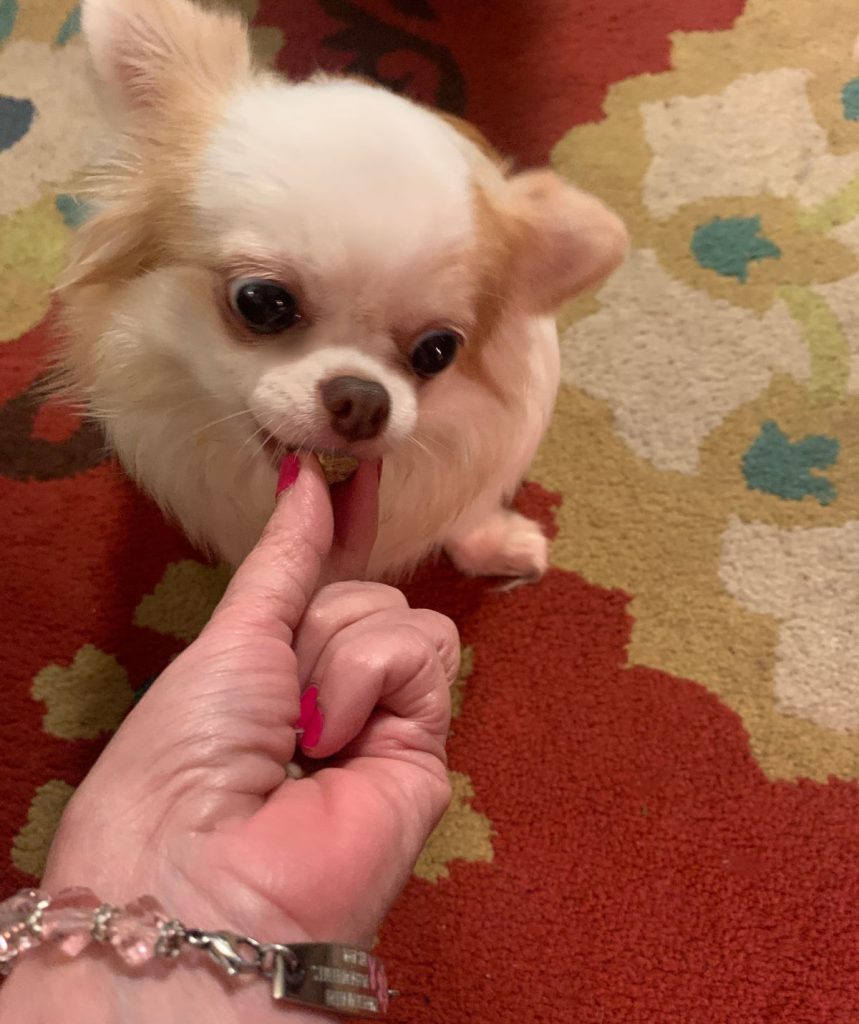




Products that purport to help dogs with fear and anxiety have an interesting thing in common. Their marketing almost always portrays dogs lying down. Just check out their featured images: snoozing pups. It seems that lying down, looking drowsy and relaxed, is the goal. But the opposite of fear or anxiety is not sleep.

You know what dogs free from fear or anxiety do? Well, lots of things!
They may:
- play with their human or dog friends
- sniff
- chase varmints
- chew
- dig
- solicit petting from their humans
- countersurf
- learn tricks
- hang around humans who are eating, making googly eyes
- enjoy a walk
- play agility
But we don’t usually see photos of these activities. We see dogs lying down with implied ZZZs floating above their heads.
As a person who has had two dogs with phobias, I understand. It is far better to see them resting than shivering and drooling miserably. It’s a way for companies to portray (usually untruthfully) that their product “cures” anxiety. But you know what’s even better: dogs going about their normal life without fear.
Many of these products exploit owners’ nervousness about behavioral medications and vilify them. But thoughtfully chosen and carefully administered medications are one of the interventions for dogs with extreme fear that is most likely to help (Riemer, 2023). These sellers imply or claim outright that such meds create zombie dogs. Then, ironically, many post images of dogs that look sedated to sell their own products.

Zani was on behavioral meds at the time I filmed this agility video. Sound on for the full effect.
Zani’s not the only one. Check out this thread from the Fearful Dogs group on Facebook: This is my dog on drugs. Note how many dogs in the 92 comments are not sleeping.
Relief for the Human
If my dog is anxiously pacing, even trembling or drooling, then starts to calm and lies down, what do I feel? As a person who loves my dog and wants her to be happy and comfortable, I feel relief. Whew! She is lying down; she must feel better.

This relief can also happen when an animal hides. I’ve written a post about the myth that hiding animals are comfortable and their needs taken care of. Something I didn’t mention is that when an animal hides, we can’t see their distress. Out of sight, out of mind. If we can’t see their suffering, we feel relief. And the corollary with product marketing is that if a dog is lying down being quiet, we can believe they feel fine.
I am not condemning this response of relief. When our beloved pet is distressed and we can’t help them, it can be agonizing. The weeks before Zani got medical help for her generalized anxiety and panic disorder in 2016 were among the saddest of my life.
But there is a grim side. This advertising has a secondary purpose. Again, sleep is not the opposite of fear. But you could fairly call sleep the opposite of overarousal or hyperactivity. Countless images of sleeping dogs may serve to persuade owners that they won’t be bothered by their dogs if they buy the product.
I believe most people who buy products to help their fearful or phobic dogs do it out of love. They want their dogs to be happy and free of fear. But a person can have more than one motivation. Someone who is threatened by their landlord about their barking dog needs a solution, quick. Someone who is sleep deprived because their dog paces and whimpers all night needs desperately for the dog to calm down. Someone who didn’t plan for their life with their dog to be like this and is out of patience just wants their dog to stop already.
Marketers for bogus products prey on these people. Their goal is to to convince potential customers that the product will solve their problems (and that they should buy it right now!). Pictures of sleeping dogs are potent. It would be one thing if the products worked to trigger that response. But the sound, music, and many other products have no evidential support for their claims.
For comparison: commercials for psychiatric meds for humans don’t show them lying down and sleeping. They walk around parks, play tennis, visit with their children or grandchildren, blow out candles at their birthday parties. They look (rather obnoxiously) happy and engaged. So why do we want our dogs asleep, again?

Sedation
With all my photos of an active dog on behavior meds, and my complaints about “sleeping dog” marketing, you may get the impression that I am against sedation. I am not. Here is my own real-life “sleeping dog” photo. This was Lewis’ first Independence Day after he started to suffer from sound phobia. He had been on maintenance medications for six months and I had continued to countercondition to sudden noises. He was doing very well with day-to-day sounds. But I knew my neighborhood’s “hours o’ fireworks” would be too much for him. I gave him, per my vet’s recommendation, a medication that helped him relax and sleep. I was also employing sound masking: a dryer recording, a fan, and some “busy” music without changes in volume. He could still function. He was happy to get up and interact with his people or go outside for a bathroom break. But after that, he would go back to sleep. It was a mercy for him.

But sedation is not my ultimate goal. I believe it’s far better for a dog’s fear to be addressed in ways that allow them to live their normal life, as you can see in the images and the movie of Zani above.
It would be better still if these phony products that claim to cure anxiety and phobias in dogs would knock it off with their manipulative and exploitative practices. Countless dogs suffer because of delays in reaching evidence-based interventions as their people go down the ratholes of internet marketing.
Related Resources and Posts
References
Riemer, S. (2020). Effectiveness of treatments for firework fears in dogs. Journal of Veterinary Behavior, 37, 61-70.
Riemer, S. (2023). Therapy and Prevention of Noise Fears in Dogs—A Review of the Current Evidence for Practitioners. Animals, 13(23), 3664.
Copyright 2026 Eileen Anderson
Discover more from eileenanddogs
Subscribe to get the latest posts sent to your email.